Below are the projects and experiments that I recorded in 2019.
January 2019
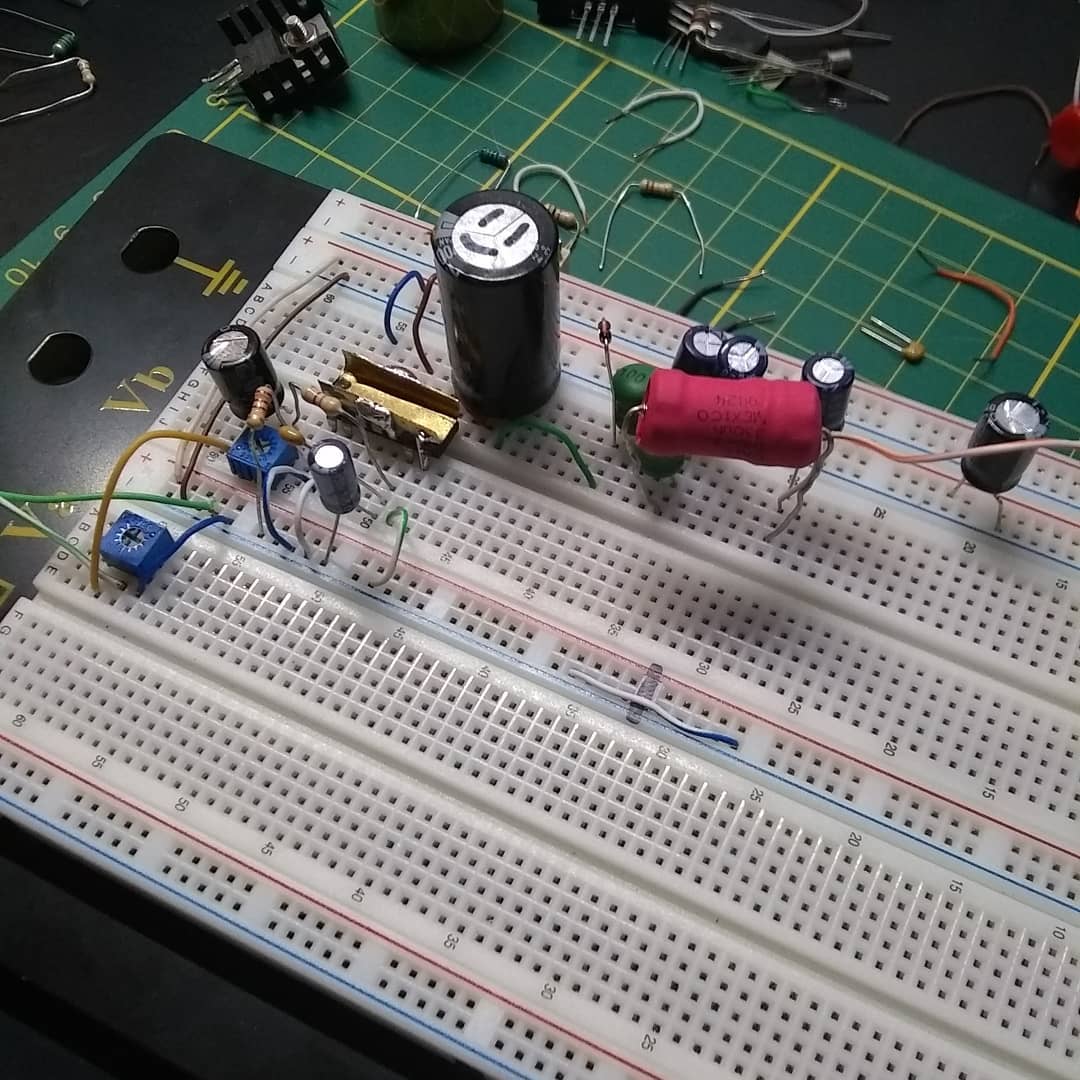
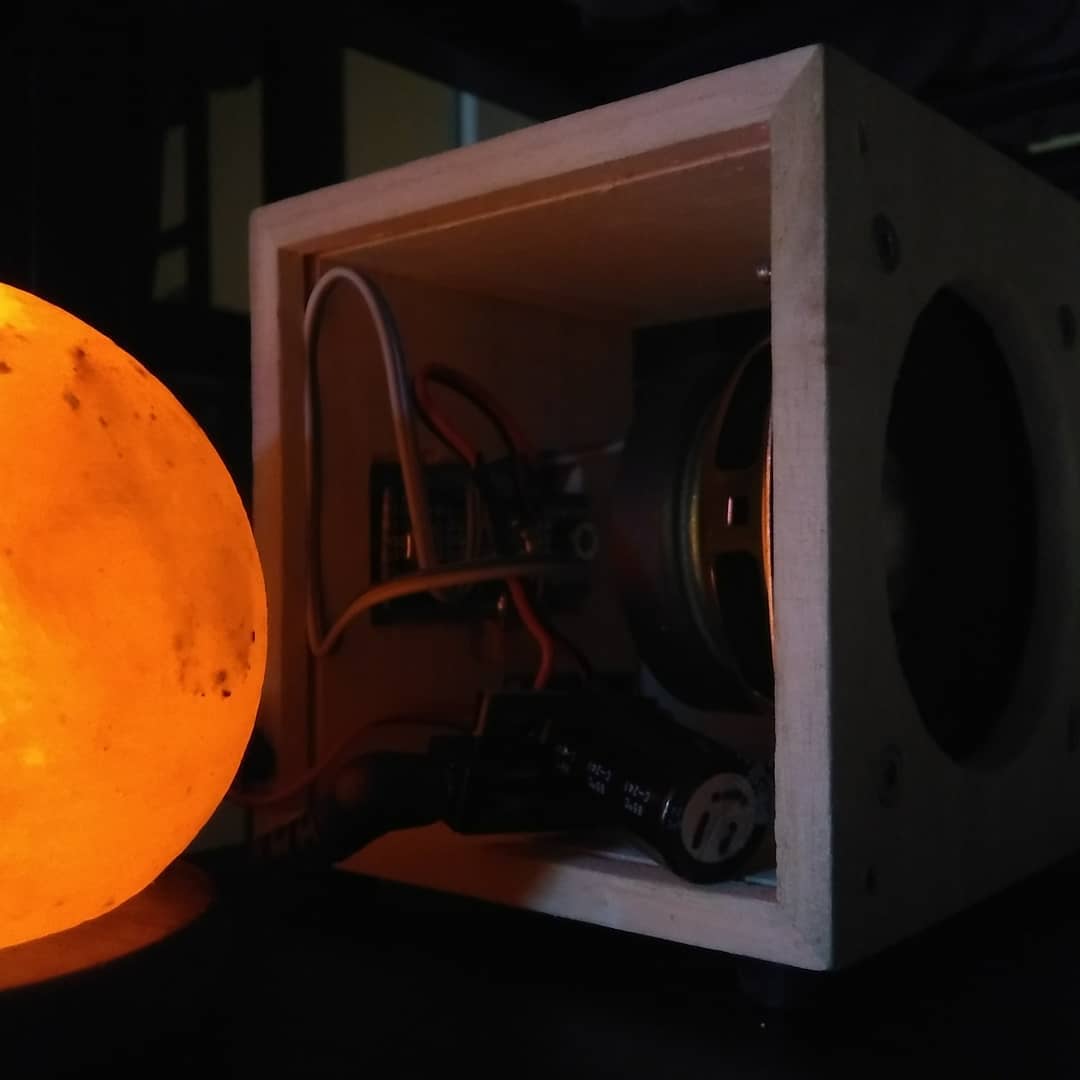
- Starting the year off, I wanted to make a mini subwoofer for my speaker system. I did this using a dedicated 3W speaker amplifier IC, and some passive filters. This project mainly taught me about filters and the various topologies such as low pass, high pass, and bandpass filters.
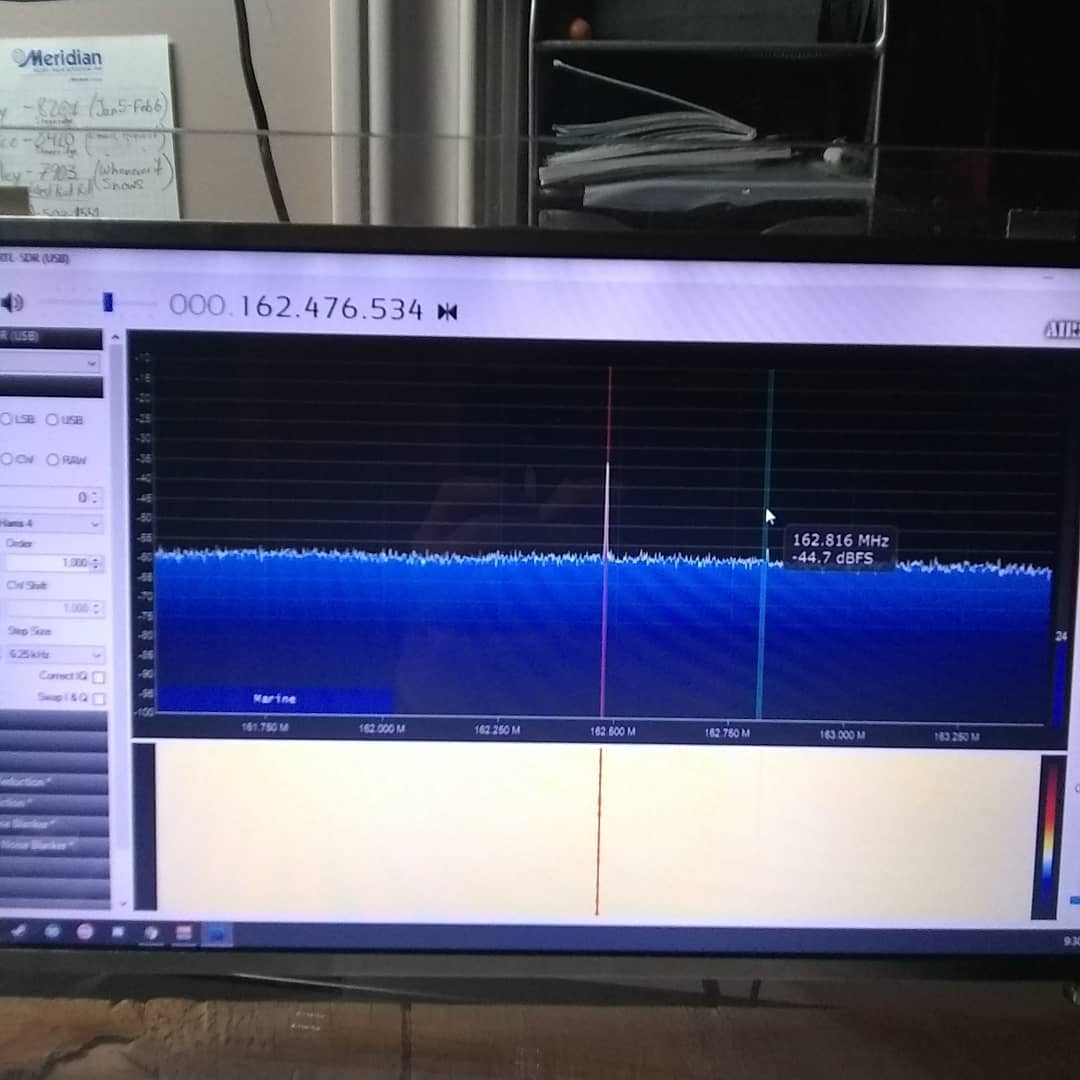
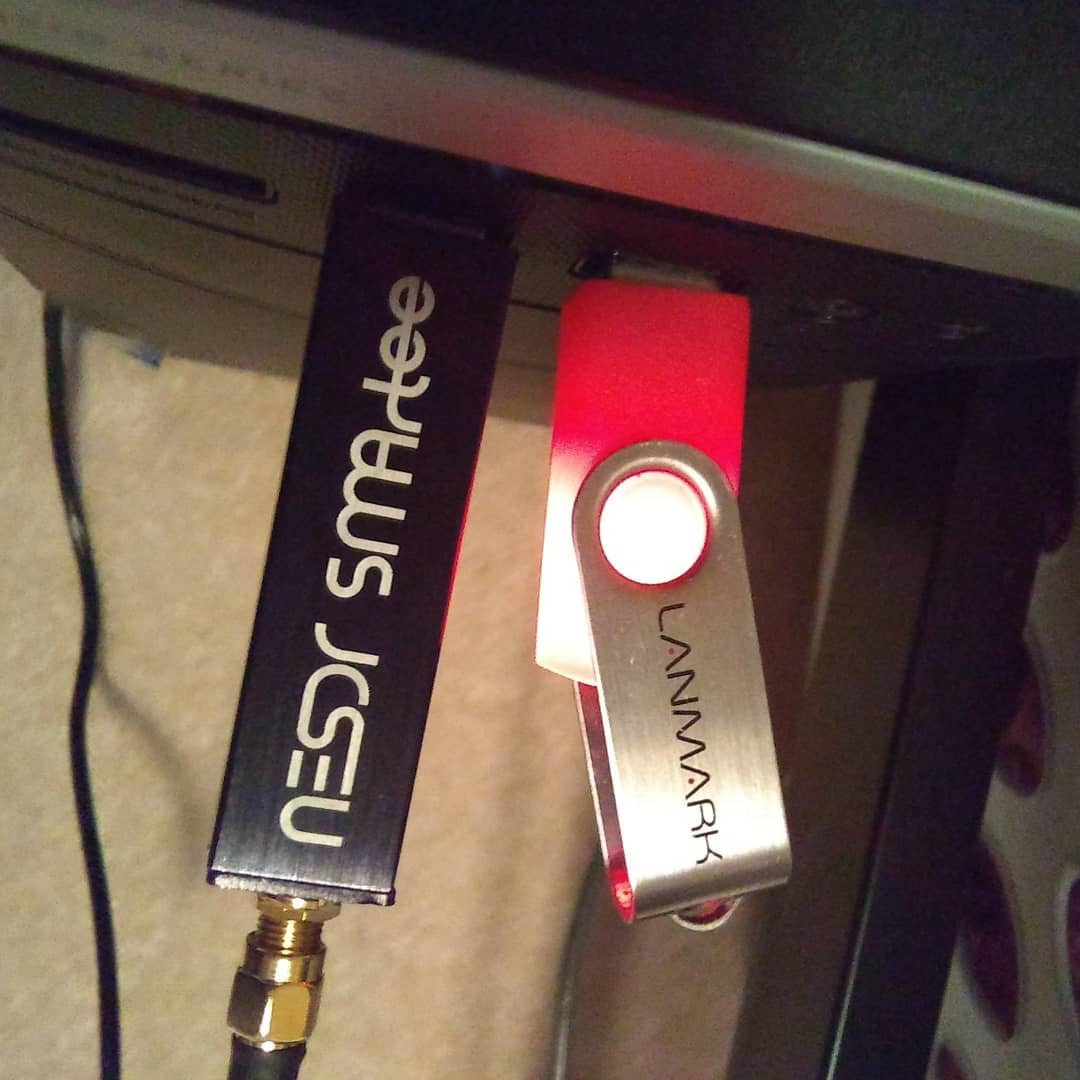
- I also dove further into my interest in radio and bought a software defined radio (SDR). With this SDR I was able to recieve radio signals from 30 MHz all the way to 1.6 GHz.
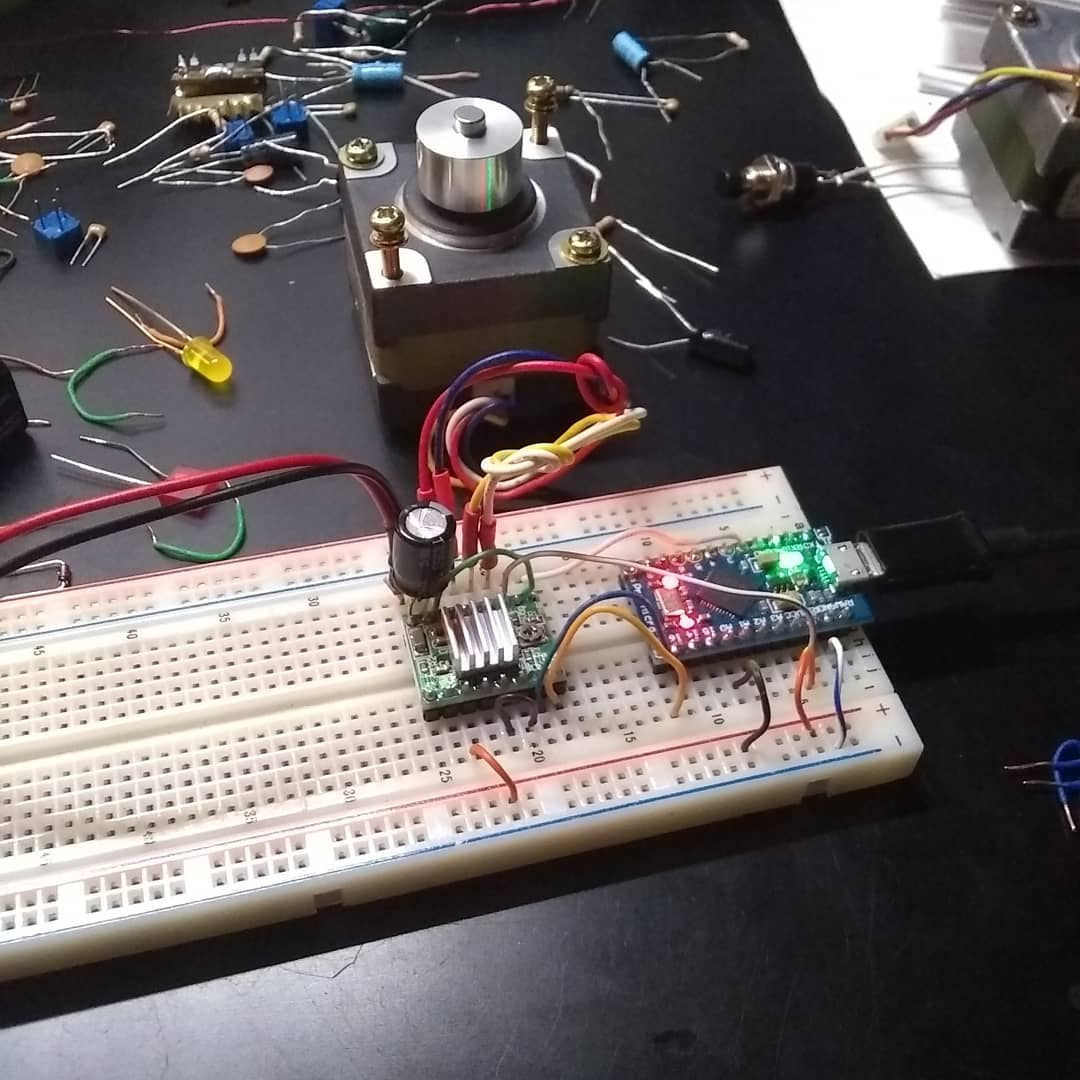
- Another experiment I played around with was learning to drive a stepper motor I had salvaged from an old printer. I was able to successfully drive the motor with full steps in both clockwise and counter clockwise rotations.
Febuary 2019
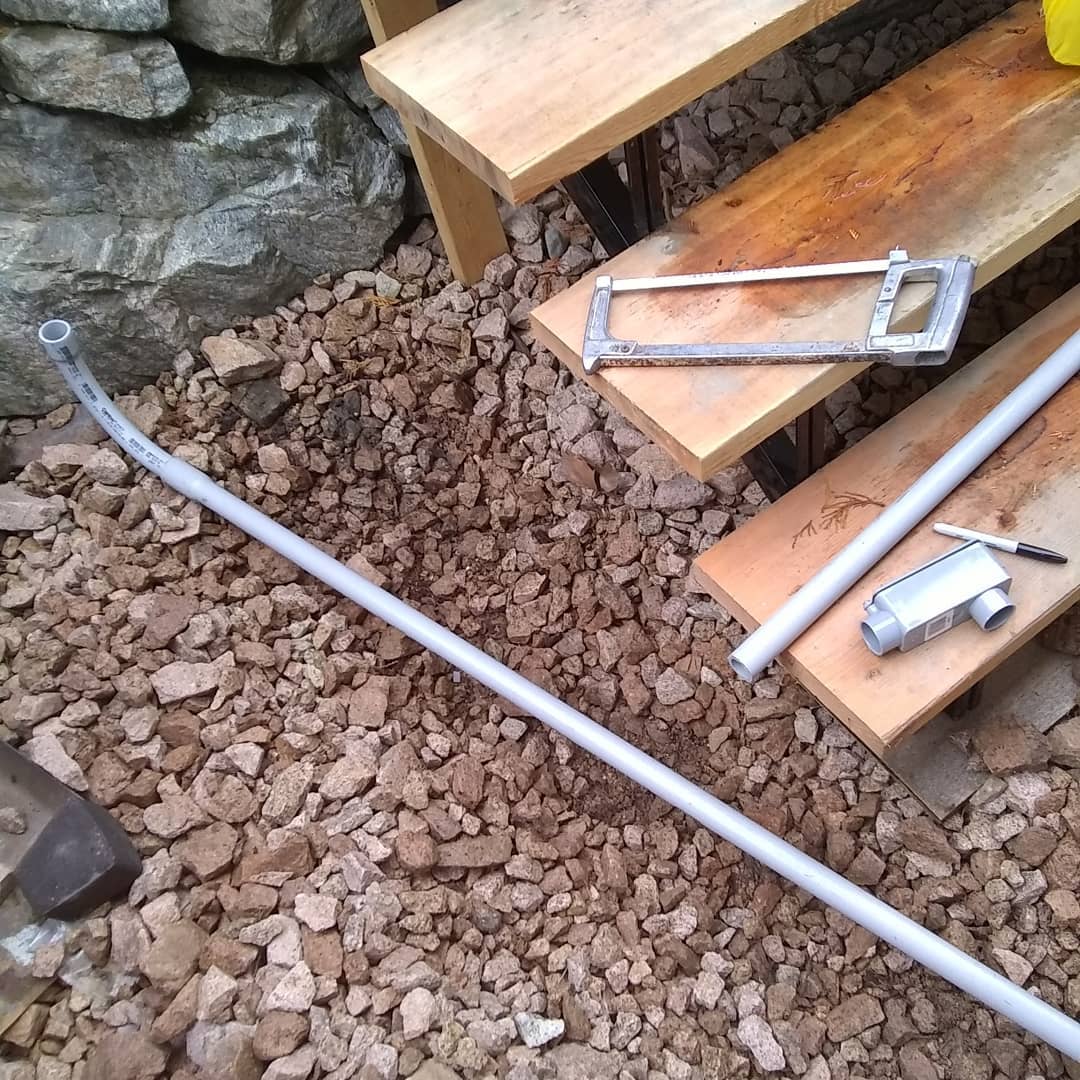
- Continuing further into my radio journey, I laid conduit out to run coaxial cable to my back yard from my room. This enabled me to create and set up larger antennas to capture lower frequency radio signals.
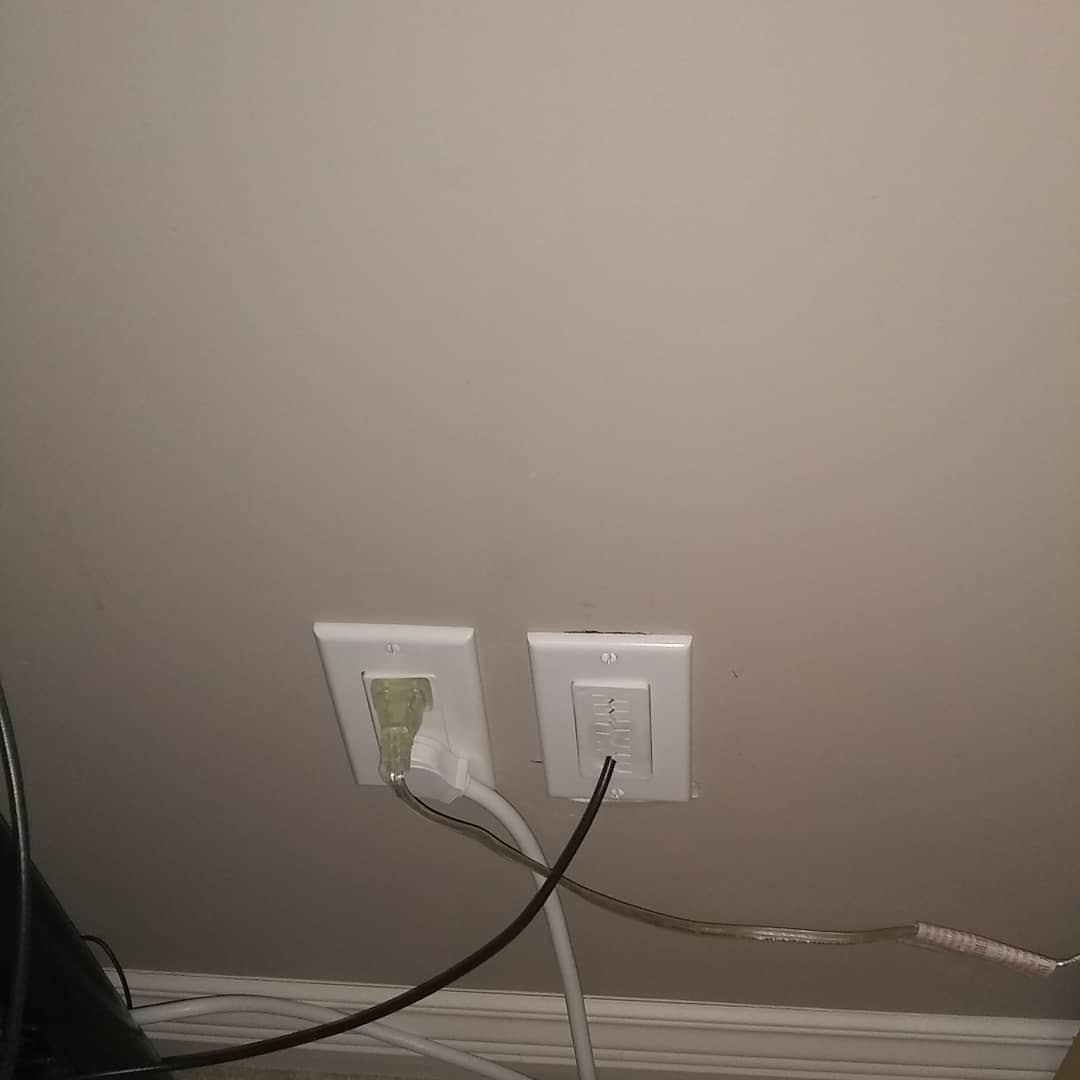
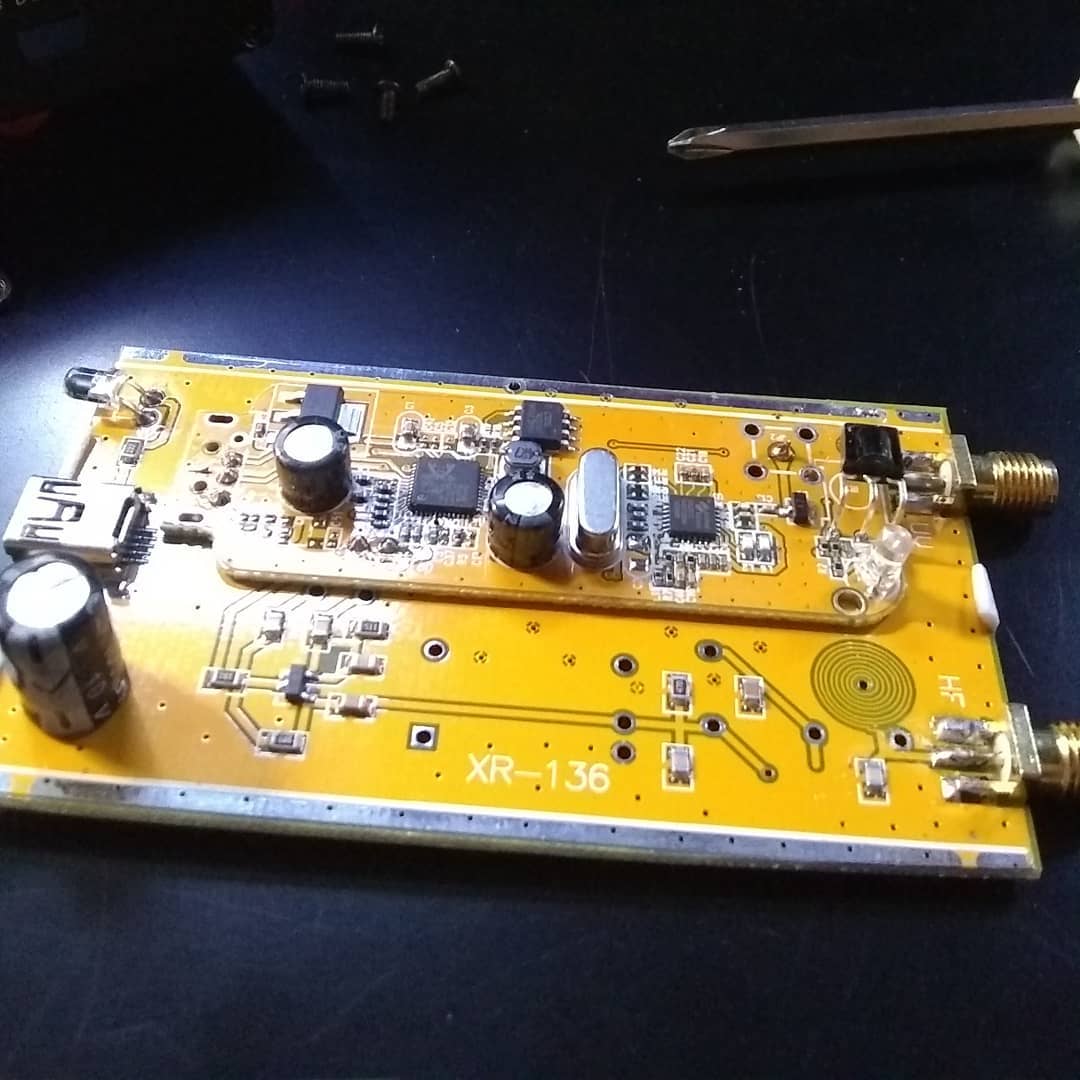
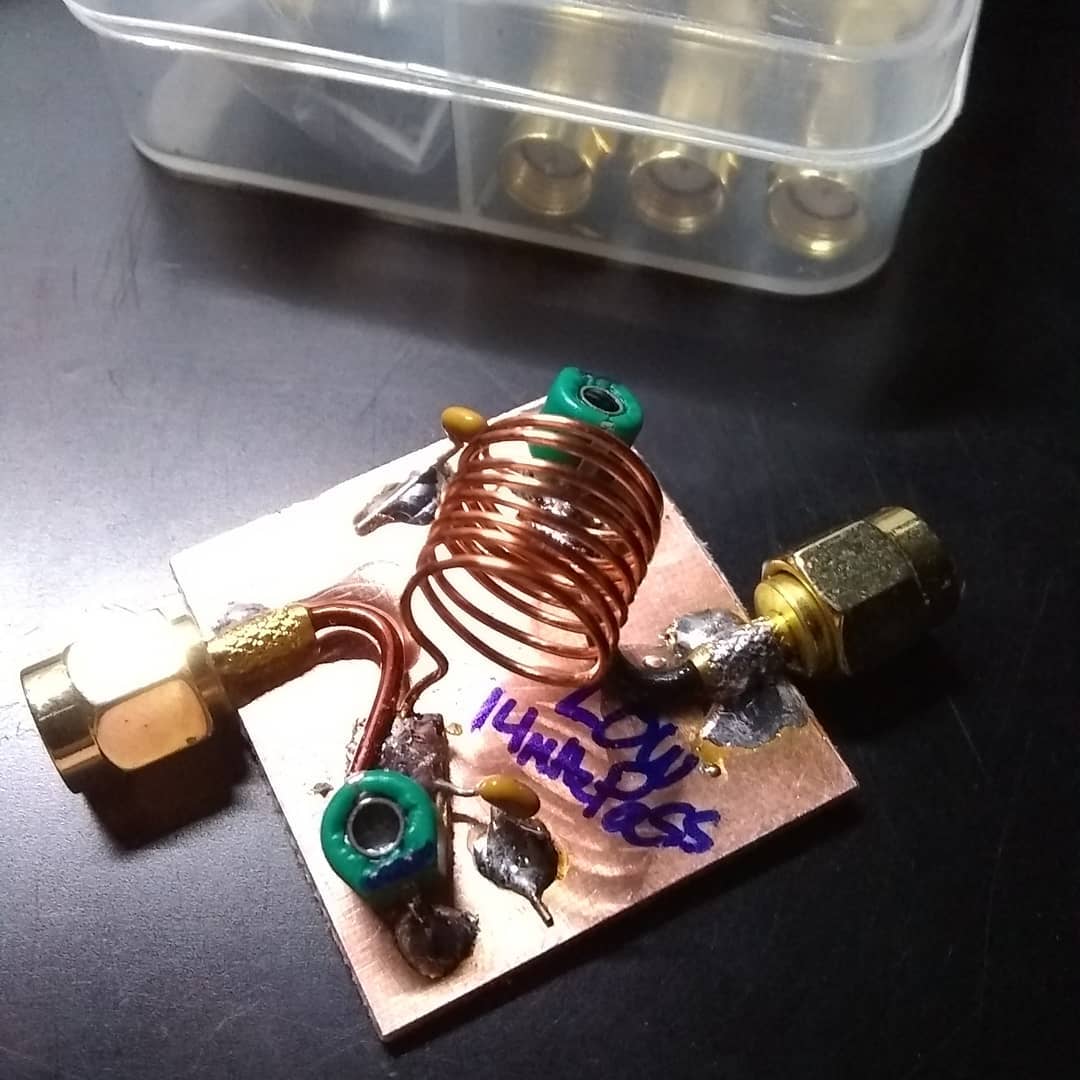
- I also bought another SDR with a down converter to allow me to capture these lower frequency signals down to 100 kHz. With the ability to recieve lower frequency signals, I was having "ghost signals" show up on my radio software (which I believe was due to aliasing but didn't know at the time) so I built a first order passive low pass filter to get rid of any signals above 14 MHz (a.k.a. the 20m band).
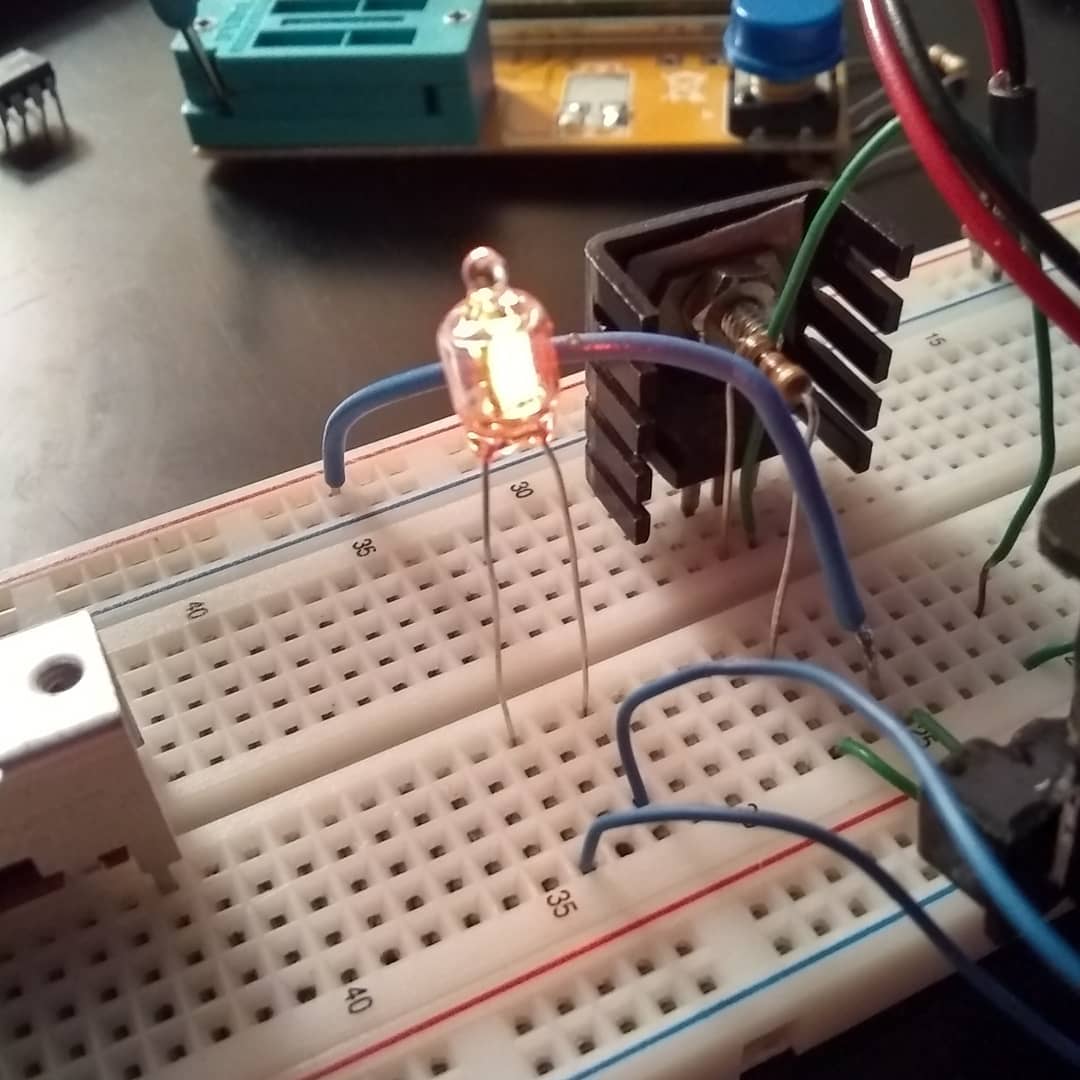
- Another experiment I worked on was a high voltage step up transformer. As these experiments go, I was bored in my electronics class and had some spare time to waste, so I decided to begin winding a transformer. By winding the primary with 10 turns of 24 AWG magnet wire and winding the secondary with upwards to 6000 turns of 32 AWG wire, I was able to produce around 600V AC to light up a neon bulb. I sadly don't have any images of the transformer itself, but I do have an image of the neon bulb lighting up.
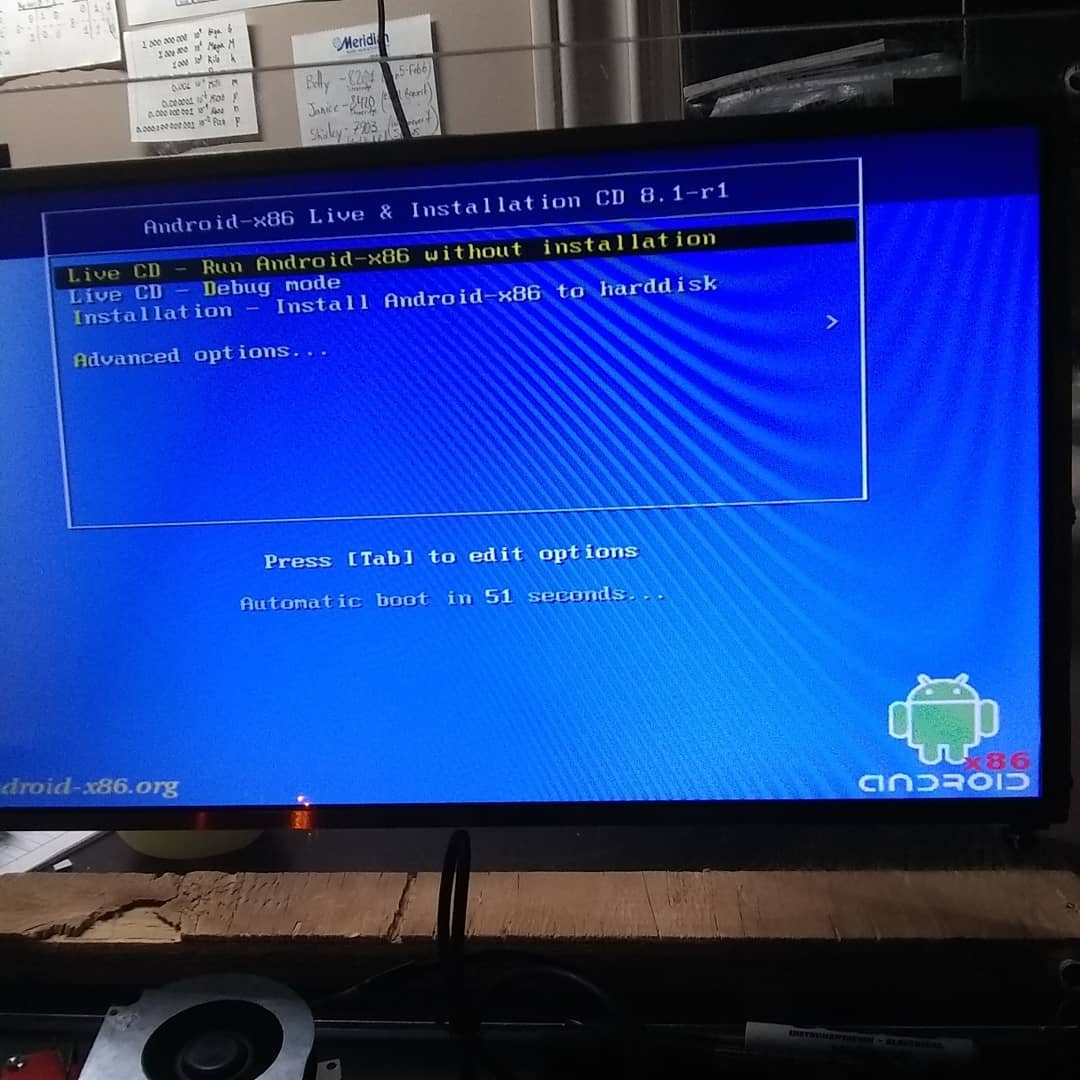
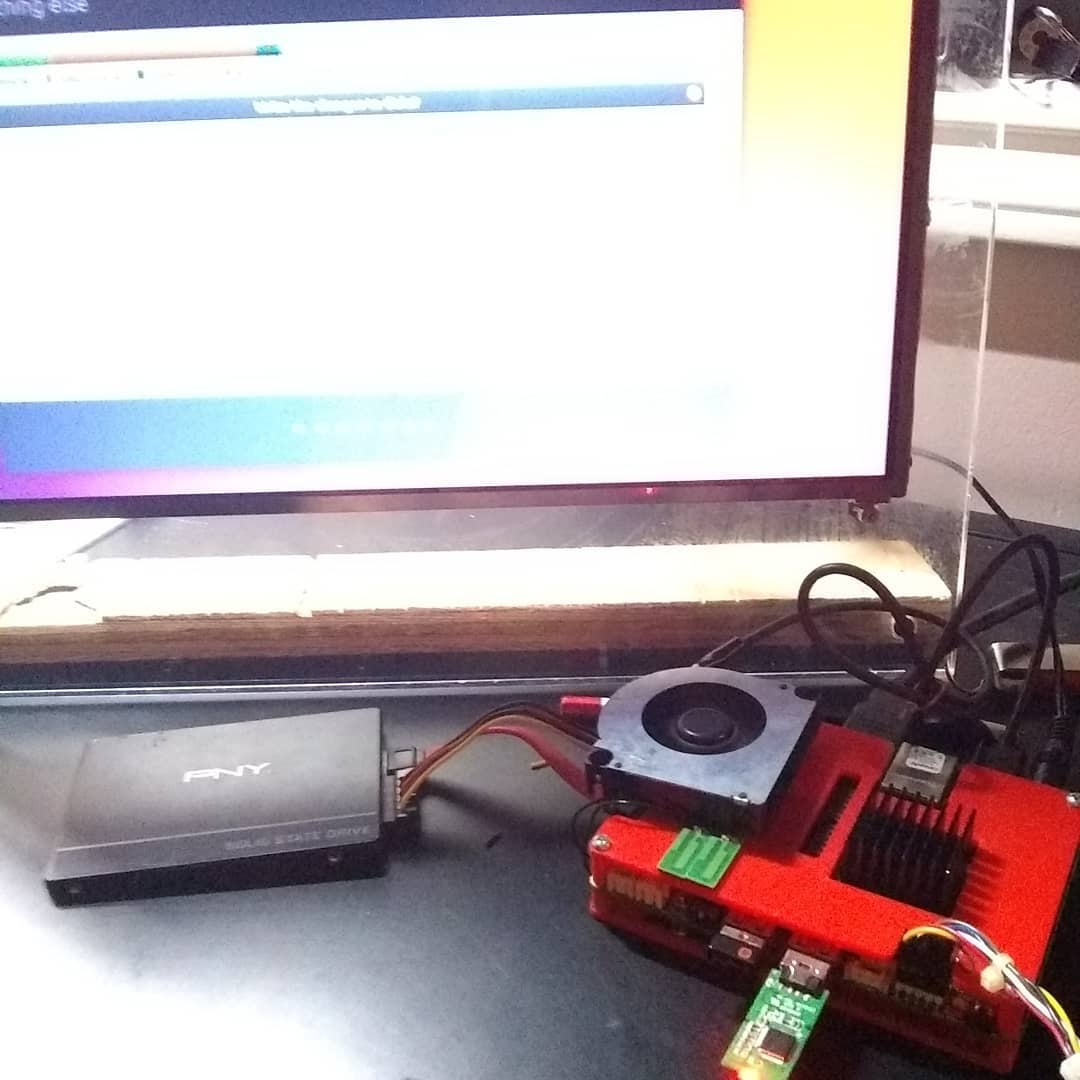
- To top things off, I began playing around with Linux and Android x86 operating systems some more on my UDOO X86 Ultra computer.
March 2019
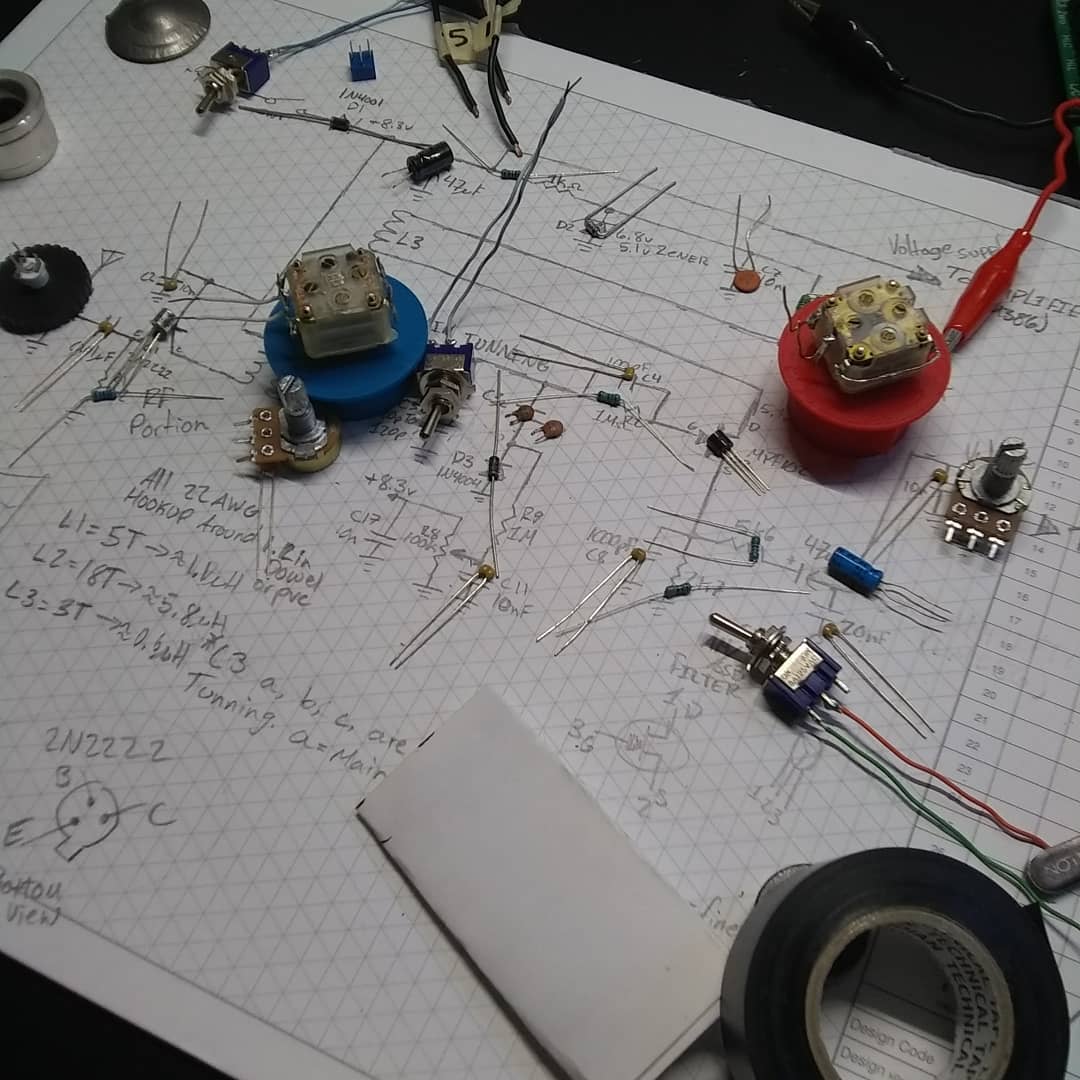
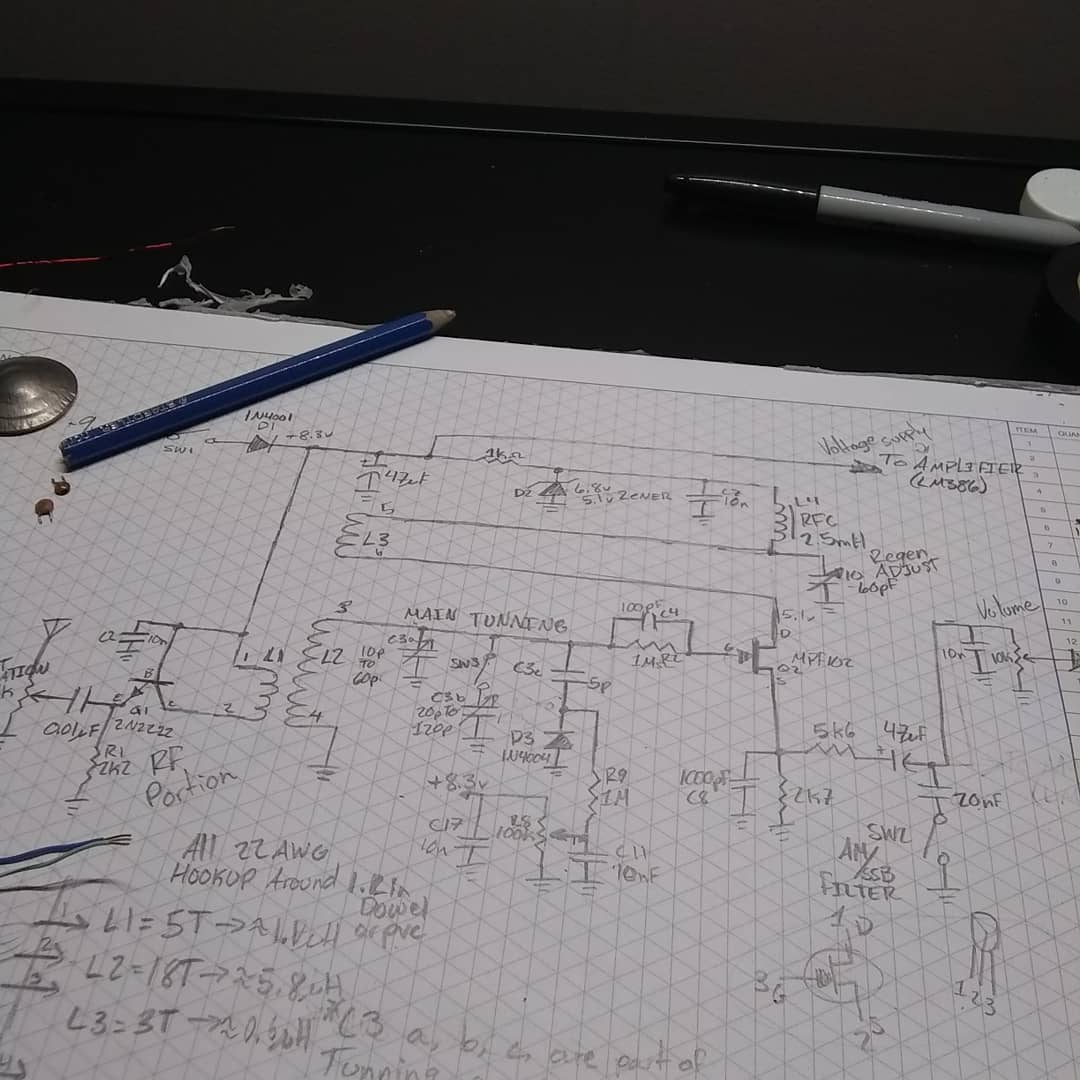
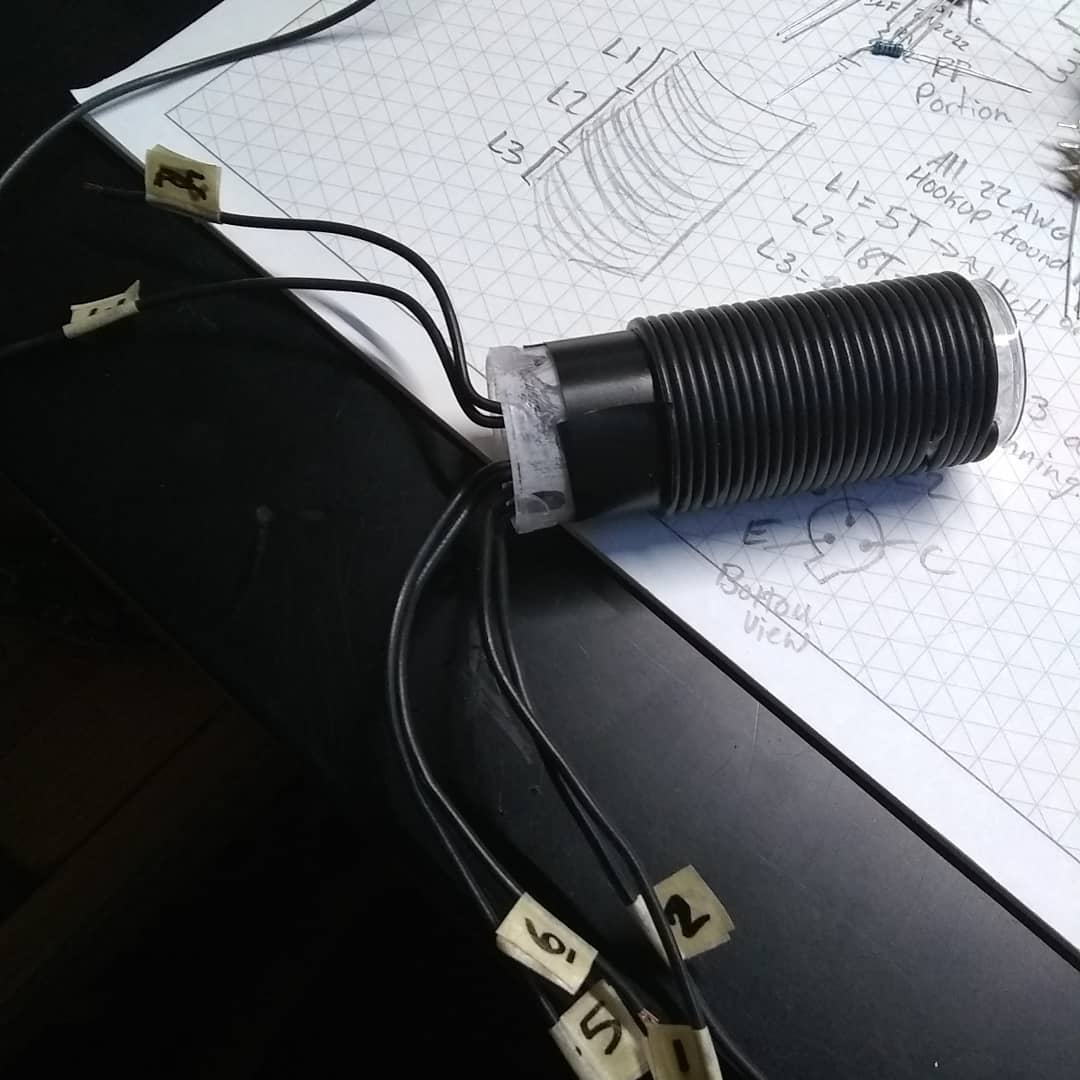
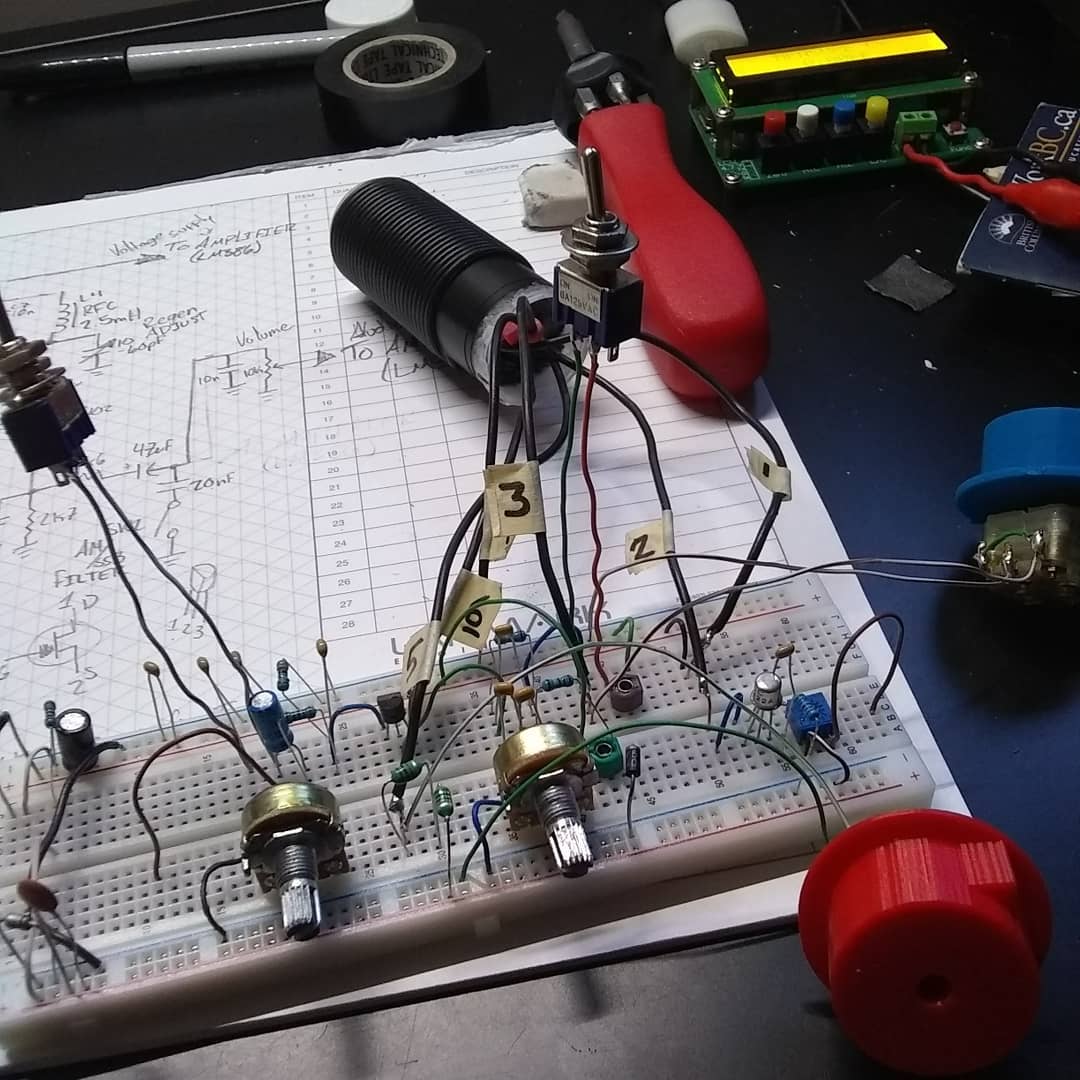
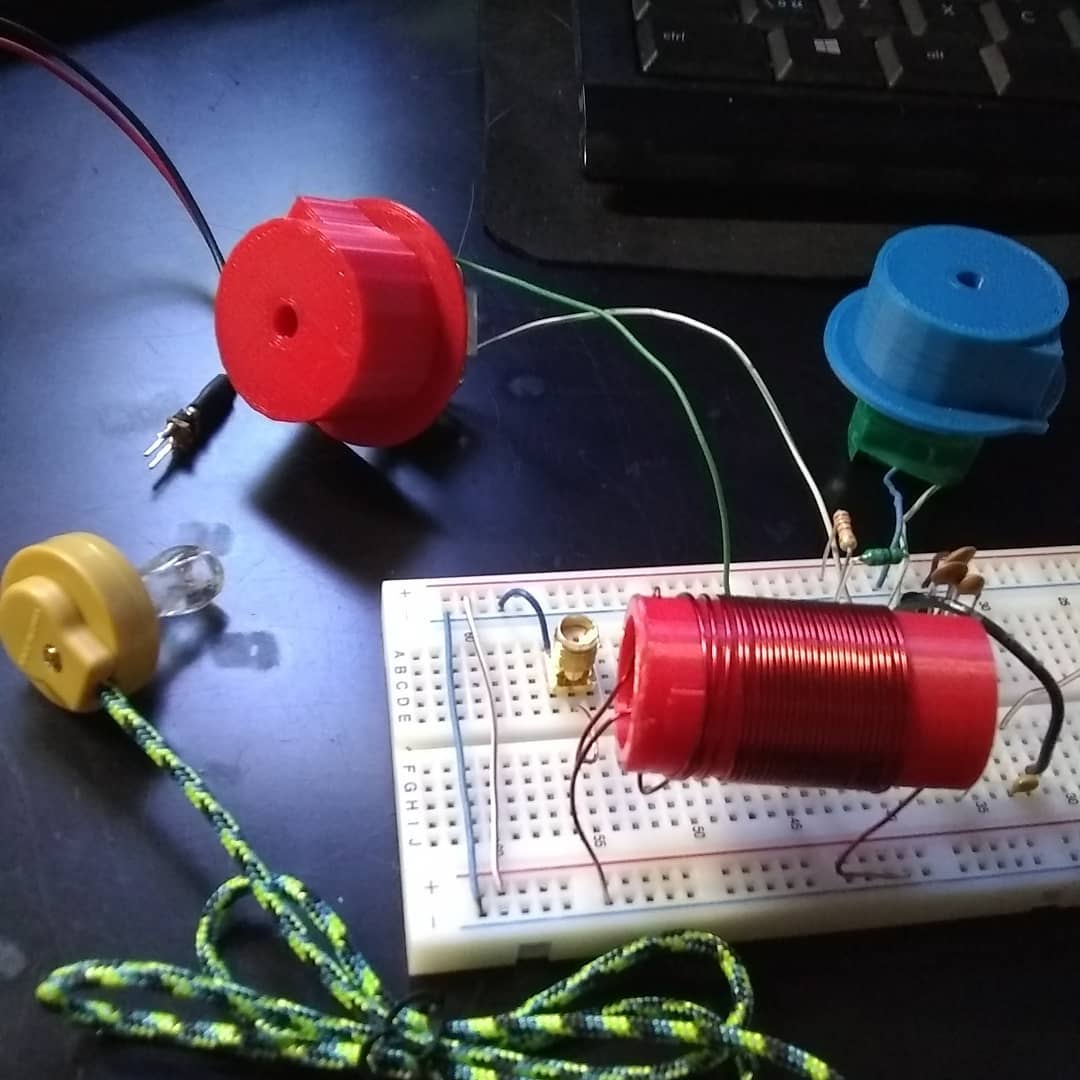
March of 2019 is the month I started a larger more monumental project. From my previous endeavours in making the FM transmitters and learning with the SDRs, I wanted to make a regenerative radio reciever. I chose to have this reciever operate within the range of 6 MHz to about 9 MHz. The design of this reciever was a hurdle as I didn't conduct any circuit analysis. I essentially took different schematics from the internet and created my own frankenstein reciever from what I could glean.
This is only the start of this project however, I cover the completion of this project in May 2019.
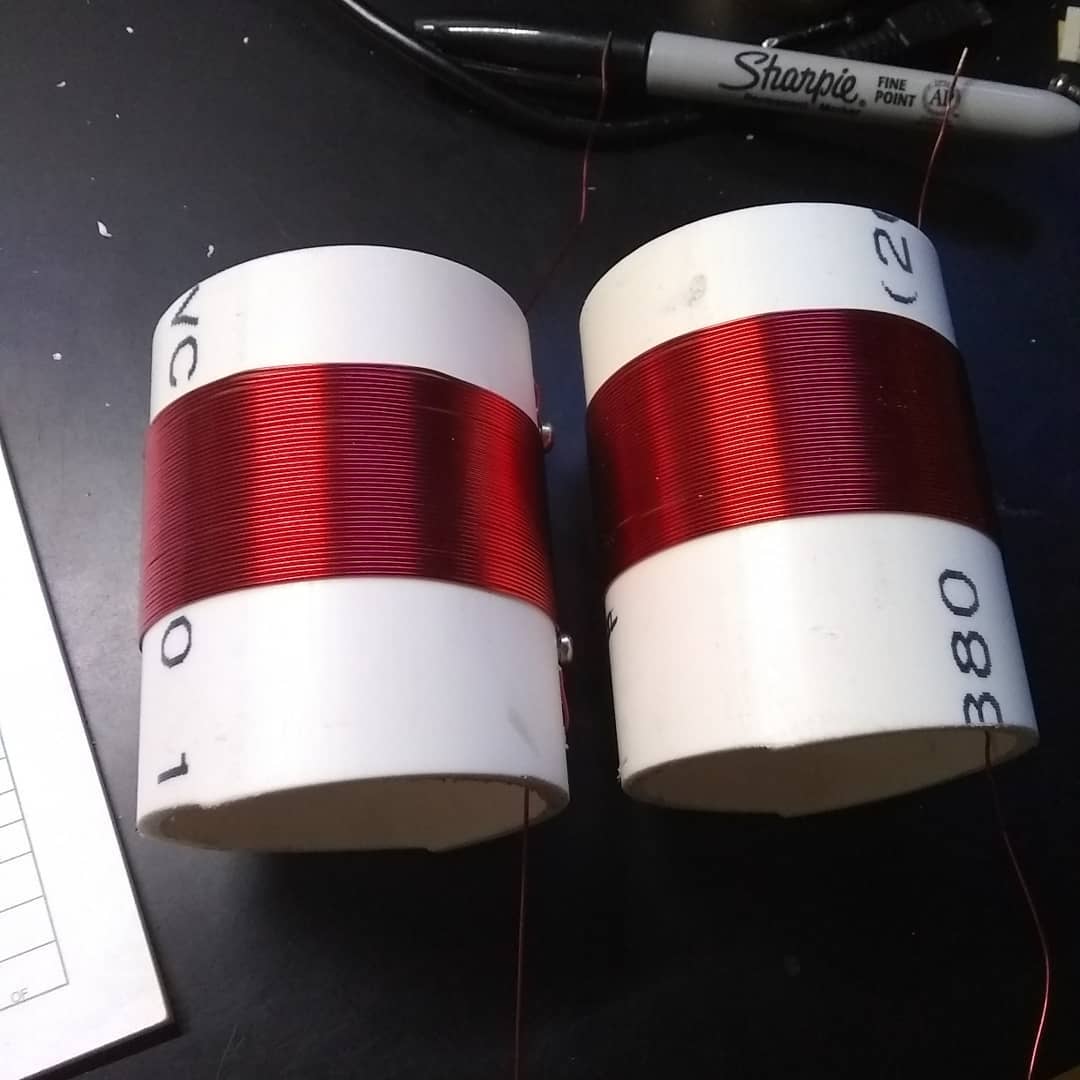
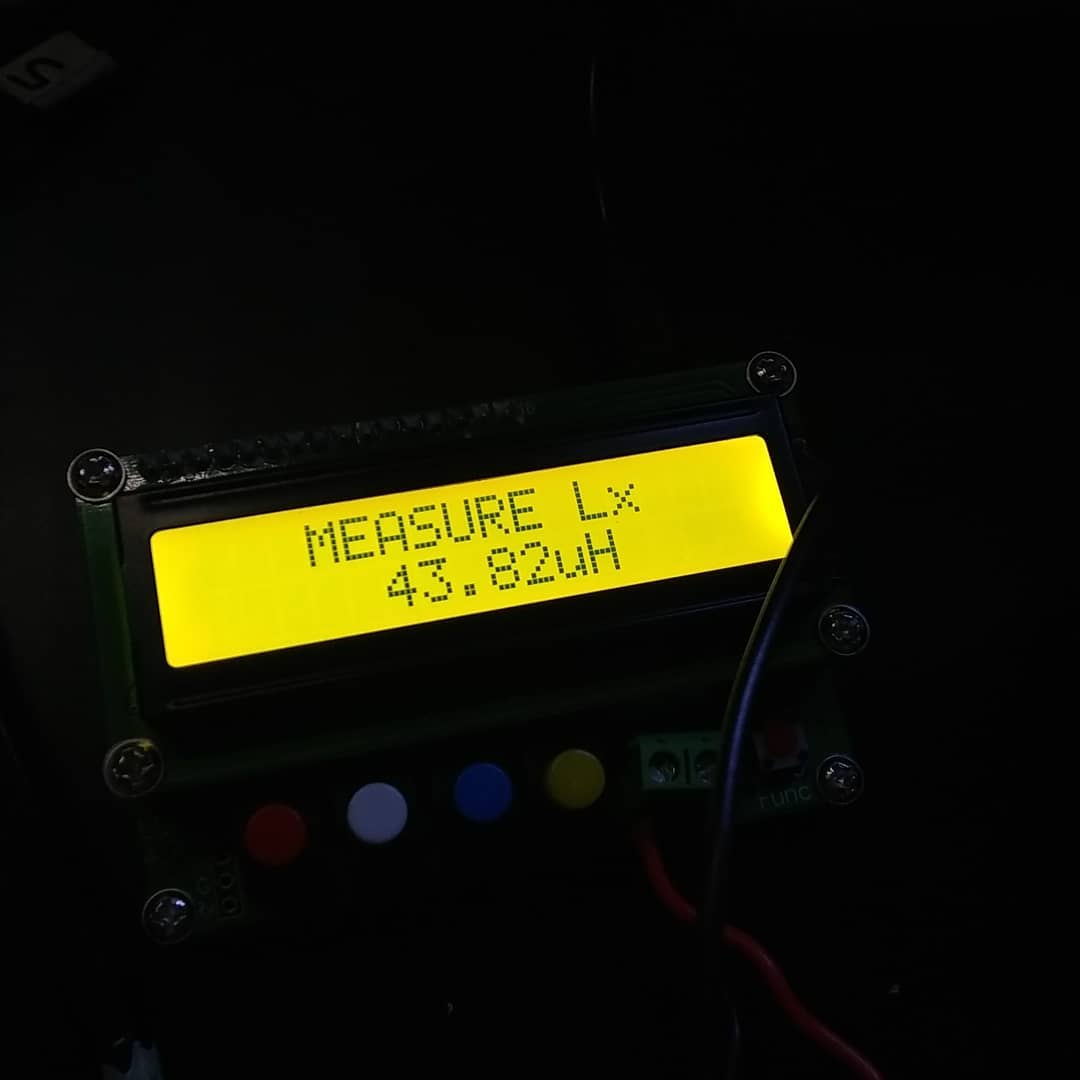
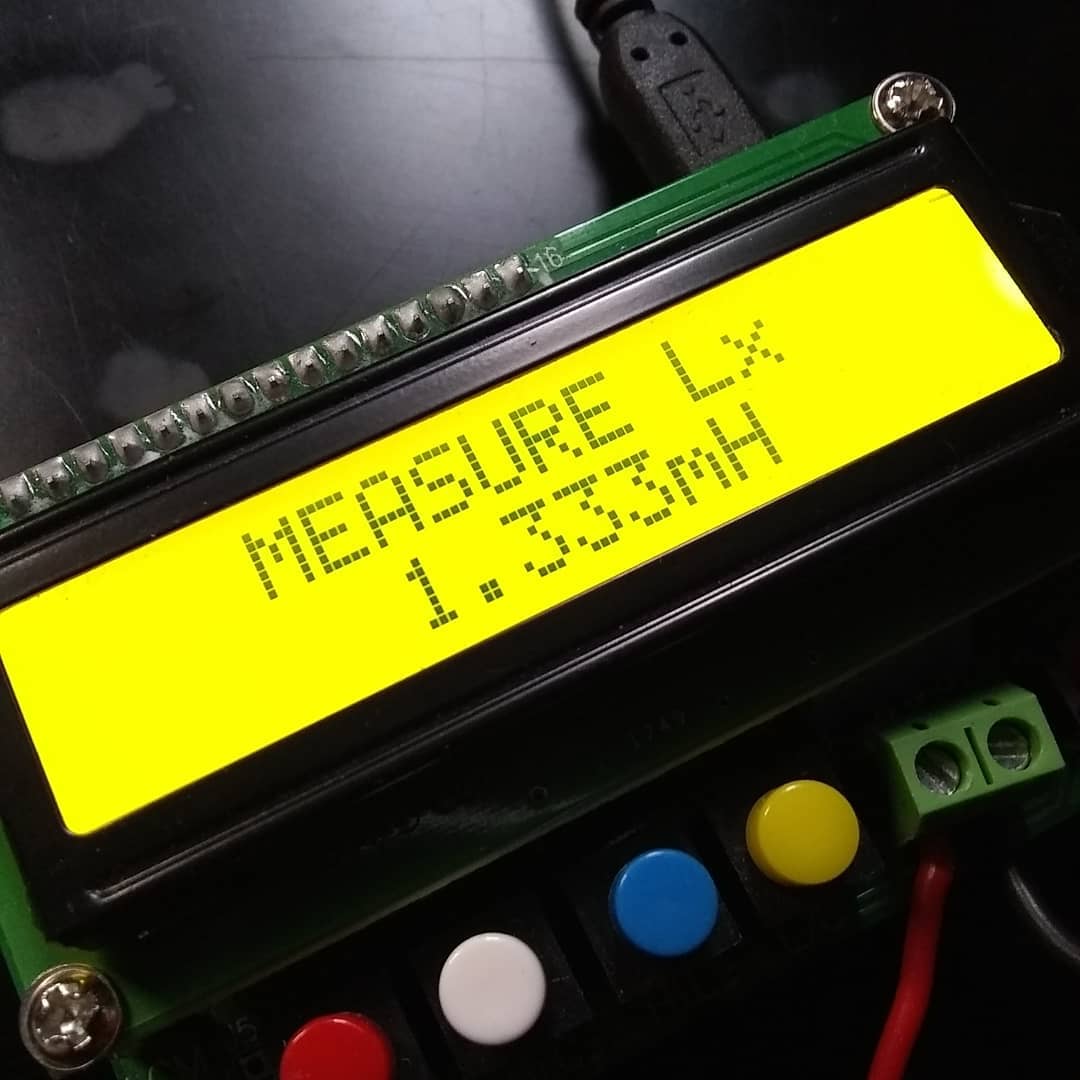
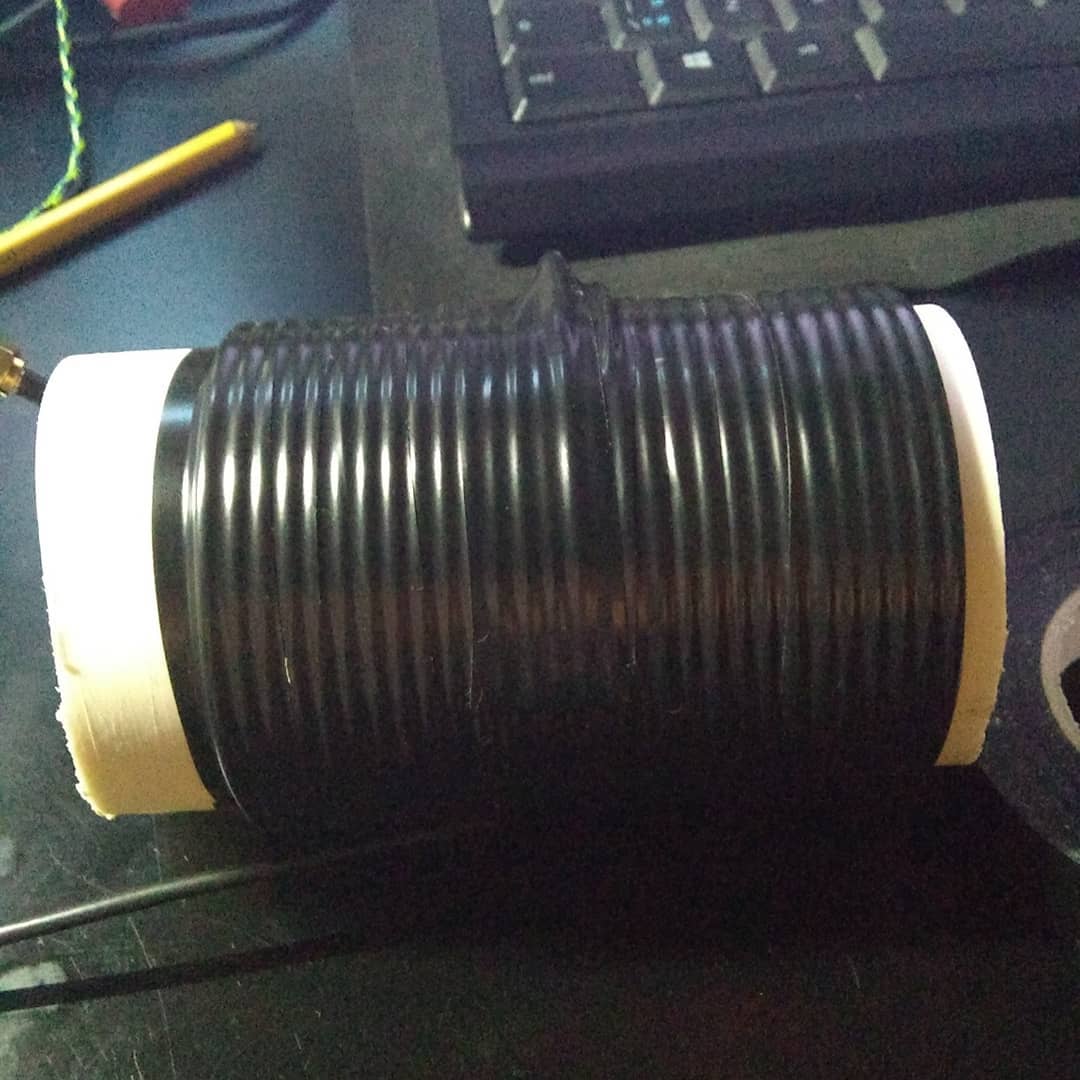
- With the regenerative reciever project and my SDR, I also needed an antenna that can operate at both 7 MHz and 14 MHz, so I began to make a 40m dipole antenna (20m physical length) with choking coils midway though to give me both a 7 MHz and 14 MHz resonance. The coil values were called to be approximately 45 microhenrys, so I began winding them around a 3 inch piece of PVC. Using an LC meter I recently purchased, I was able to measure the inductance fairly accurately.
- Another project I worked on briefly was converting a Wii remote nunchuck into a controller for games on my PC.
April 2019
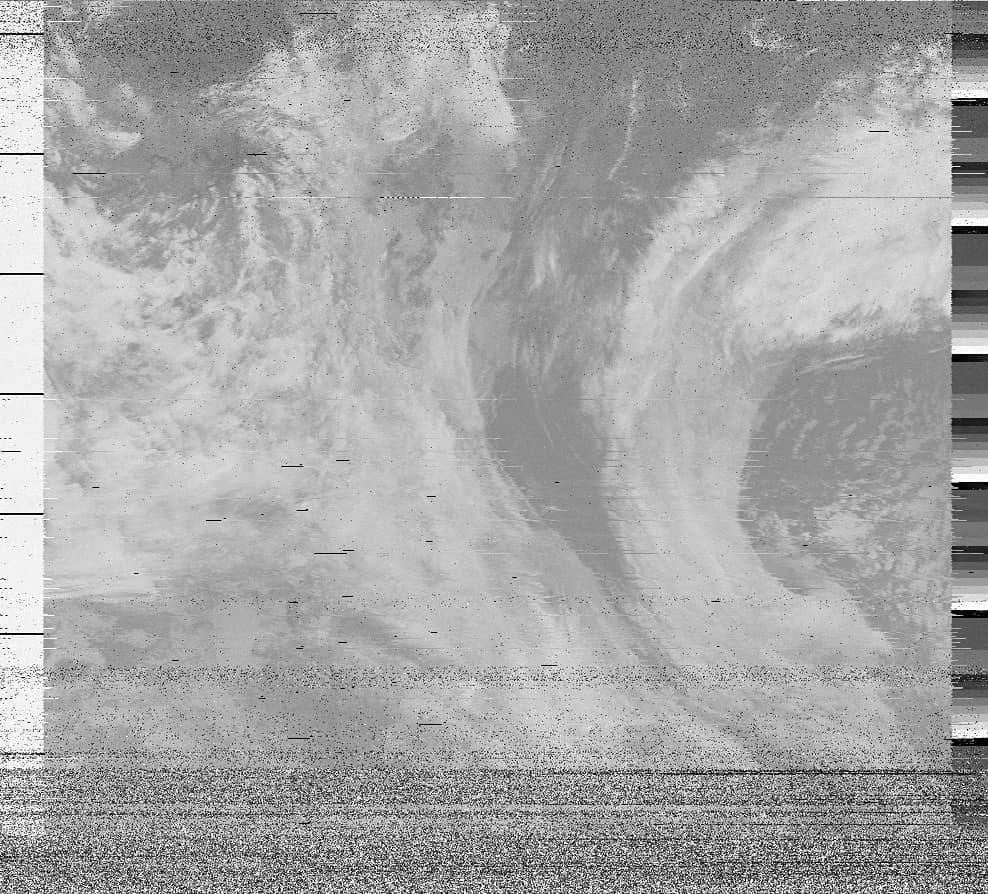
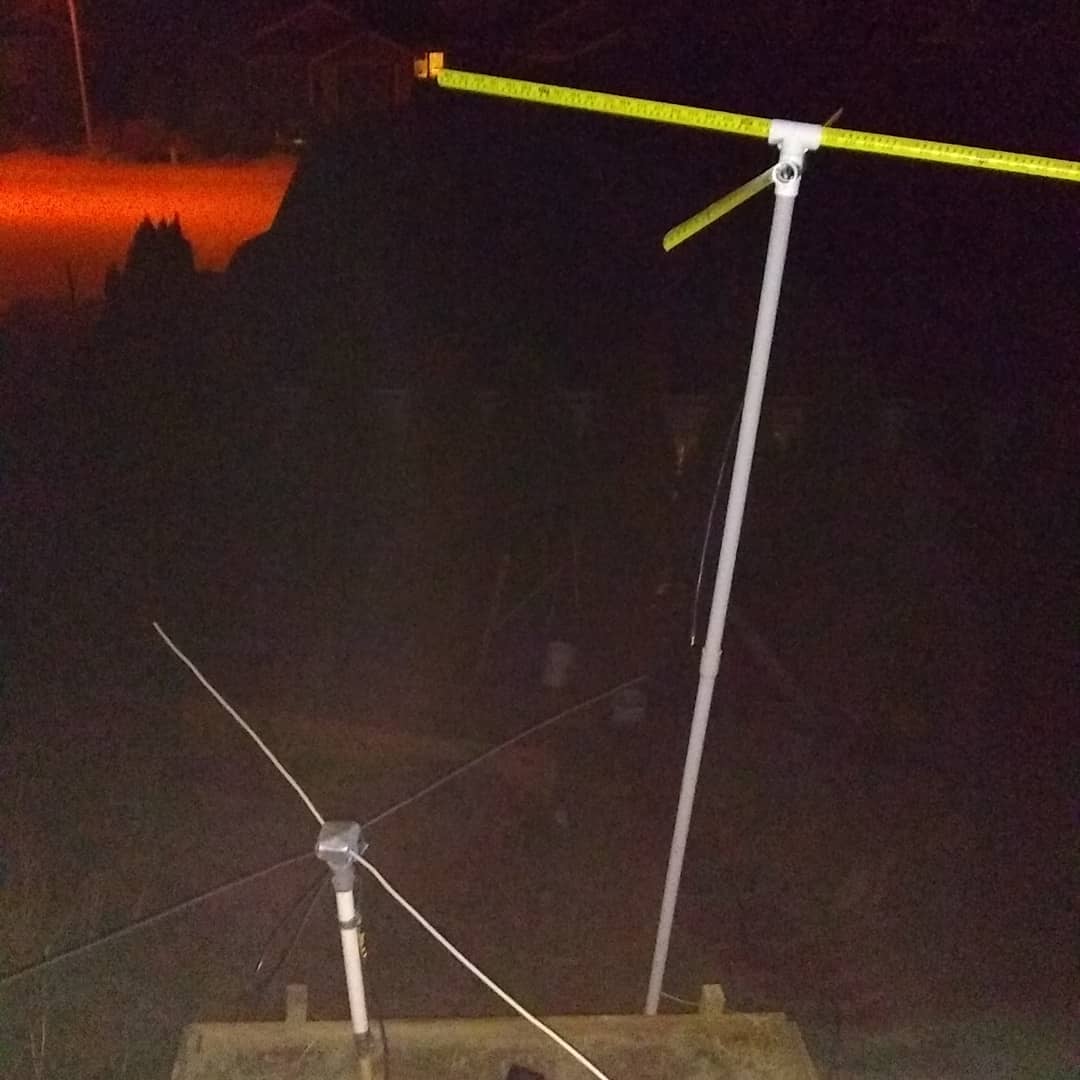
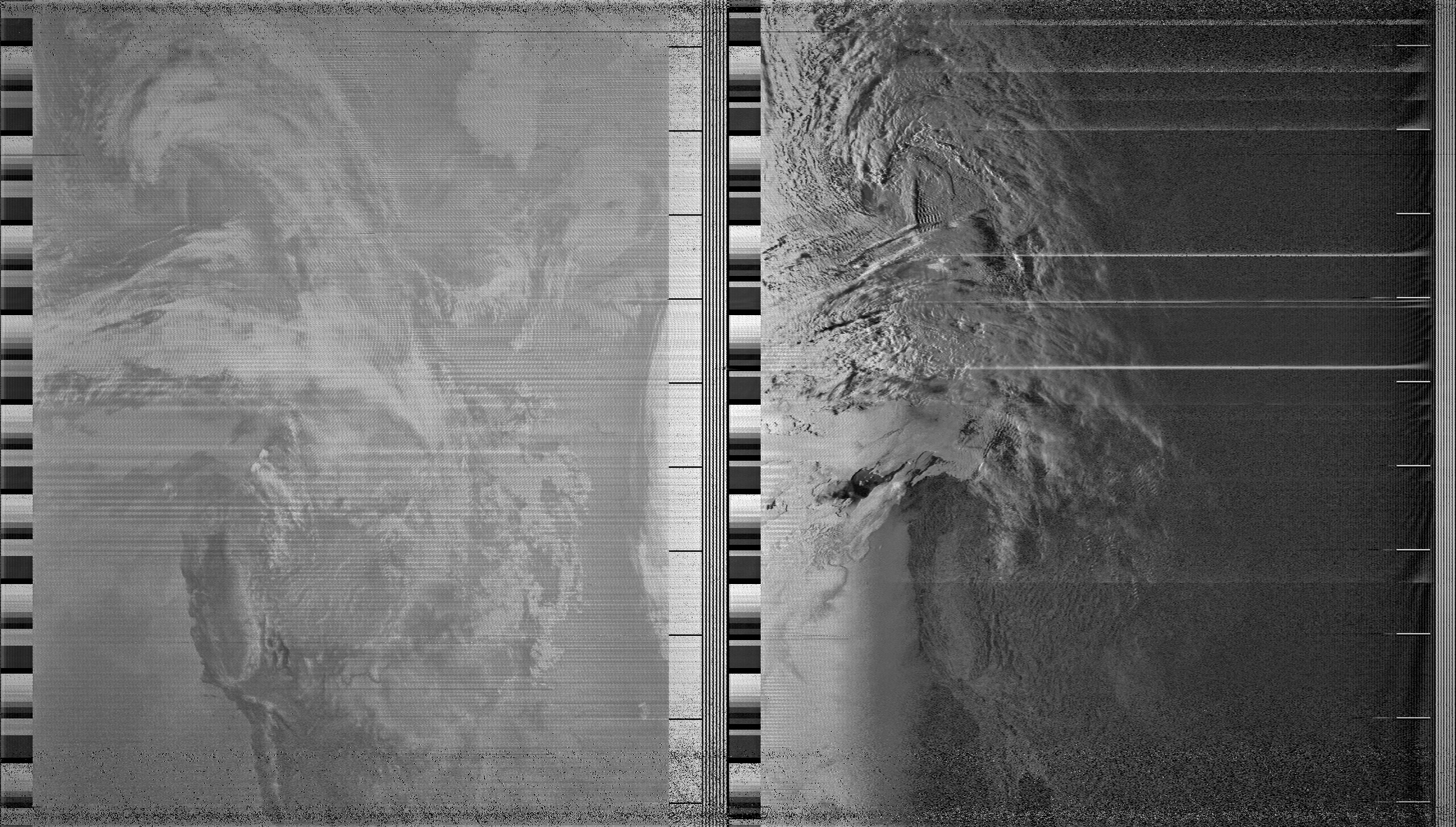
- In april of 2019 I began my attempts at capturing the image transmitted from the NOAA-19 satellite that flys overhead my area. The NOAA-19 satellite transmits a black and white image over 137.1 MHz using automatic picture transmission (APT). To capture these signals however, I needed a suitable antenna that can recieve circularly polarized radio waves. The antenna of choice for simplicity was a turnstile antenna. The idea here is that you have two dipoles tuned to 137.1 MHz, and their feedpoints are connected by a set length of coax to provide a 90 degree phase shift. My first prototype was made with 14 AWG solid core wire connected to a 3D printed jig and mounted to some spare 1 inch conduit tubing as a mast. This antenna worked well enough that I was able to capture a semi-decent image.
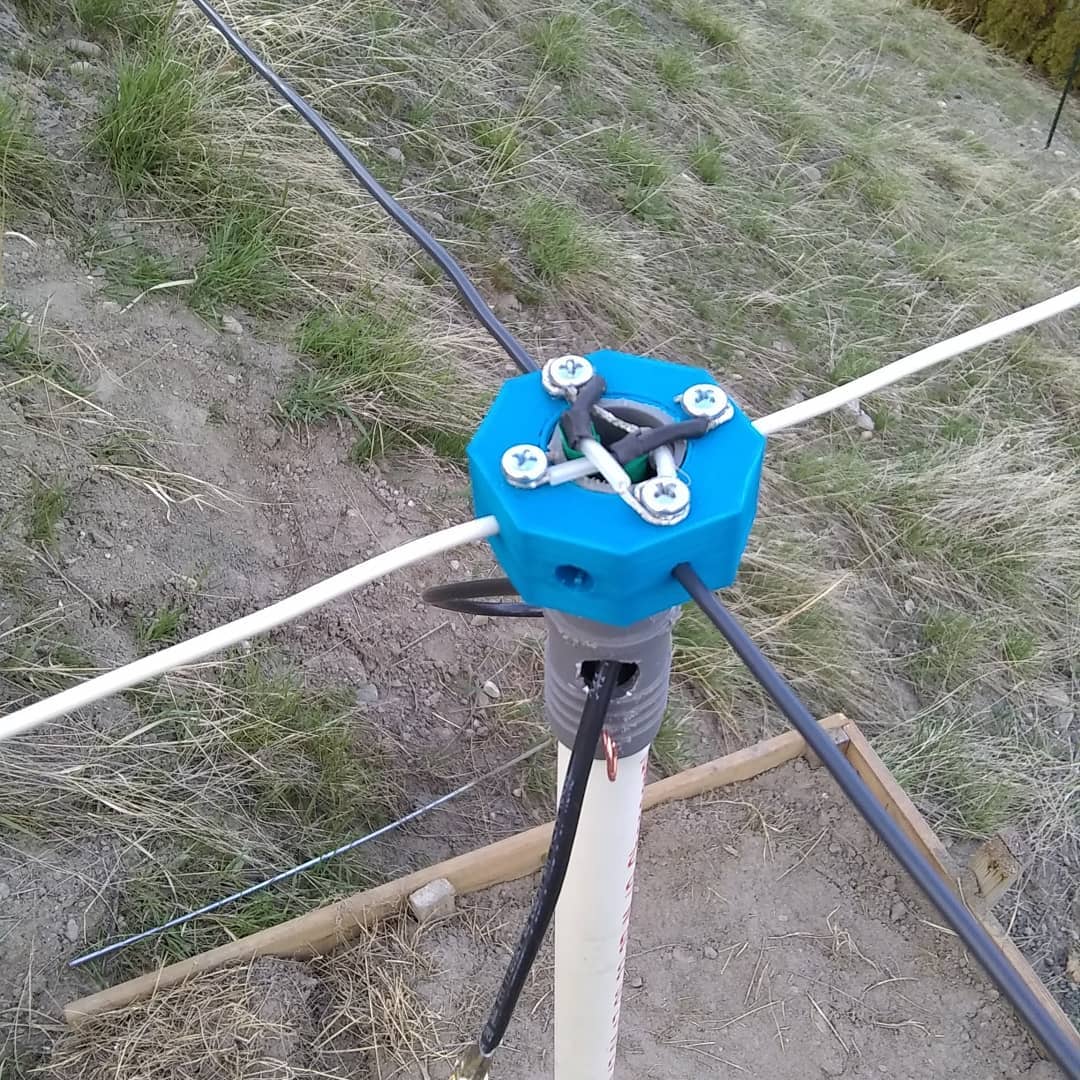
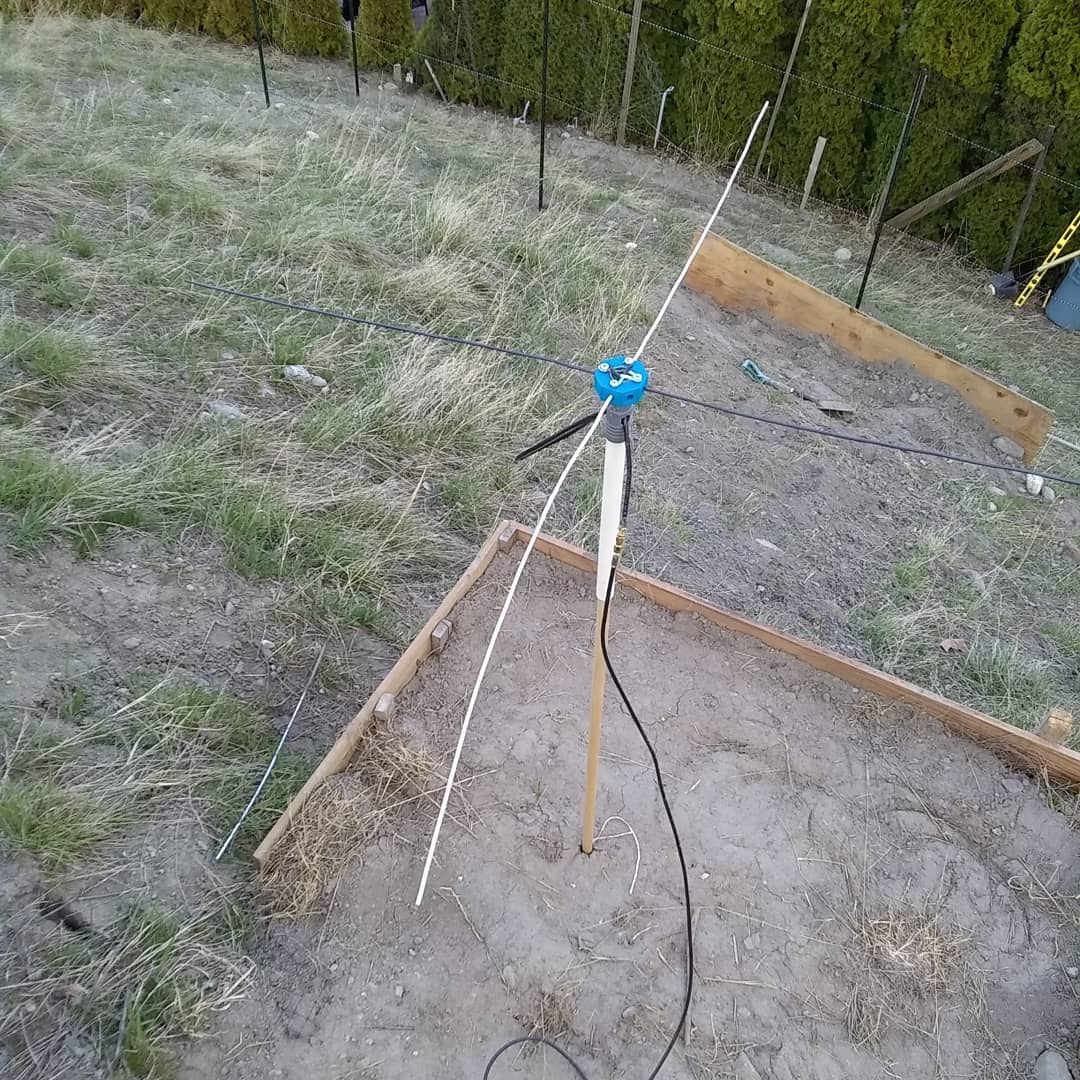
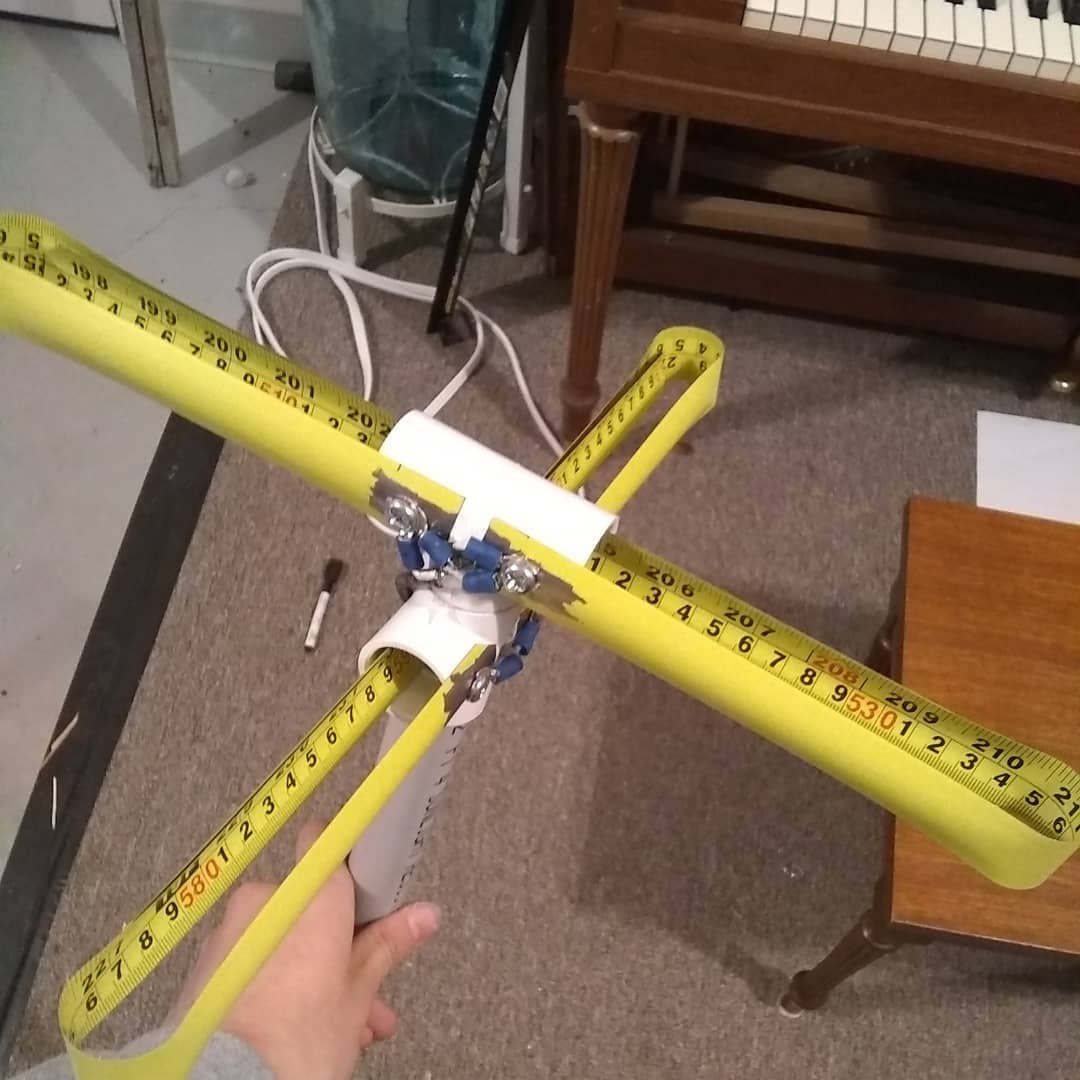
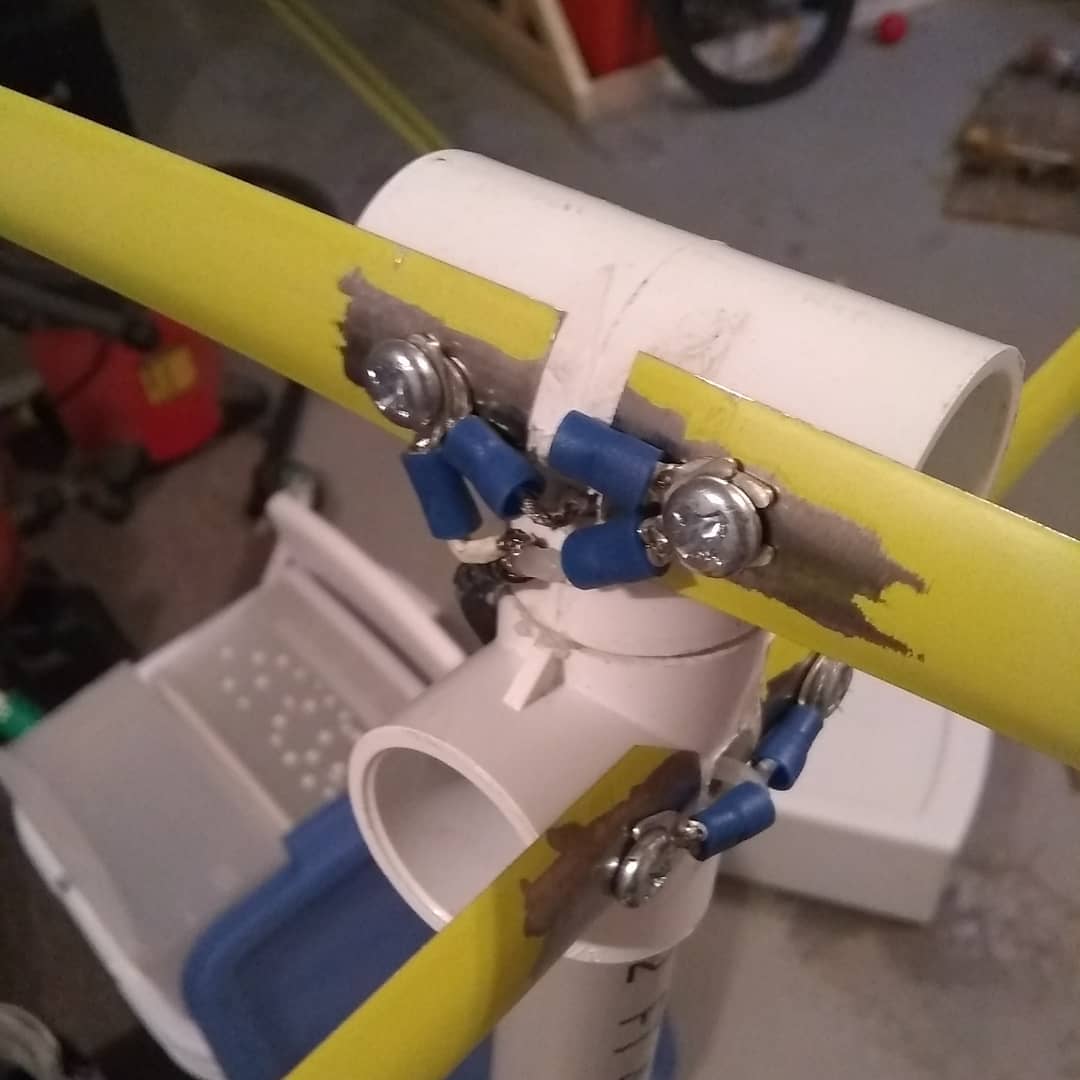
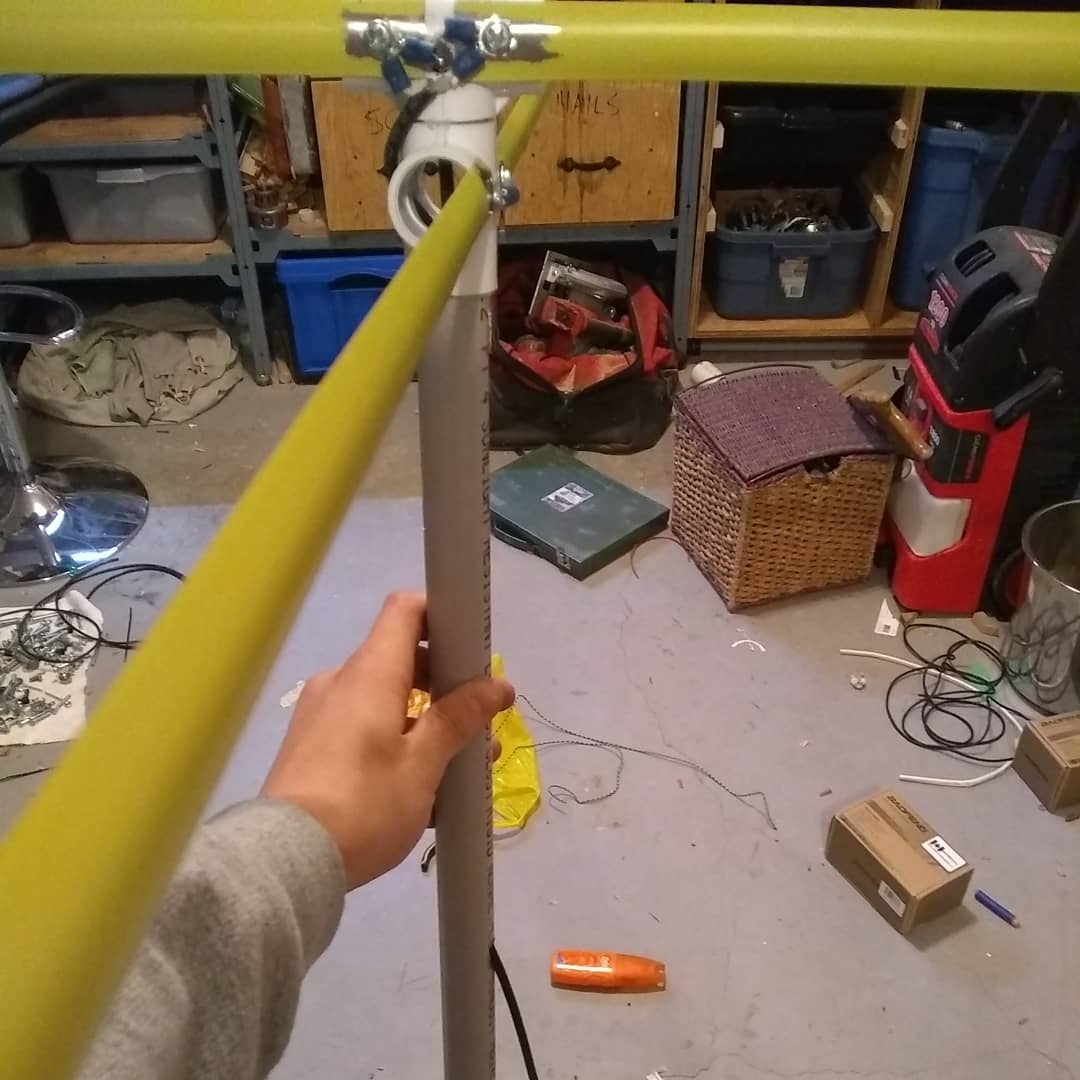
I then opted to make a second better antenna with a slightly more rigid construction using PVC fittings and tape measures. The amateur radio community finds ways to make antennas as cheap and effective as possible, and tape measures are the way to do that. Since tape measures have the curve to them, it makes for an easy to fold and store antenna, but also offers good rigidity in light wind.
I cover more on this later on May 2020.
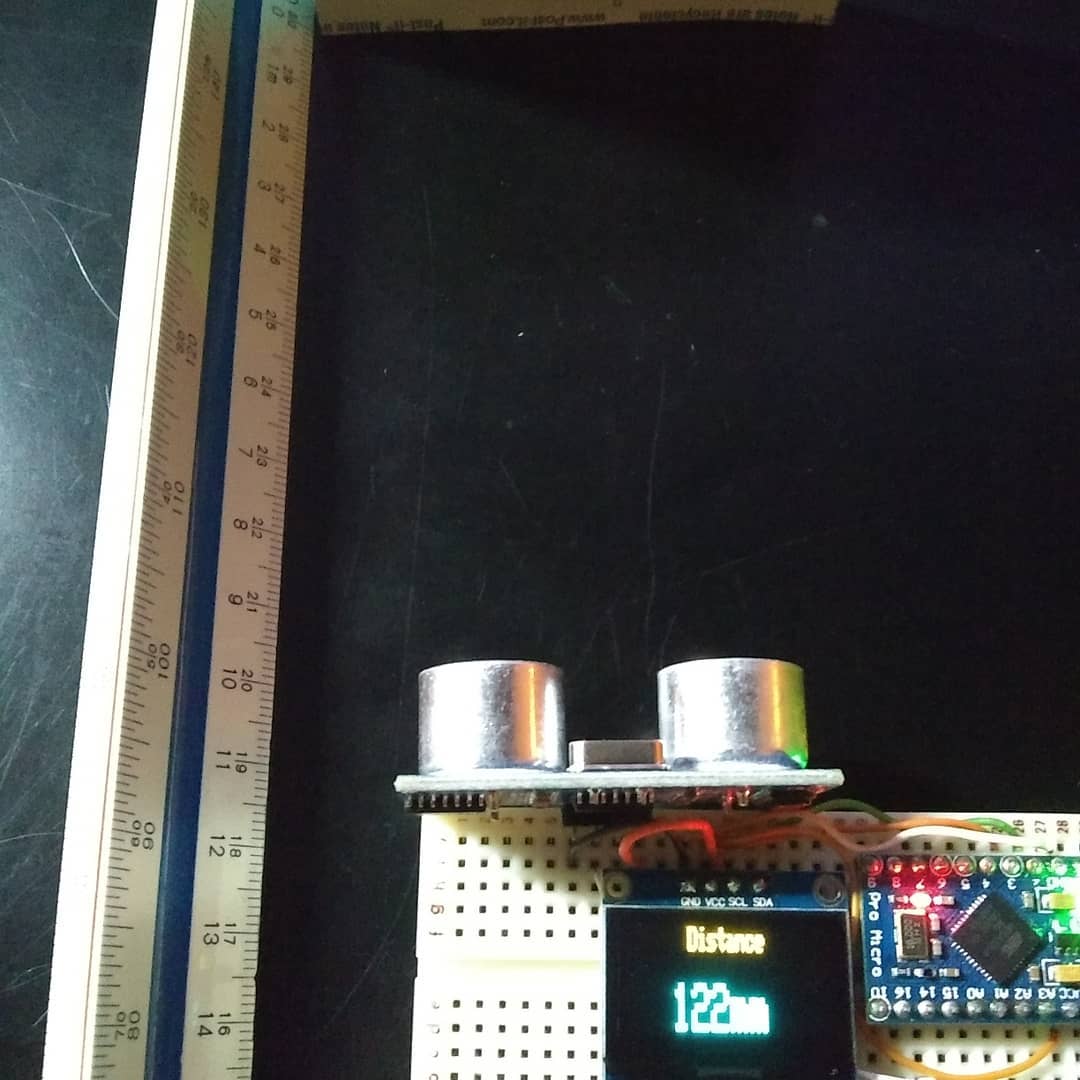
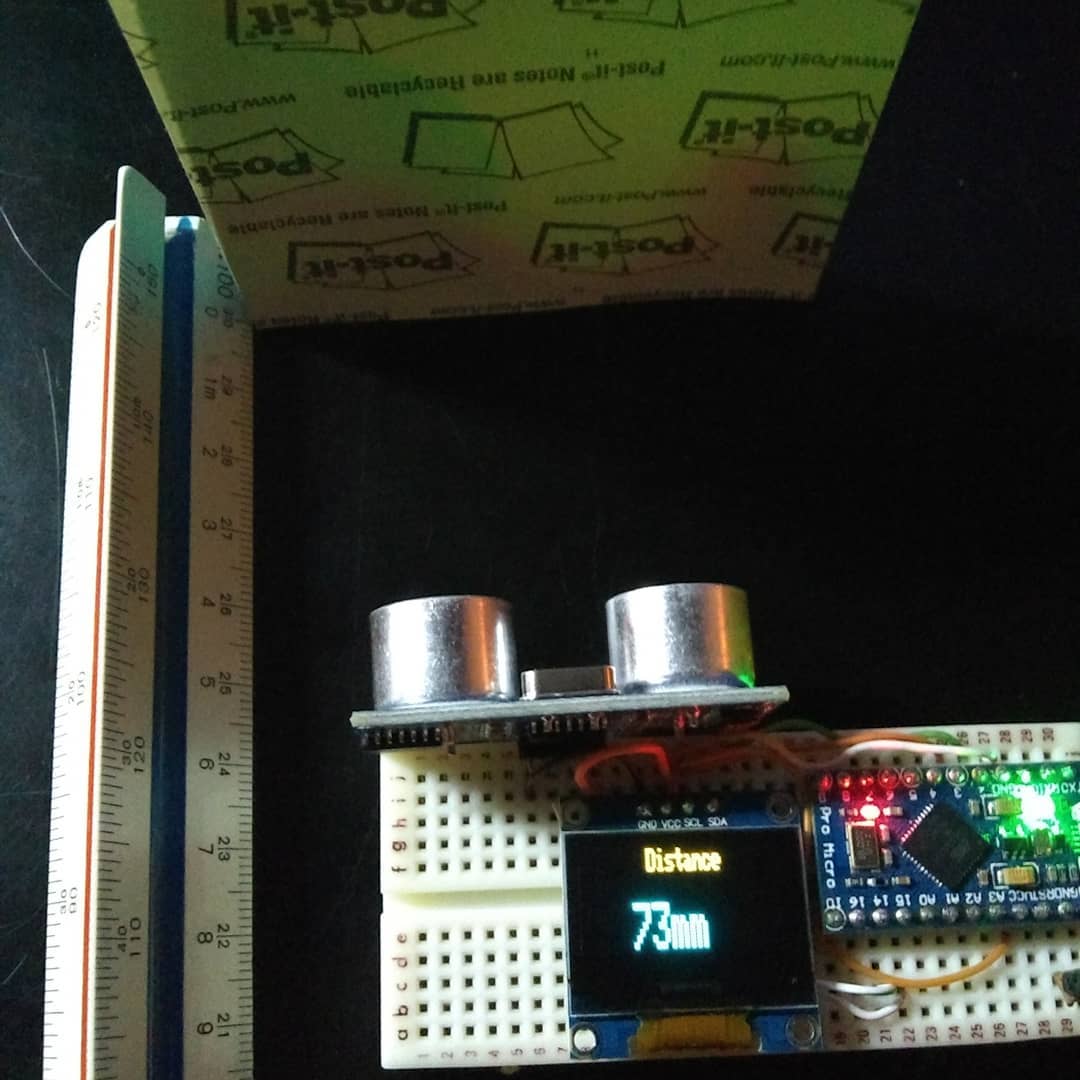
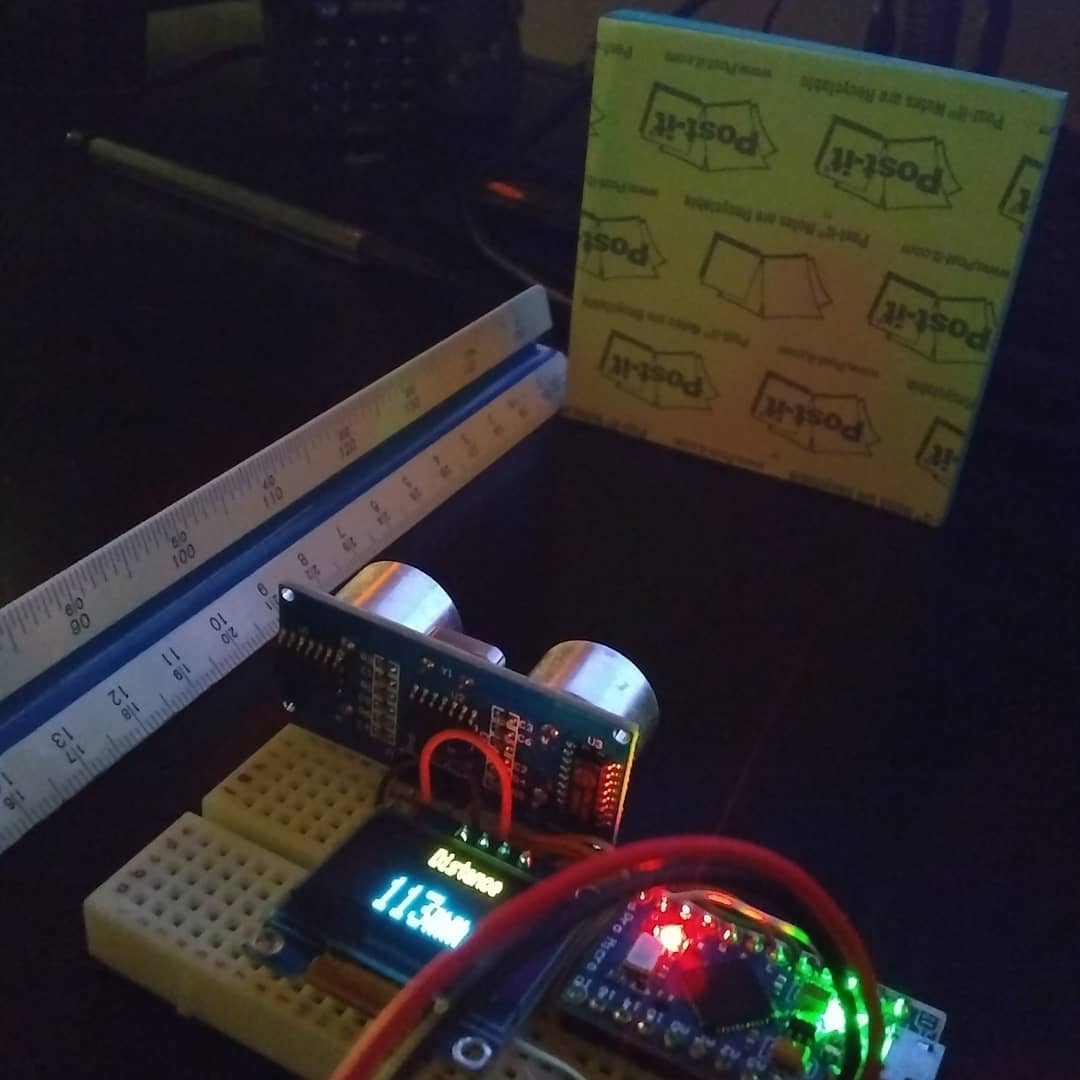
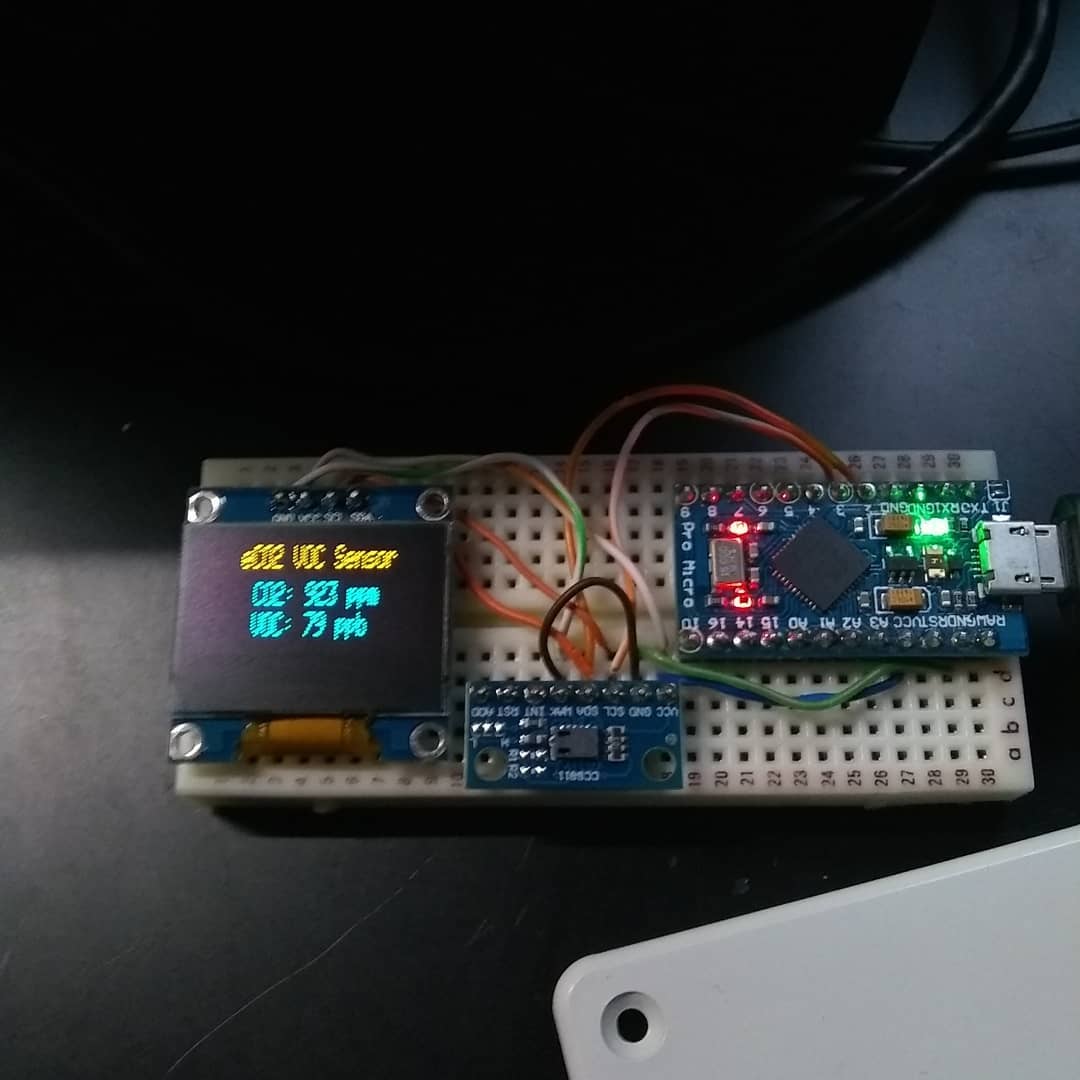
- Another experiment I worked on at this time was working with acoustic radar sensors and volatile organic compound sensors using an Arduino Pro Micro and OLED display. This was more of a functionality test of both the sensors, display, and software libraries.
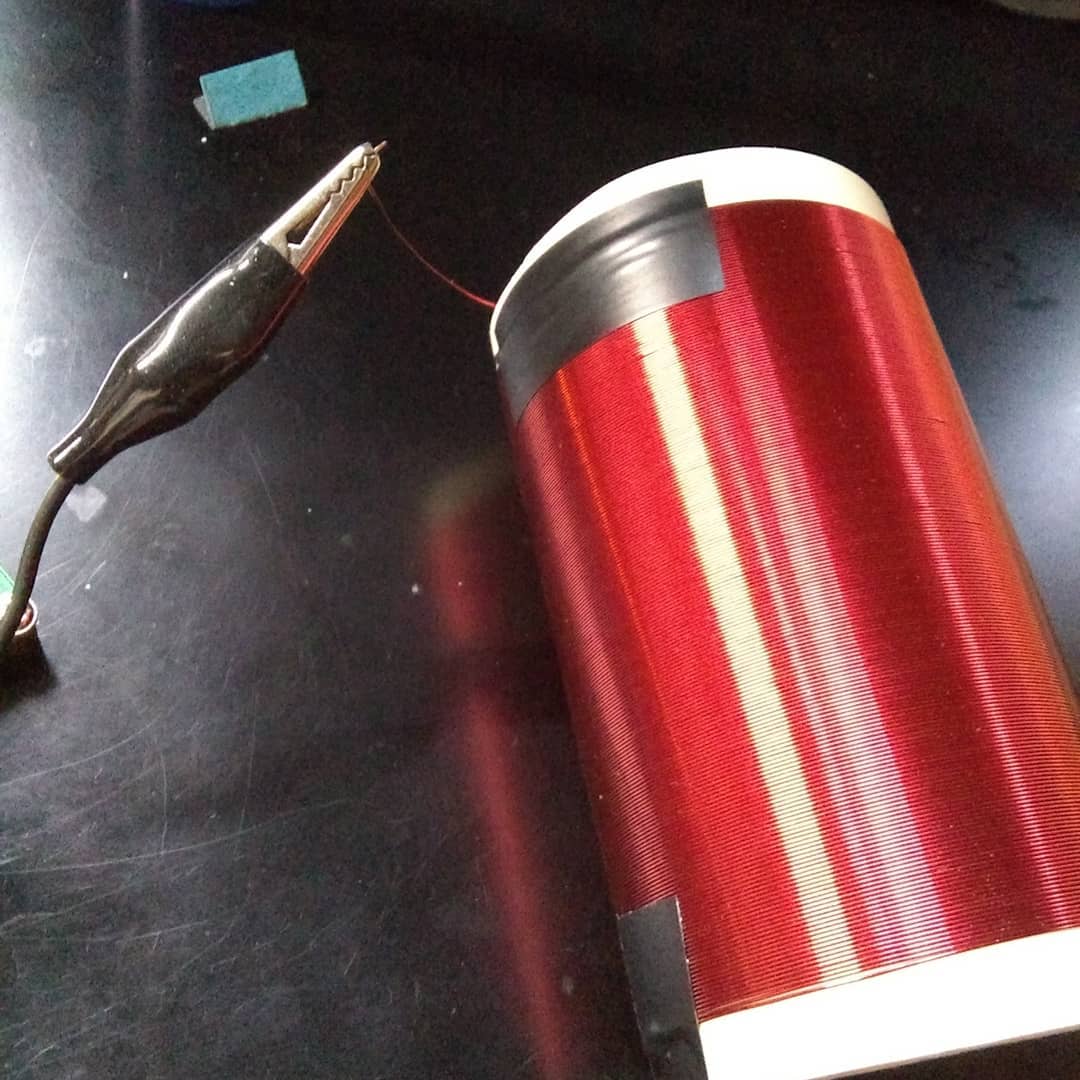
- I was also playing around with more coils, this time I was making the secondary for a small tesla coil. Spoiler alert, it didn't work, and the reason: not enough turns. Never enough turns! But it was good practice, and the coil looks very clean which is always nice to see.
May 2019
- May was the month I completed yet another monumental project. I was able to finish my regenerative reciever, and it worked! I was able to listen to signals from 6.5 MHz all the way up to around 8 MHz. I packaged everything into a wooden box which you may recognize it from the mini subwoofer project I made at the beginning of the year. Being that it is a regenerative reciever, there are two knobs you need to turn in either to tune the radio. The blue knob is the main frequency selector, and the black round knob is the regeneration amount.
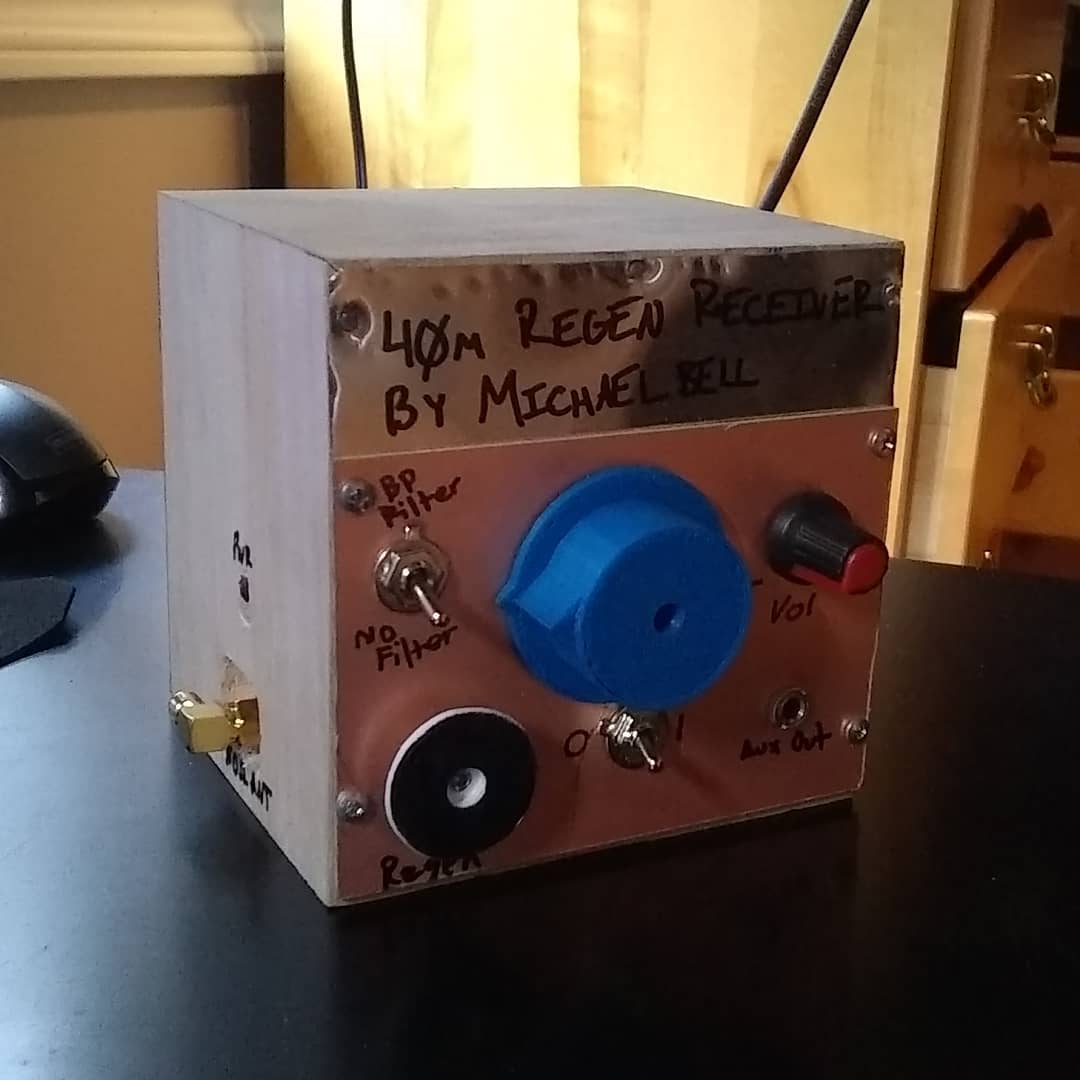
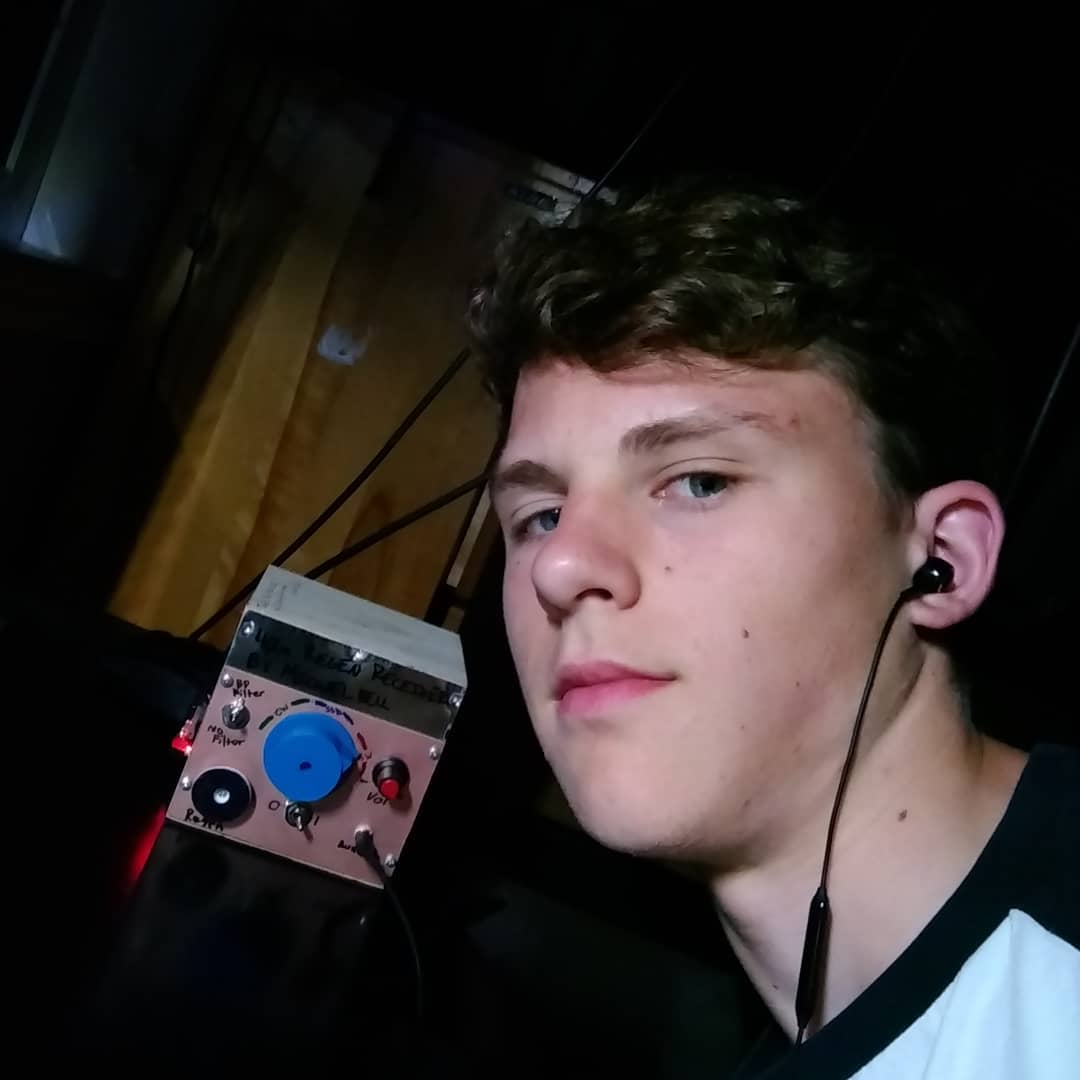
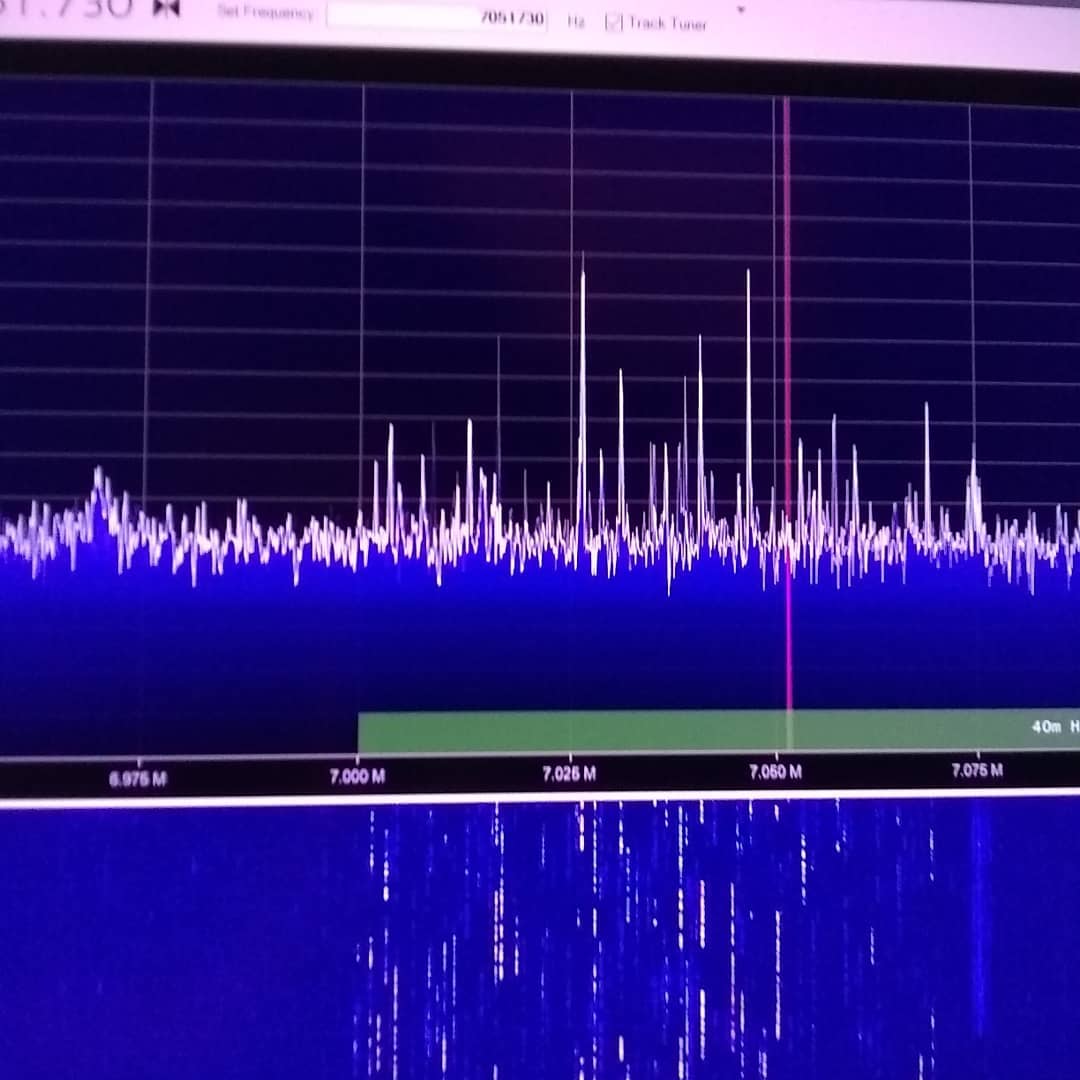
- While listening in on various stations such as a spanish shortwave station around 6.6 MHz and various morse code signals from amateur radio operators, I was also viewing the signals from my SDR. This night was particularily busy, which was a great time to test my regenerative reciever.
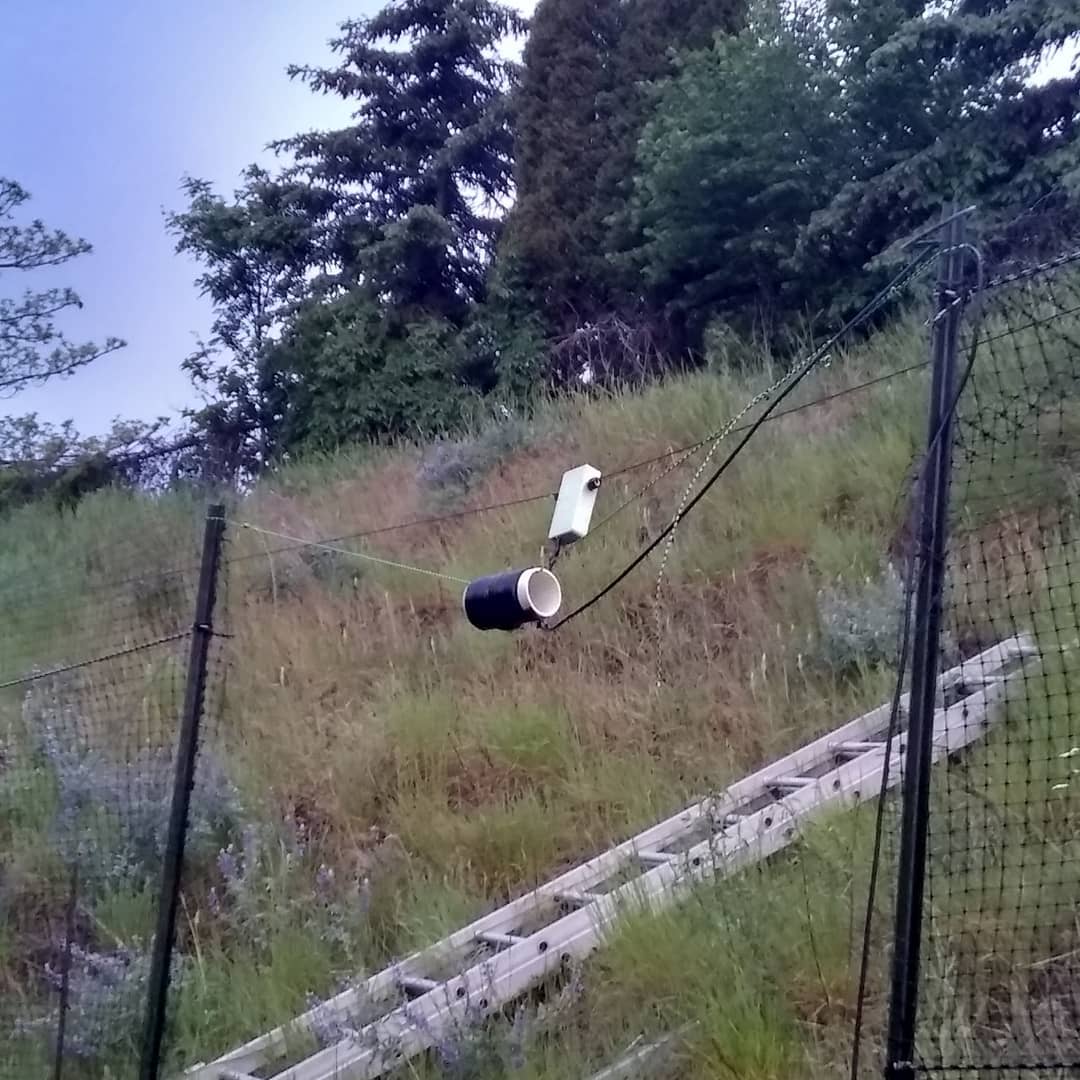
- The antenna I used to recieve these signals was a regular quarter-wavelenth dipole tuned to 7.1 MHz. I made a large choke at the feedpoint to try and improve my reception.
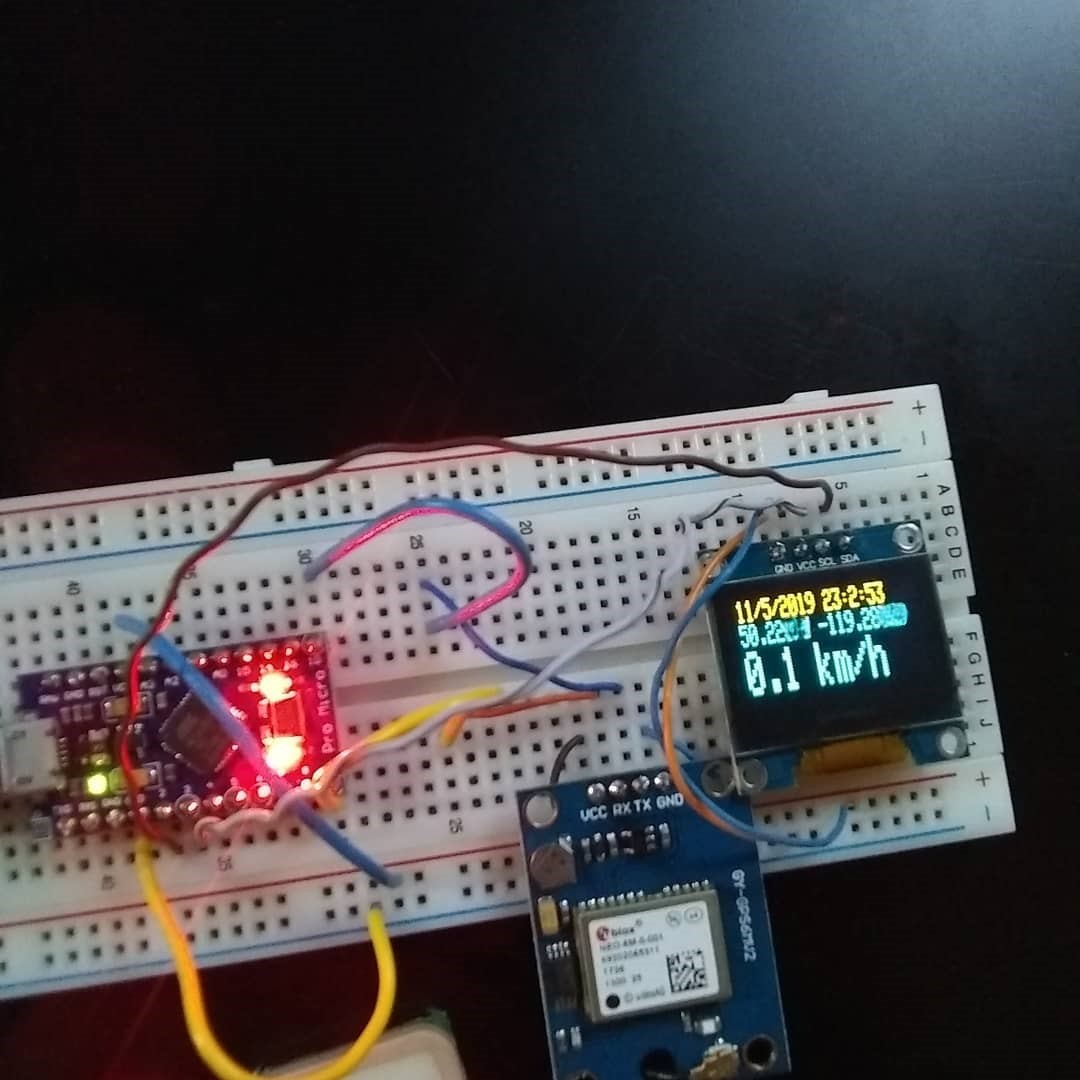
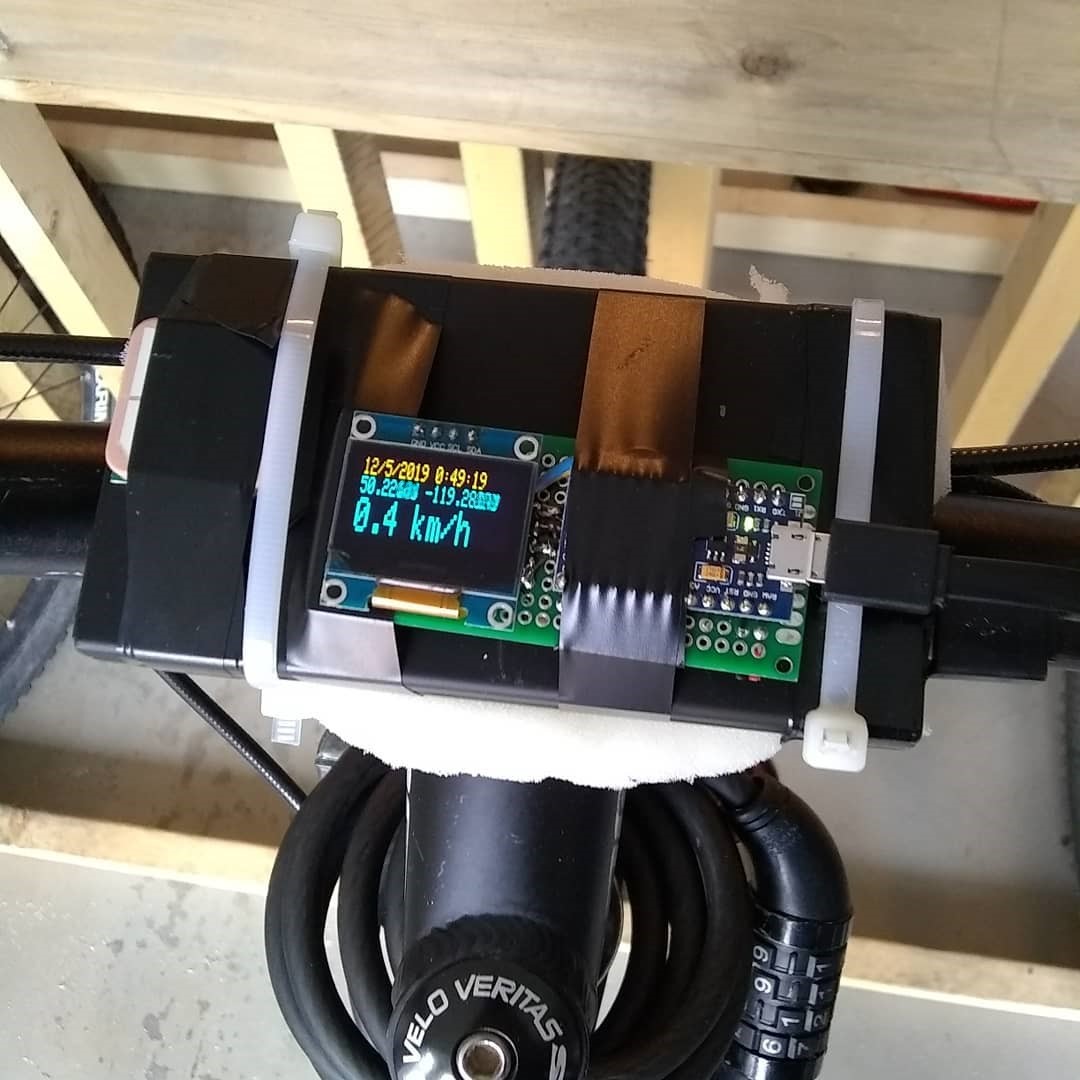
- During this month I also worked on a few other projects. I wanted to make a speedometer for my bike, so I grabbed an Arduino and GPS module, and with a little bit of programming I created a speedometer. It was rather crude but worked great. One issue however was that the OLED was difficult to see in the sun. A takeaway from this project is that LCDs with no backlight are much better in sunlit environments.
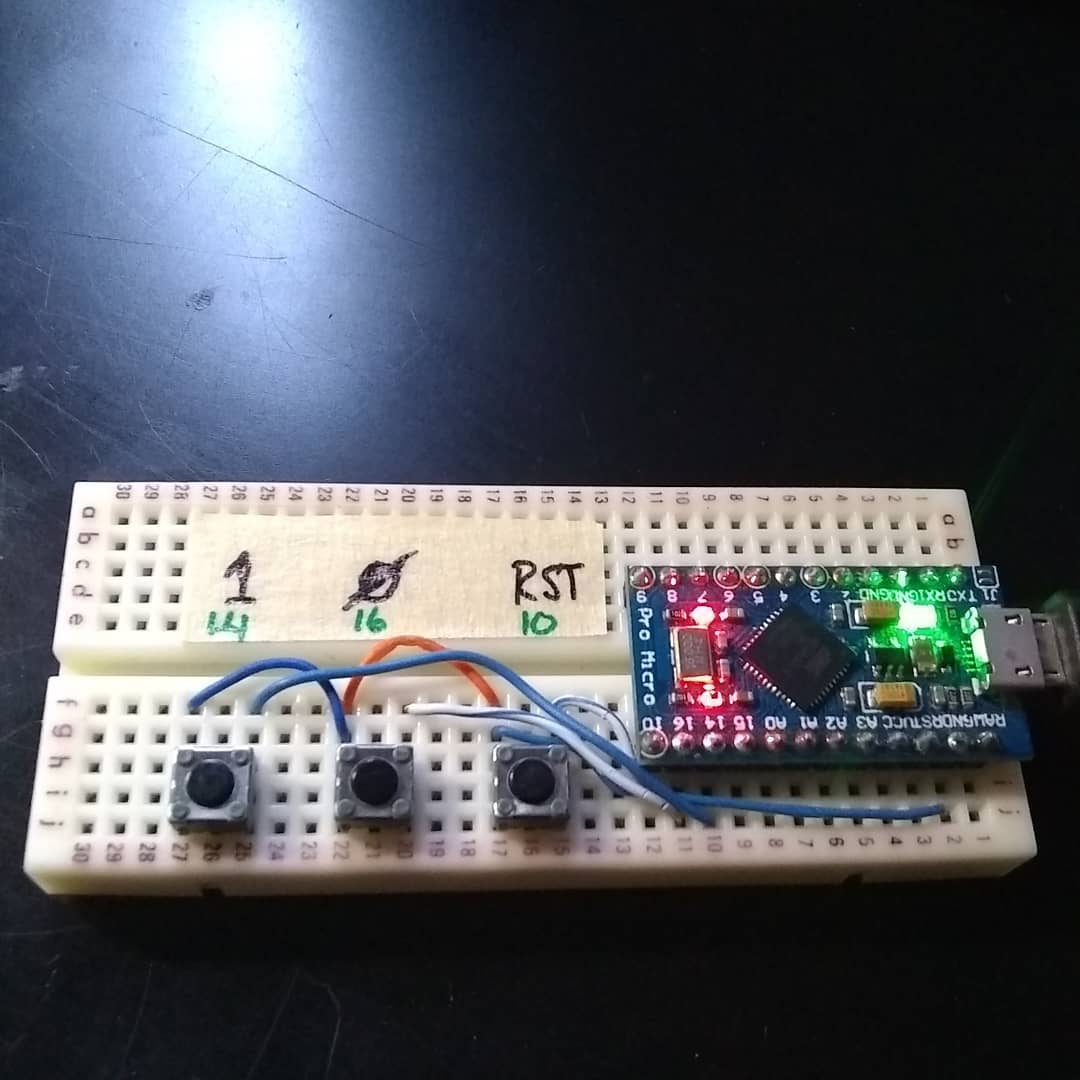
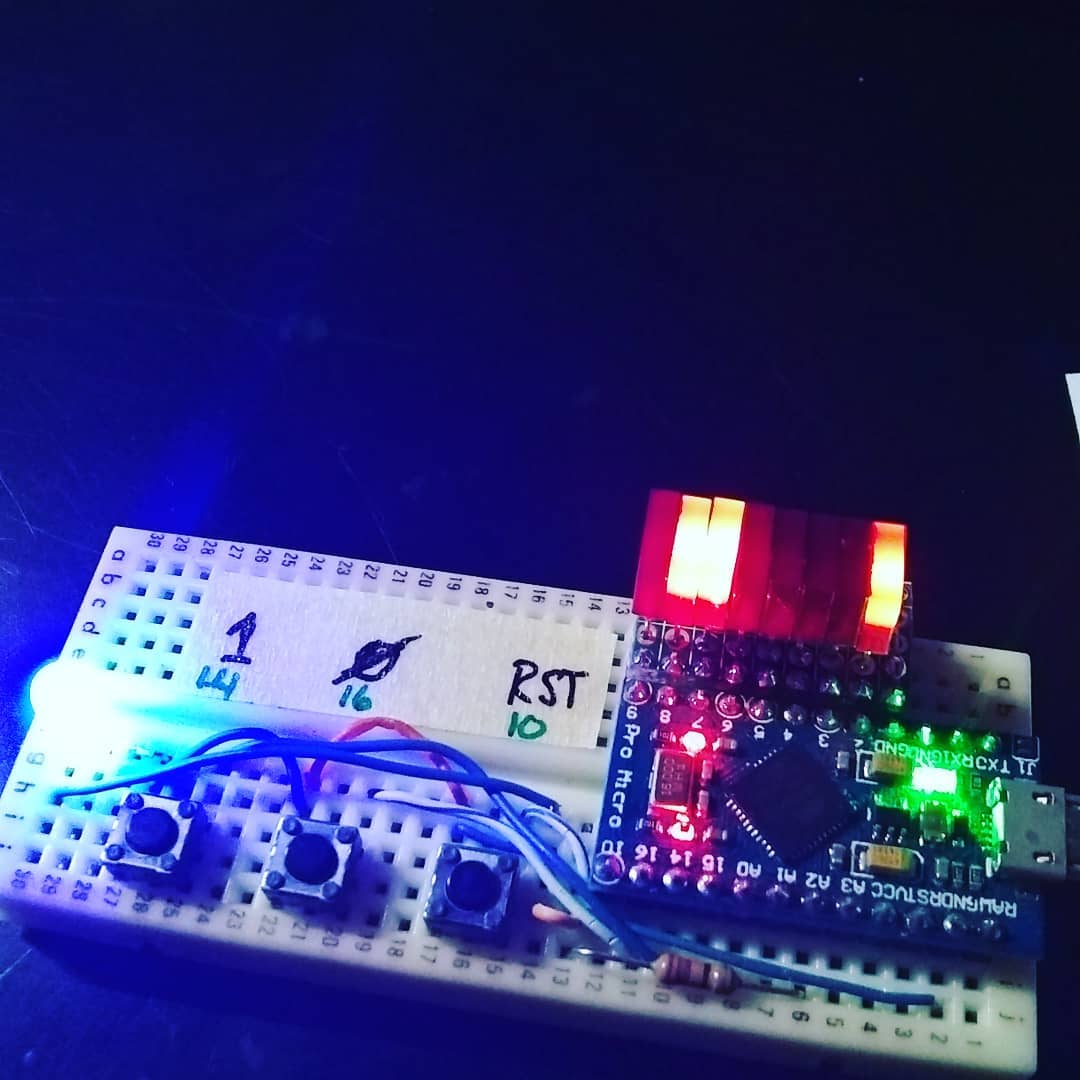
- Another project I worked on was a very useful binary keyboard. What does it do? Well, it makes the process of typing a single letter 8 times slower and more complicated! Essentially, what you do is type out the sequence of 1's and 0's according to the ascii character you want to send, and once the register is full, the letter is sent as a keyboard input to the computer. If you make an error while typing out the binary ascii character, you press the reset button to clear the register and then you can start over. Was it practical, no. Was it fun, yes.
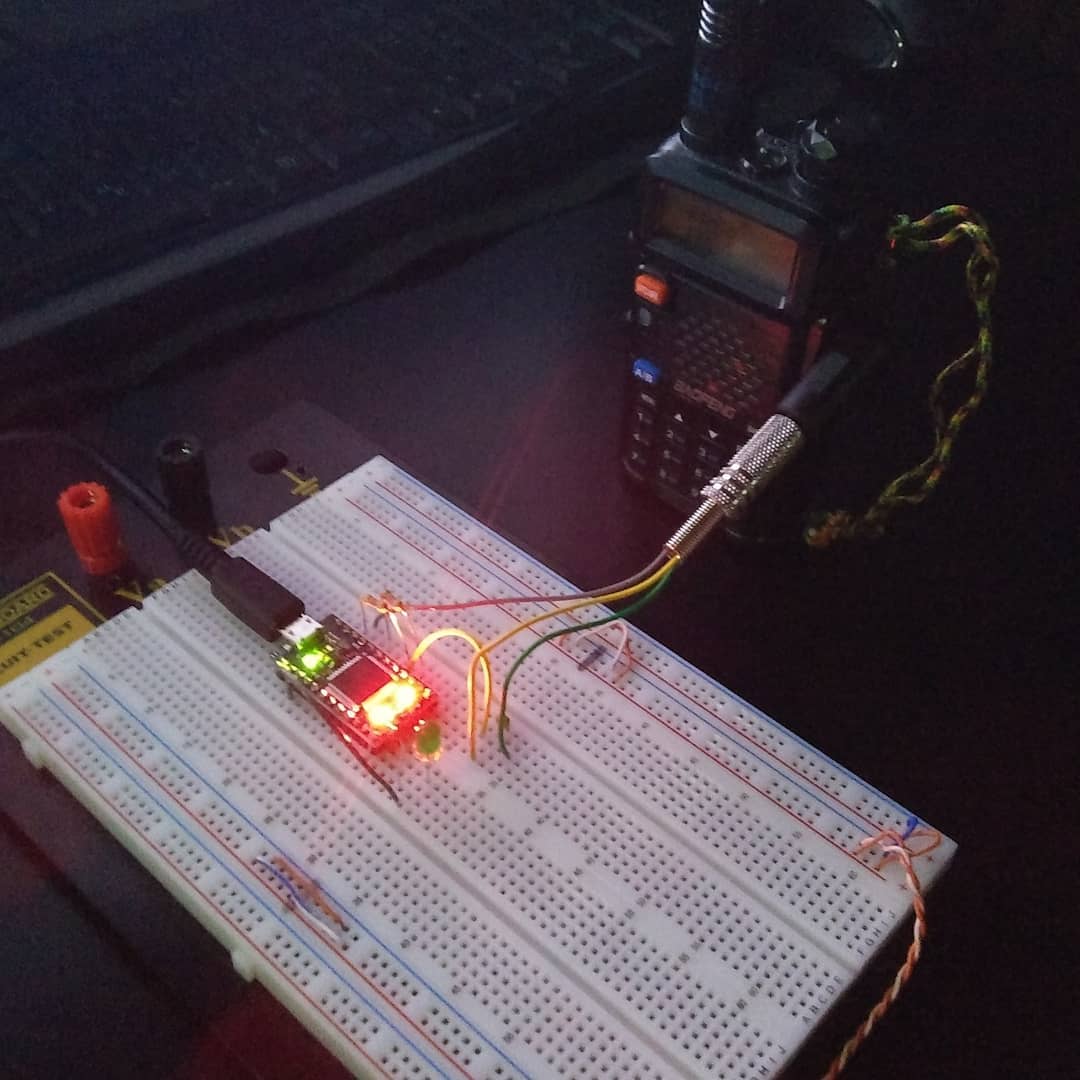
- To finish off this month, I also explored dual tone multi-frequency (DTMF) detection with my Baofeng handheld VHF radio and an arduino. Using some libraries I found, I was able to decode DTMF tones, which could be used in a number of applications and projects.
June 2019
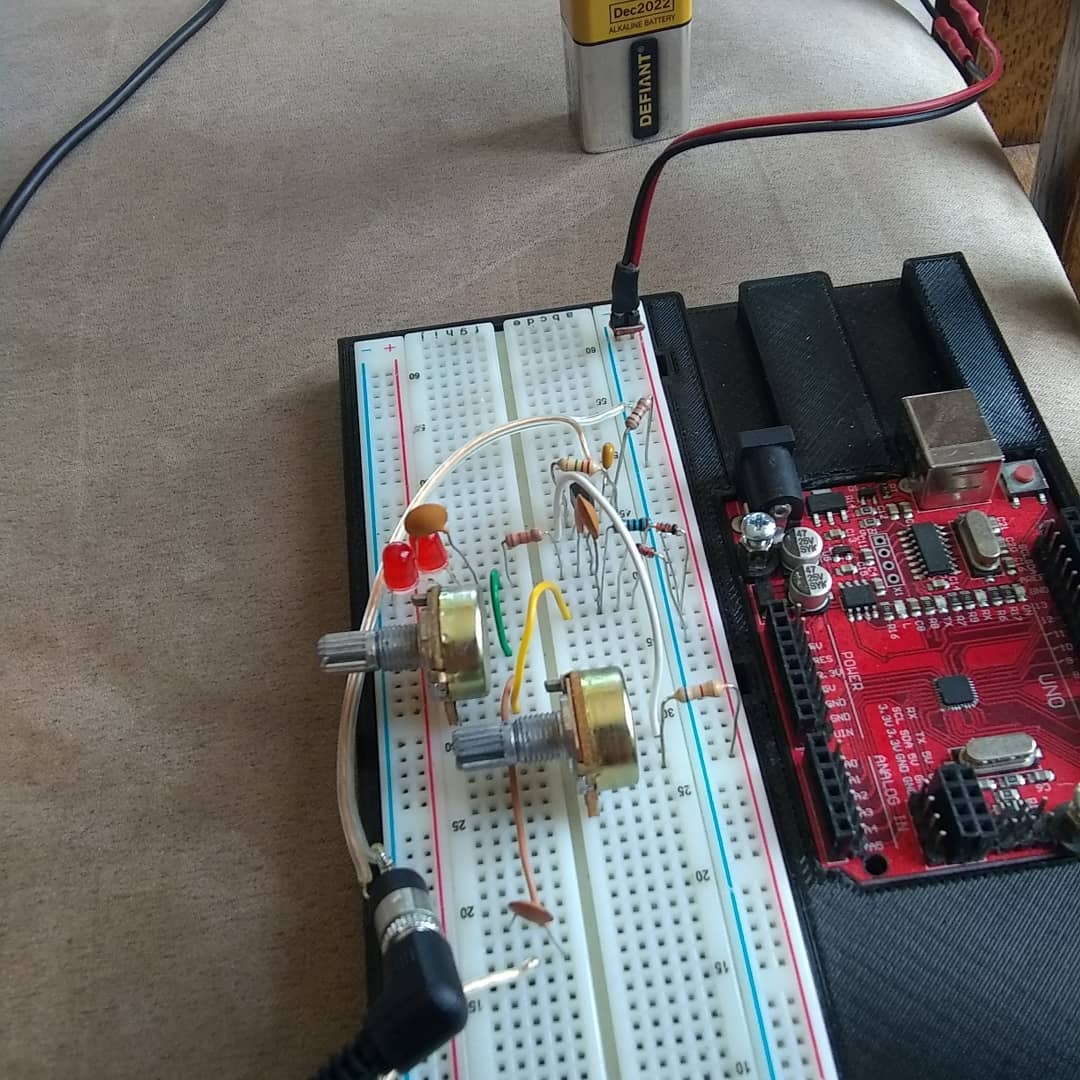
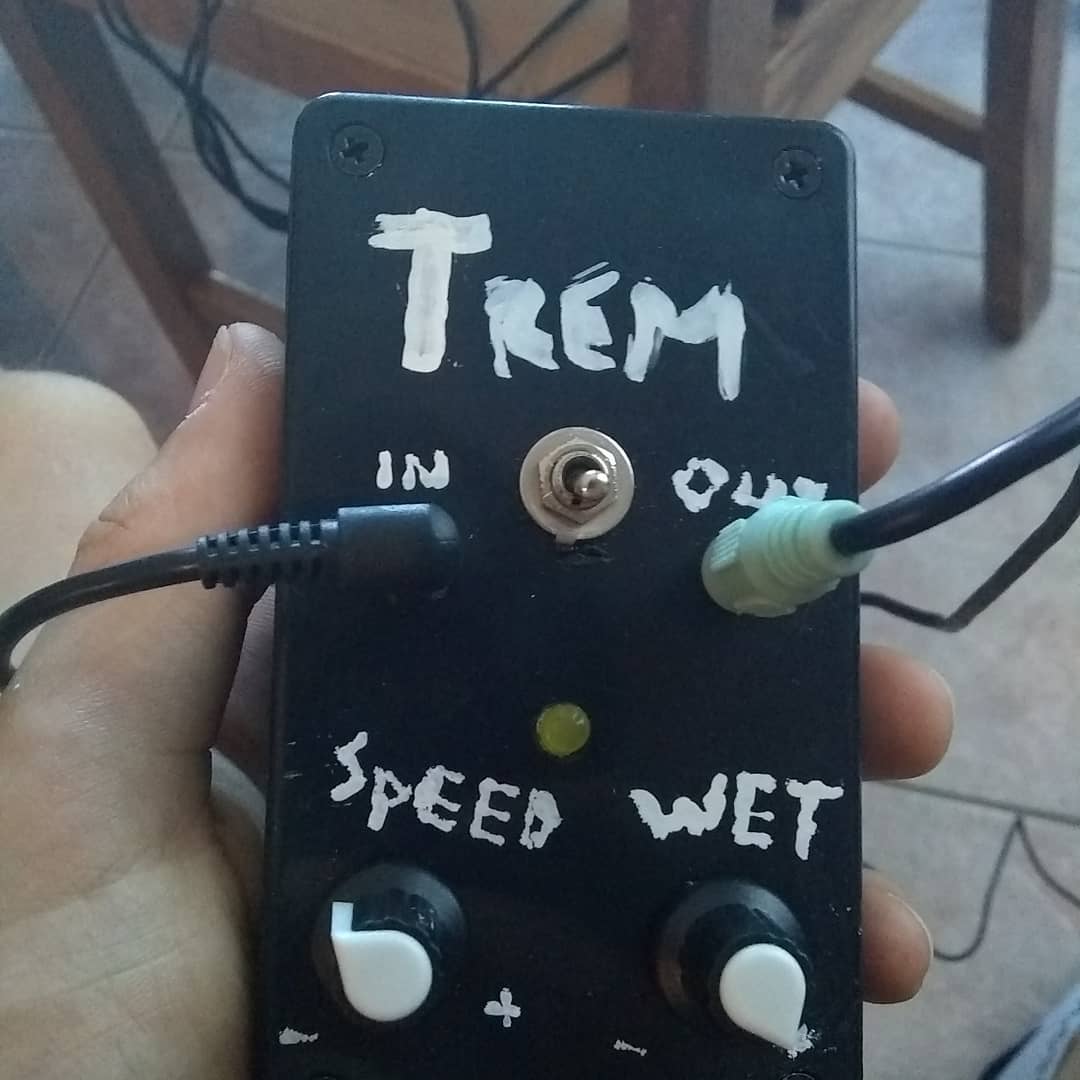
- Another project I made (which I can't find many images of) was a tremelo guitar effect pedal. I used a DIY optocoupler consisting of a white LED and a photoresistor taped together with elecrical tape. Ironically, I don't play guitar or own a guitar. Instead I tested the circuit out on my familys electric piano, and the effect was quite interesting. It worked as intended, but is an unexpected noise to hear from a piano.
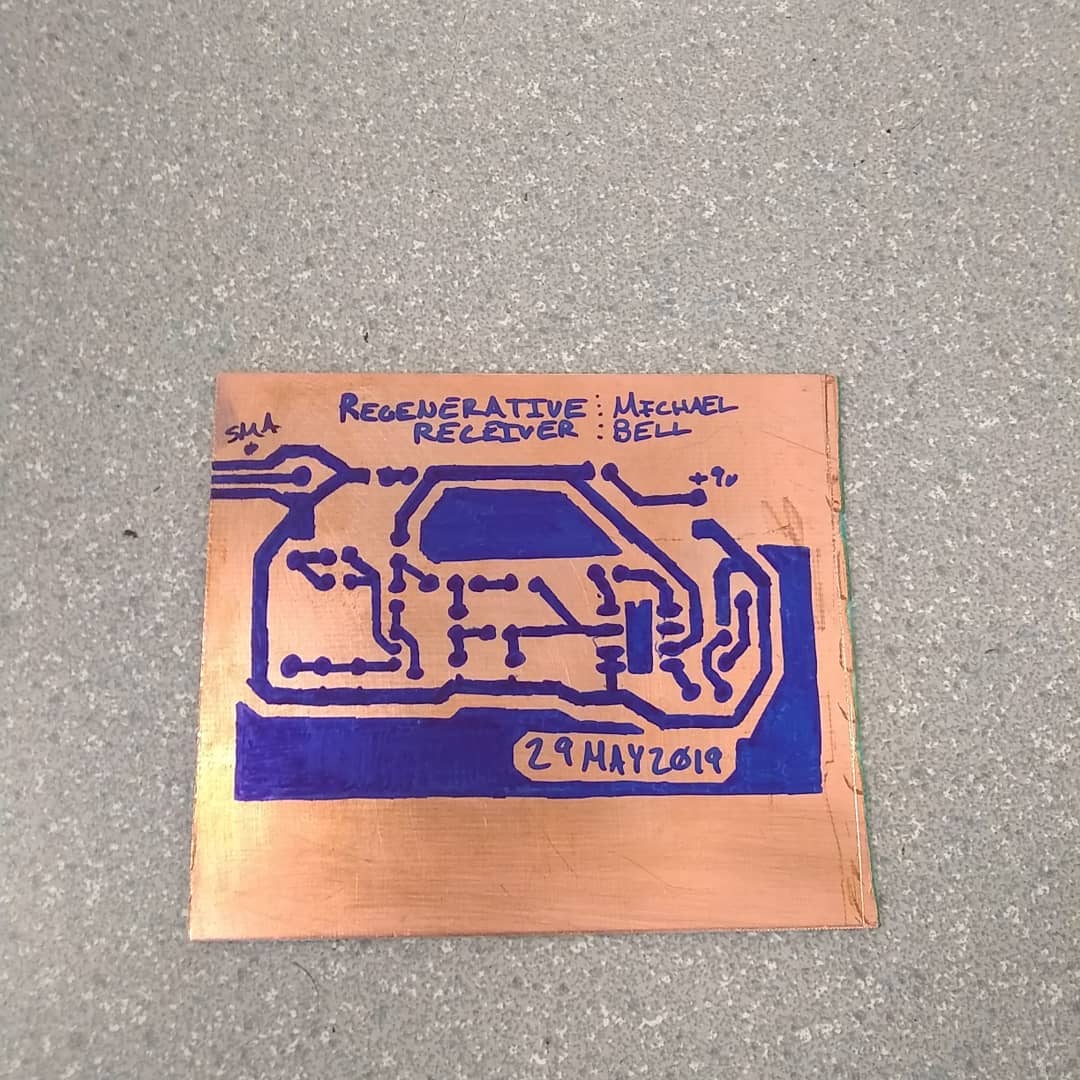
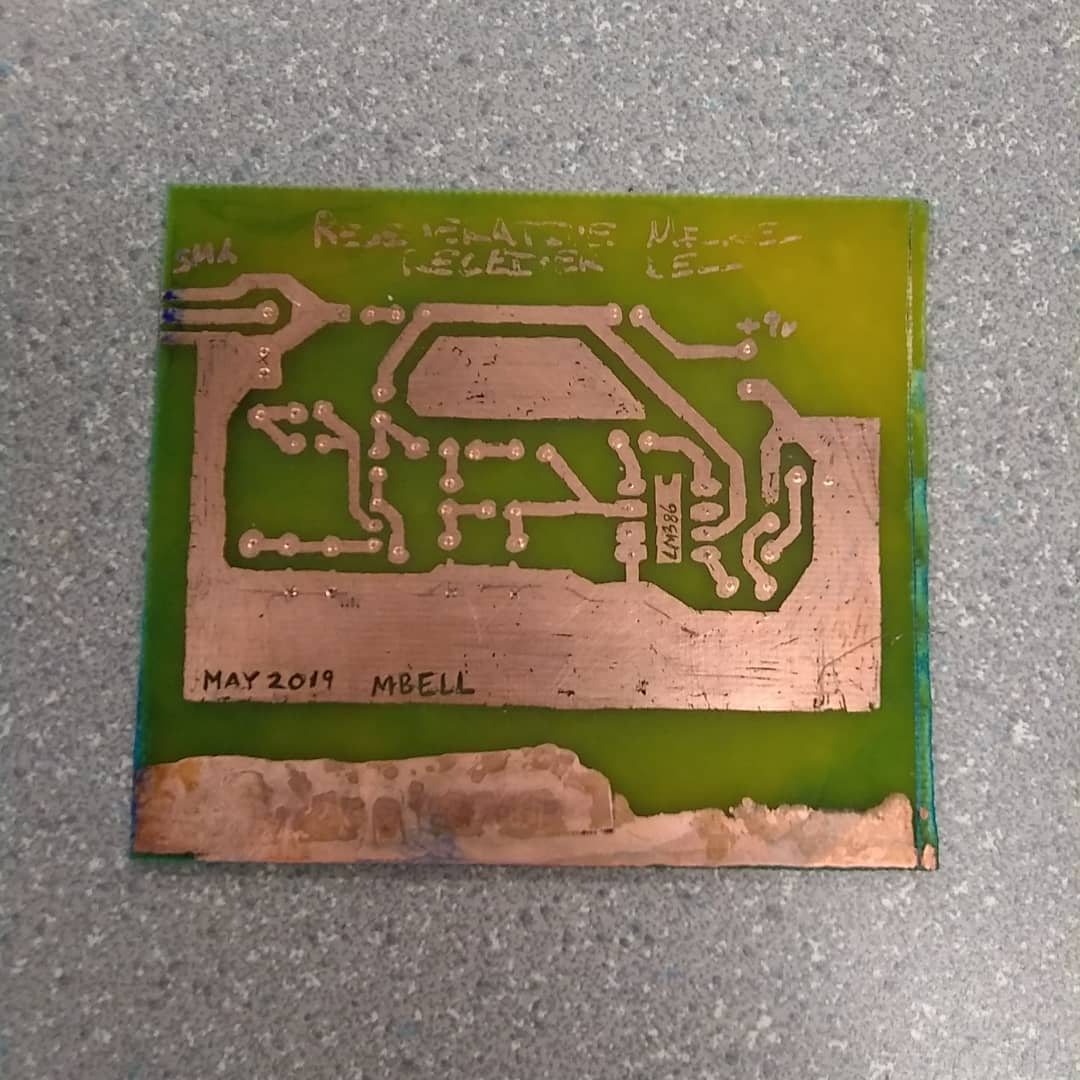
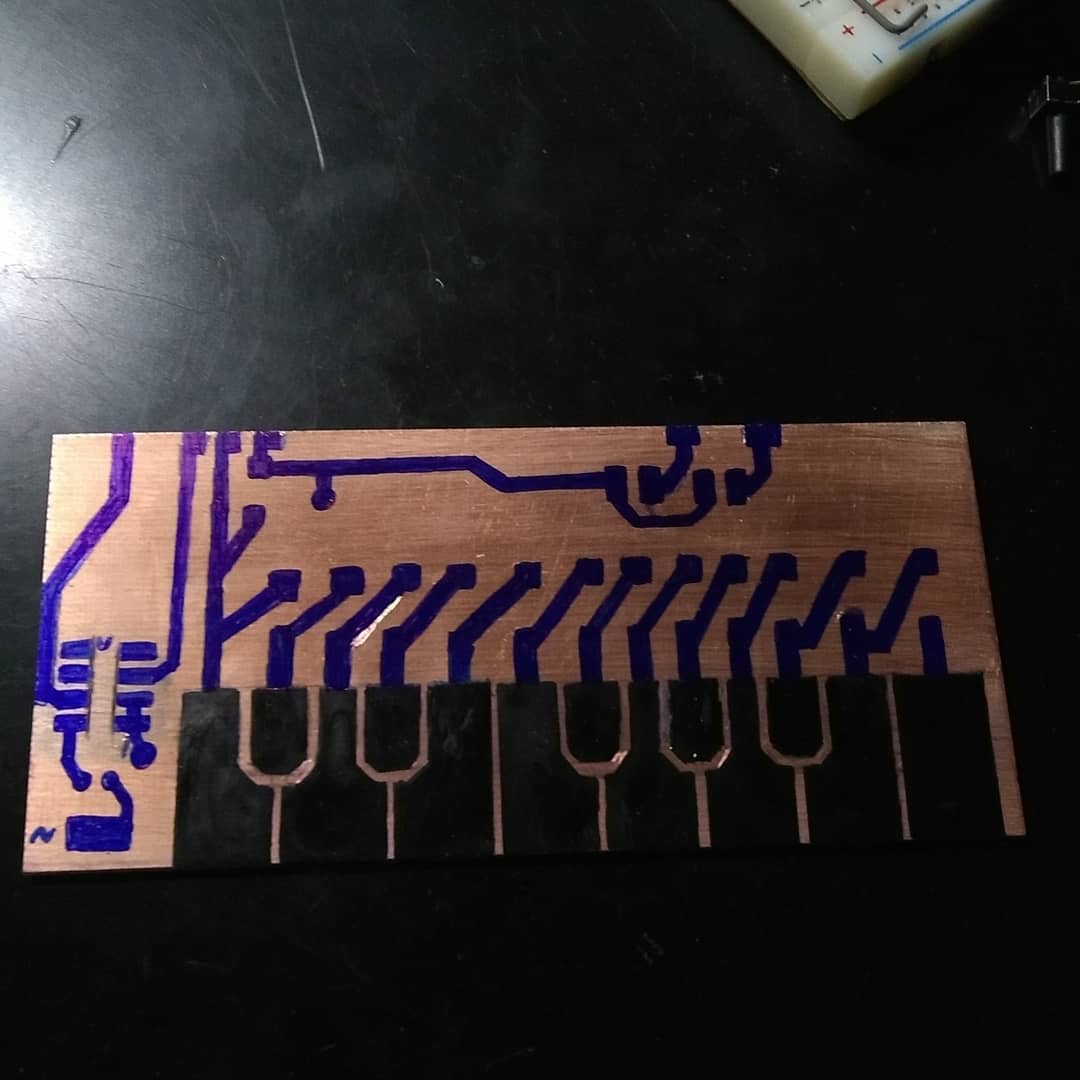
- At this time I also had a chance to etch my own circuit board during my electronics class. Using a marker, I drew thick lines to mask where I wanted to keep copper, and then using ferric chloride etchant I was able to achieve a functional result. This board was for the regenerative reciever circuit which I finished designing in May 2019.
July 2019
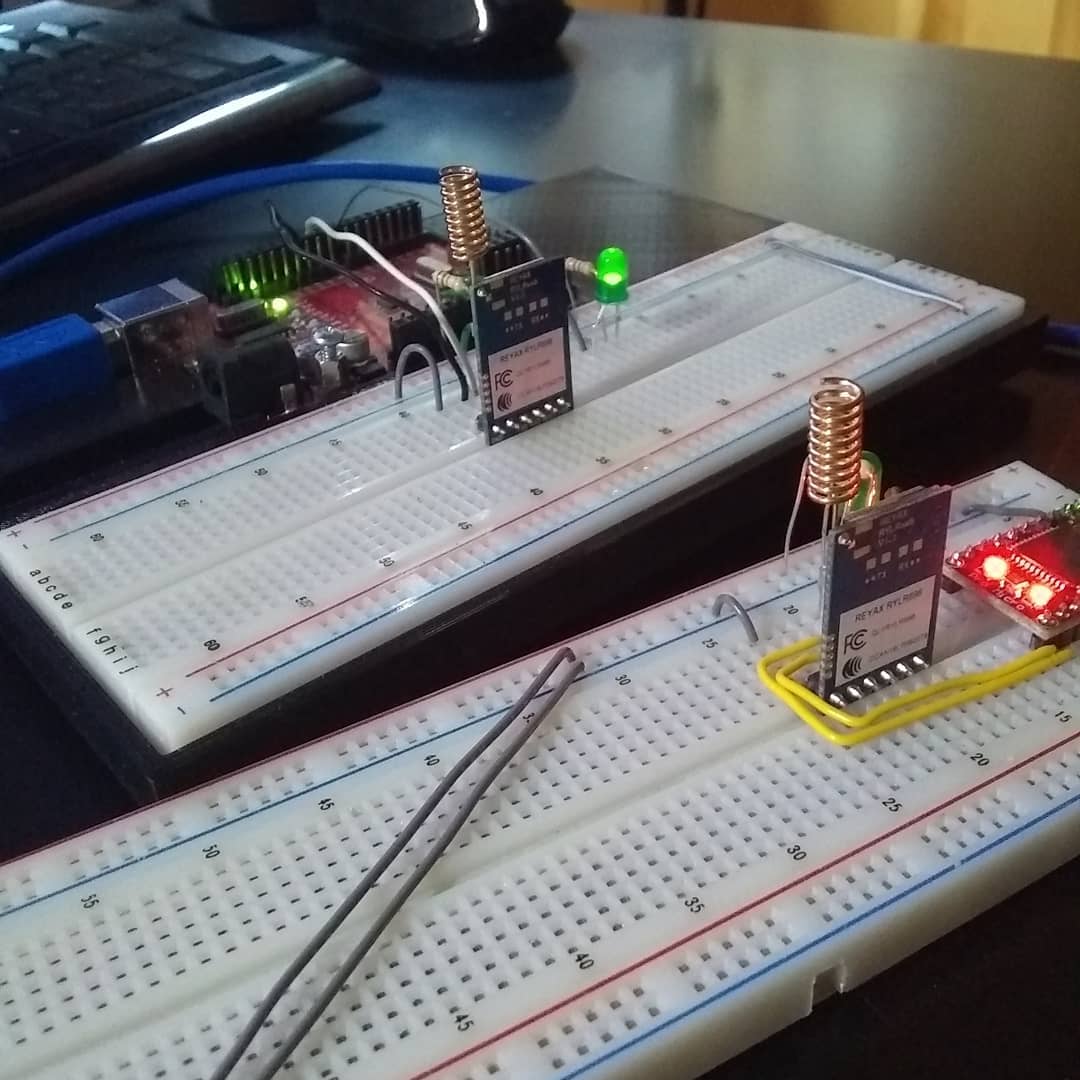
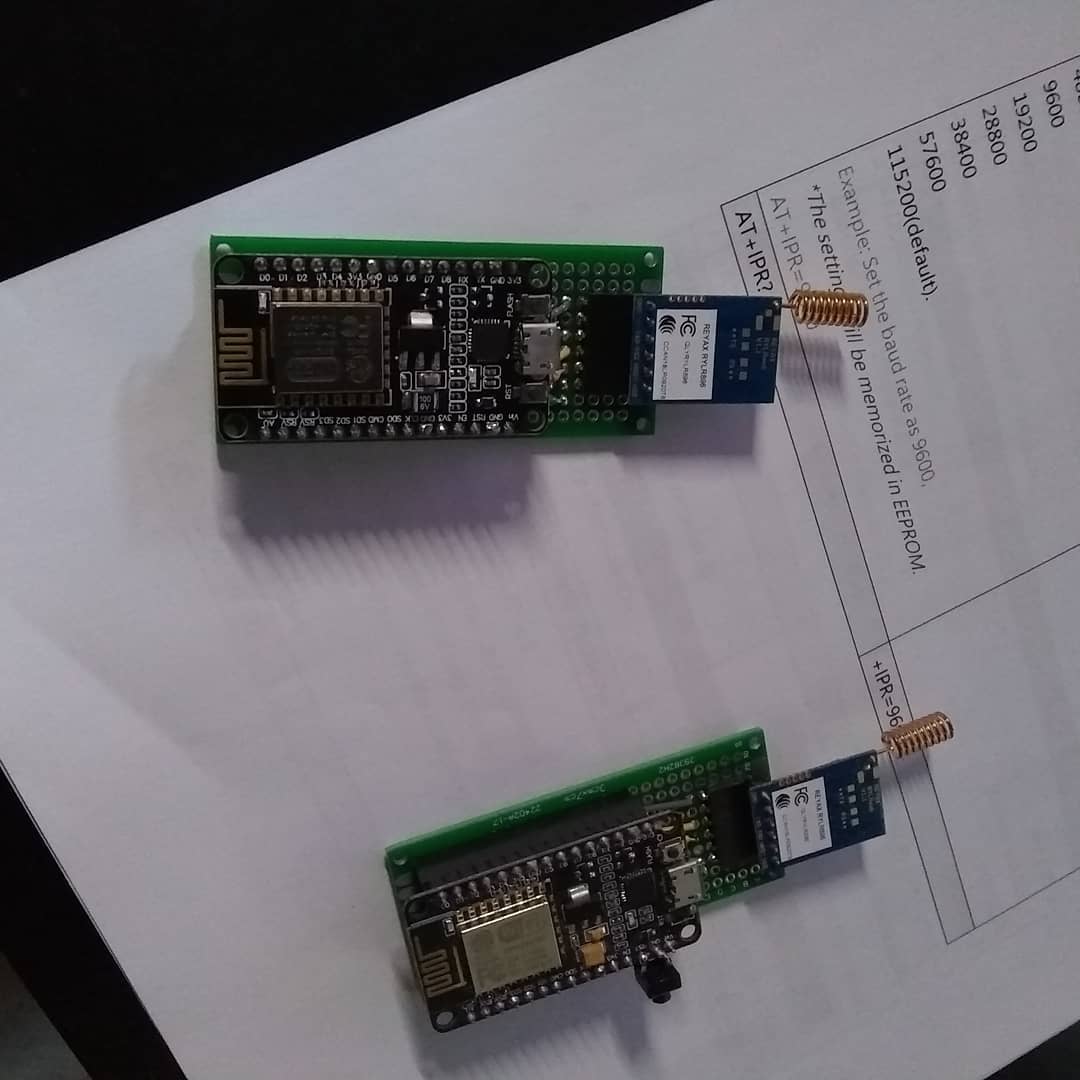
- I did a couple fun projects this month. I had purchased some serial LoRa boards to try out low powered digital communications with my ESP8266. I first tested the range of the transmitters, and achieved an astounding 10km, which was the furthest I went on my bike that day. Since LoRa works around 915MHz, and at a power far below 1W, it is quite impressive. I took it a step further however, and added a simple chatroom webpage for the ESP8266 to broadcast so I can connect to it through my phone. With that I was able to send text messages (line of sight of course) without the need of infrastructure.
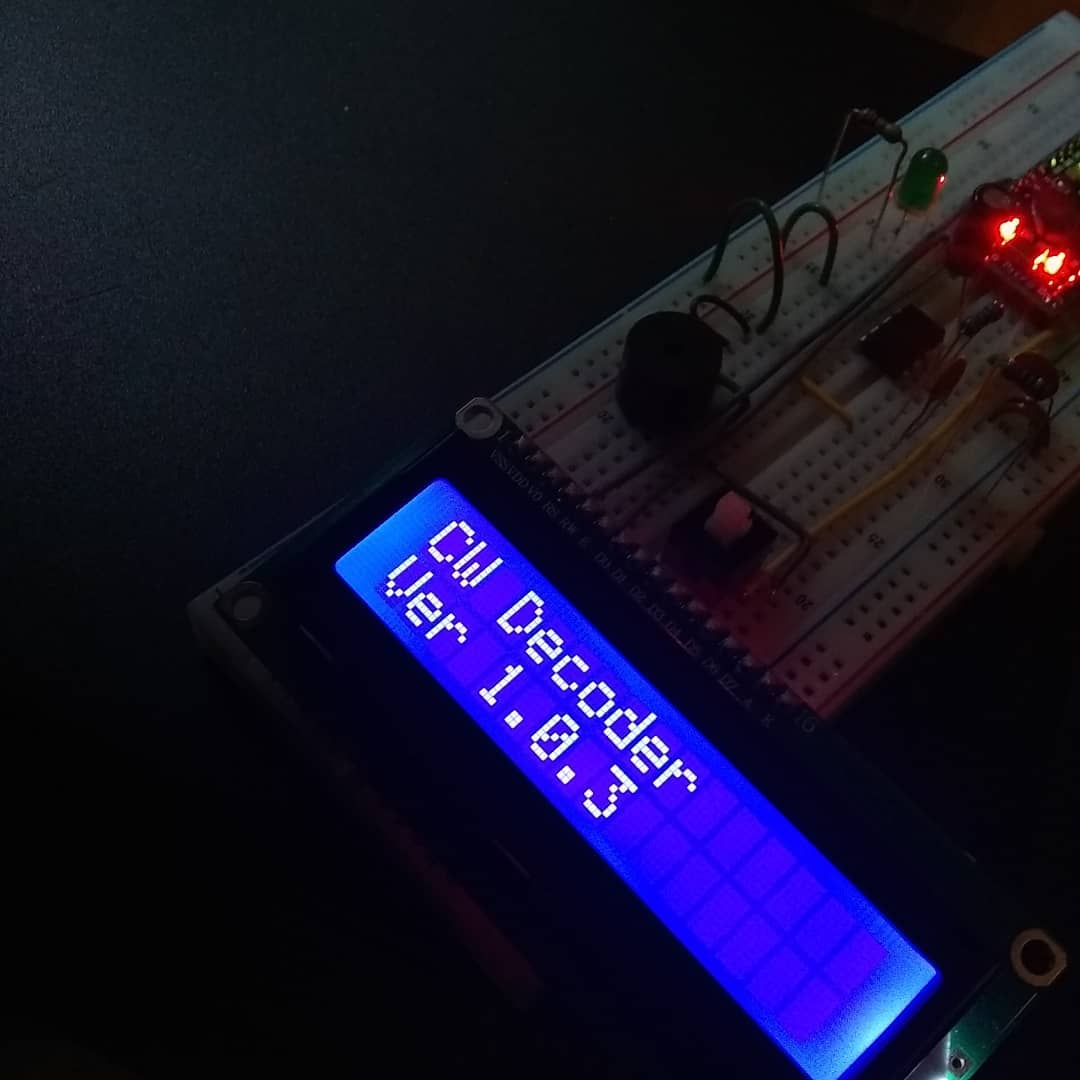
- Continuing with the theme of radios, I found some resources online on how I could make a Morse code decoder with an arduino, so I built one and it was quite fun to use with the regenerative reciever I had built.
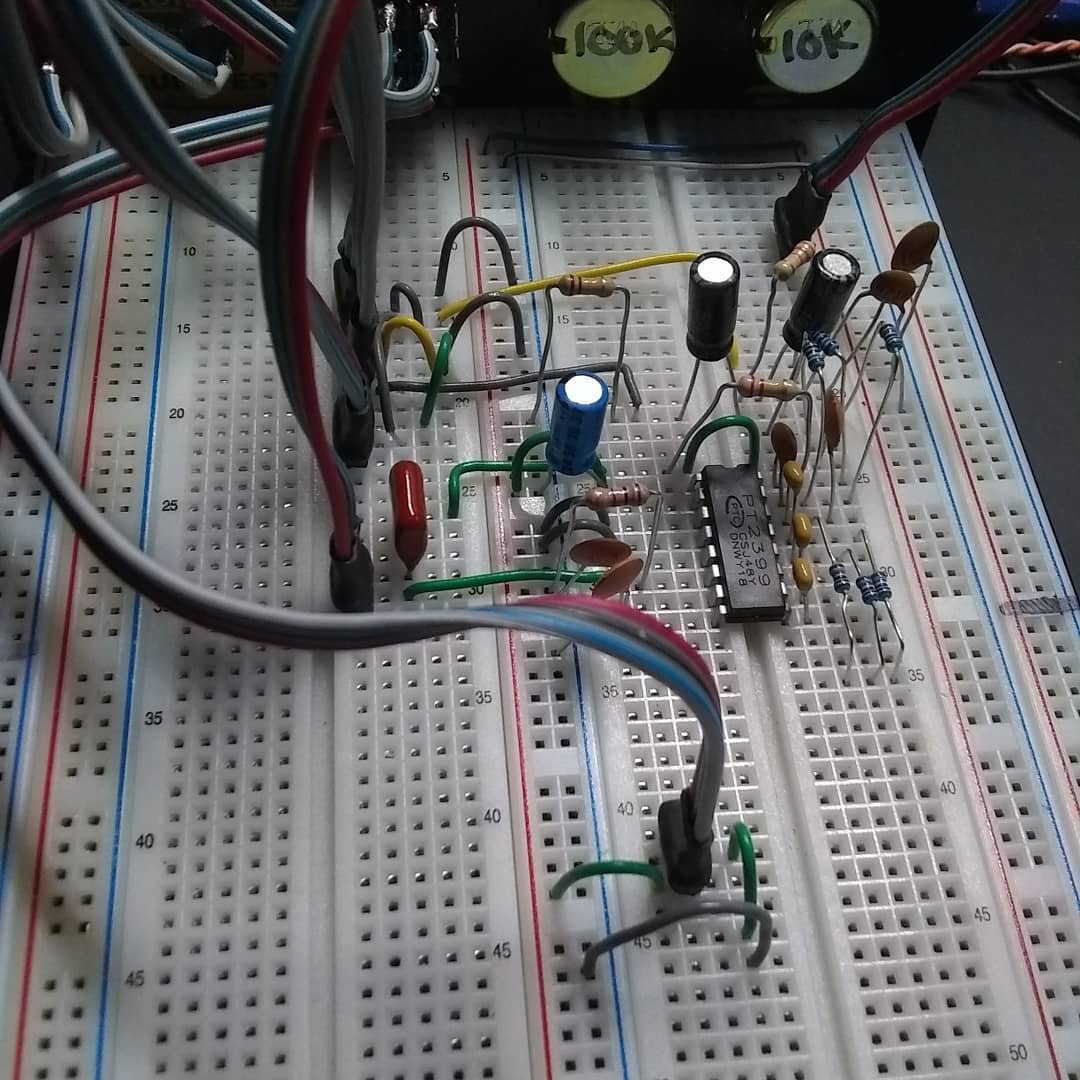
- Another project I worked on this month was a PT2399 reverb IC circuit. I was working on making a reverb effect pedal for my familys electric piano.
August 2019
- Continuing along with etching, I wanted to see what I could use to etch my own boards at home (while staying cheap). I ended up finding a guide online that used a mixture of 2 parts hydrogen peroxide (2%) with 3 parts white vinegar and a gram of table salt per litre.
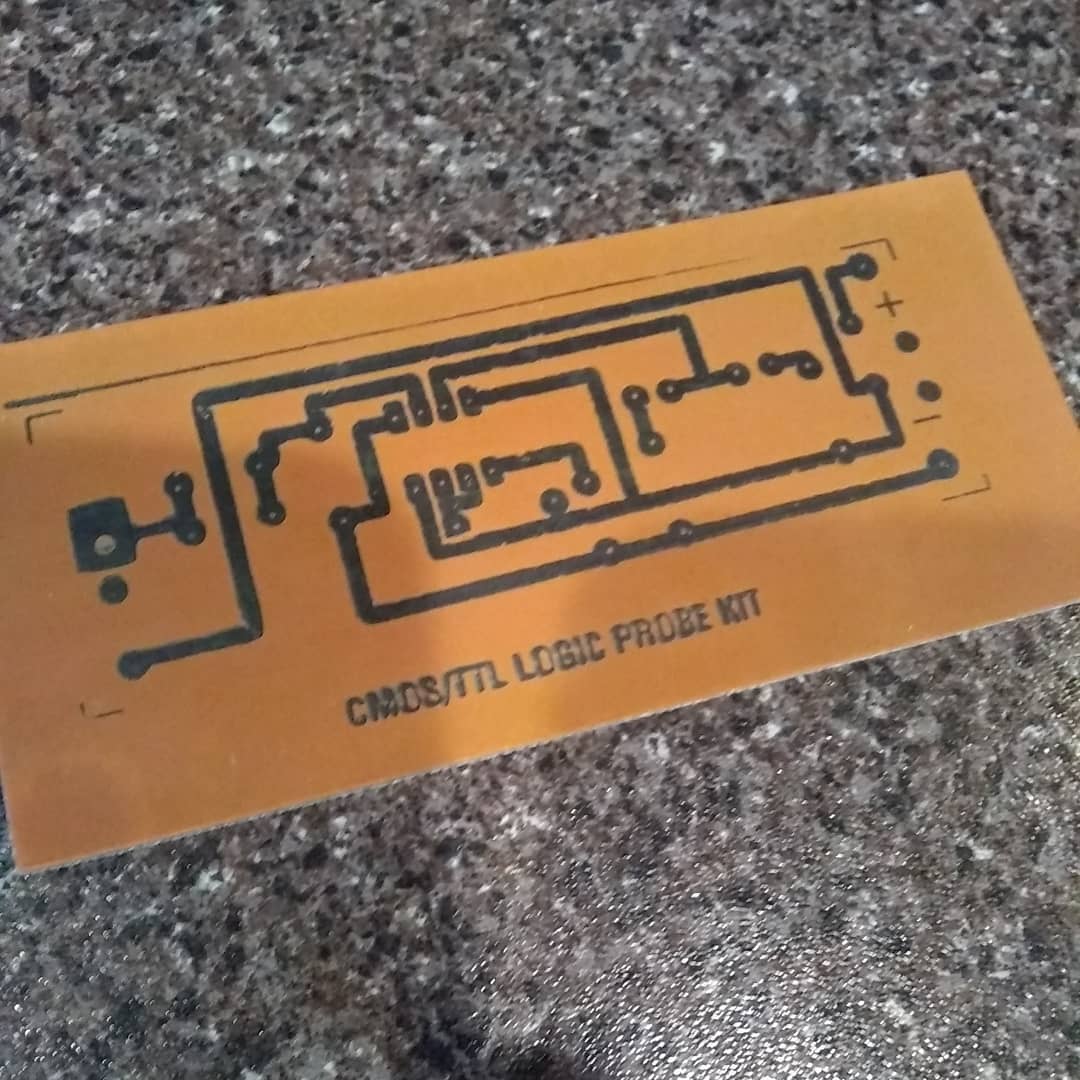
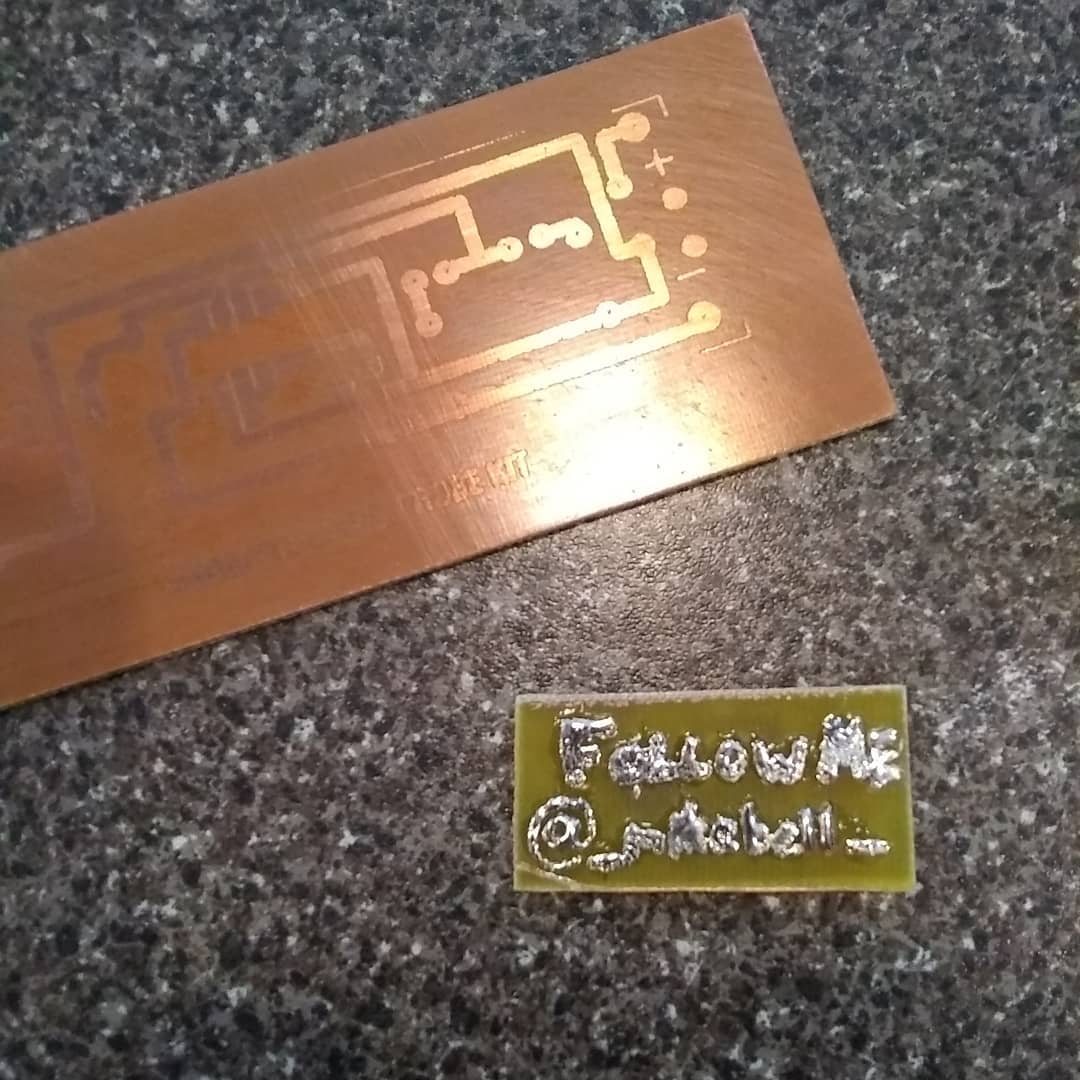
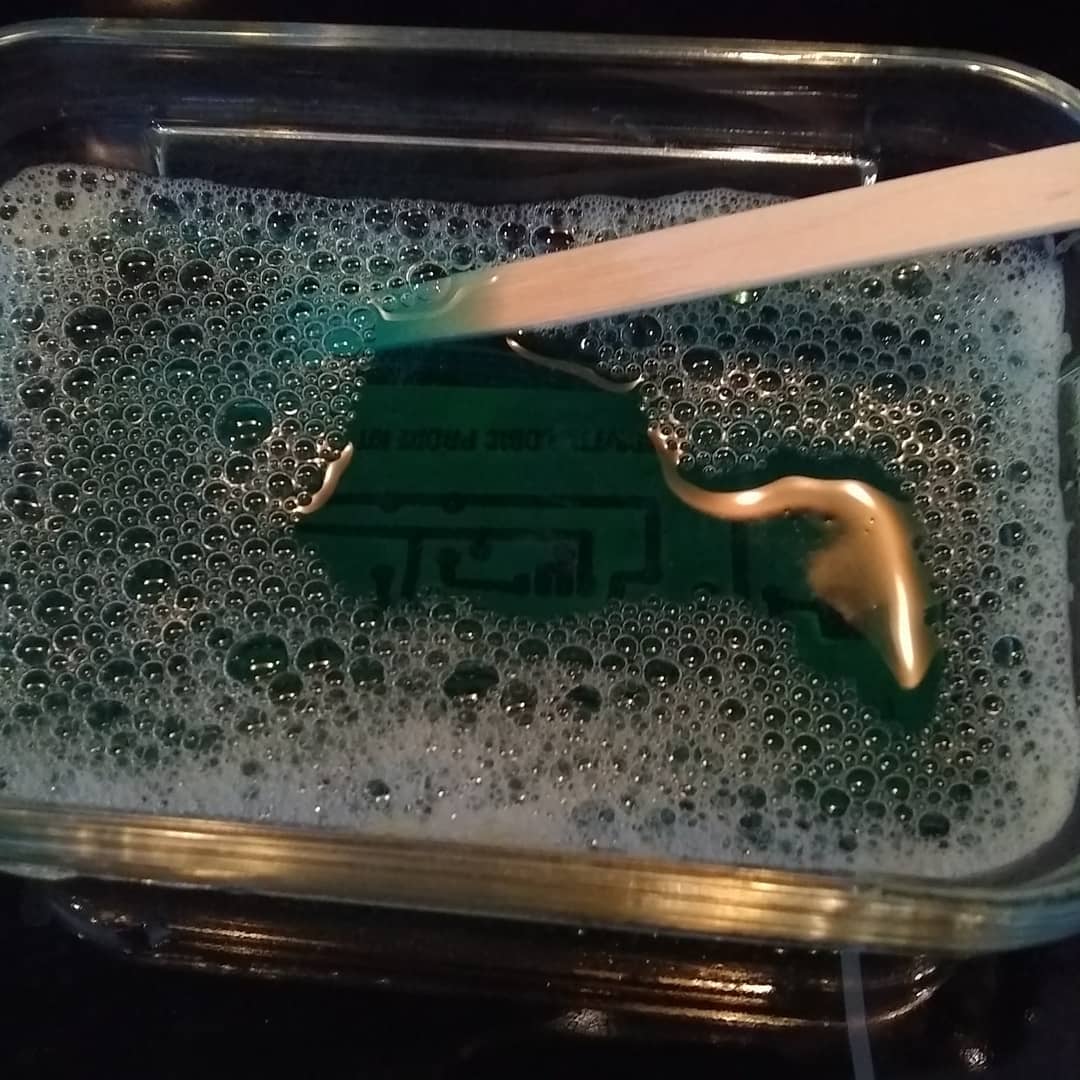
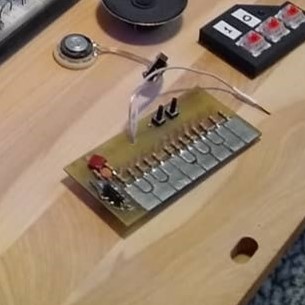
- Another project I made with this etching experiment was a small stylophone using a 555 and resistor chain to create the different notes.
September 2019
- In september I worked on making a function generator using an AD9833 waveform generator.
- I also bought a simple UART receipt printer, so I made a small random number generator that also generates unique one time pads for secret messages.
October 2019
- I didn't do too much this month, but I did spend some time capturing NOAA-19 satellite imagery.
November 2019
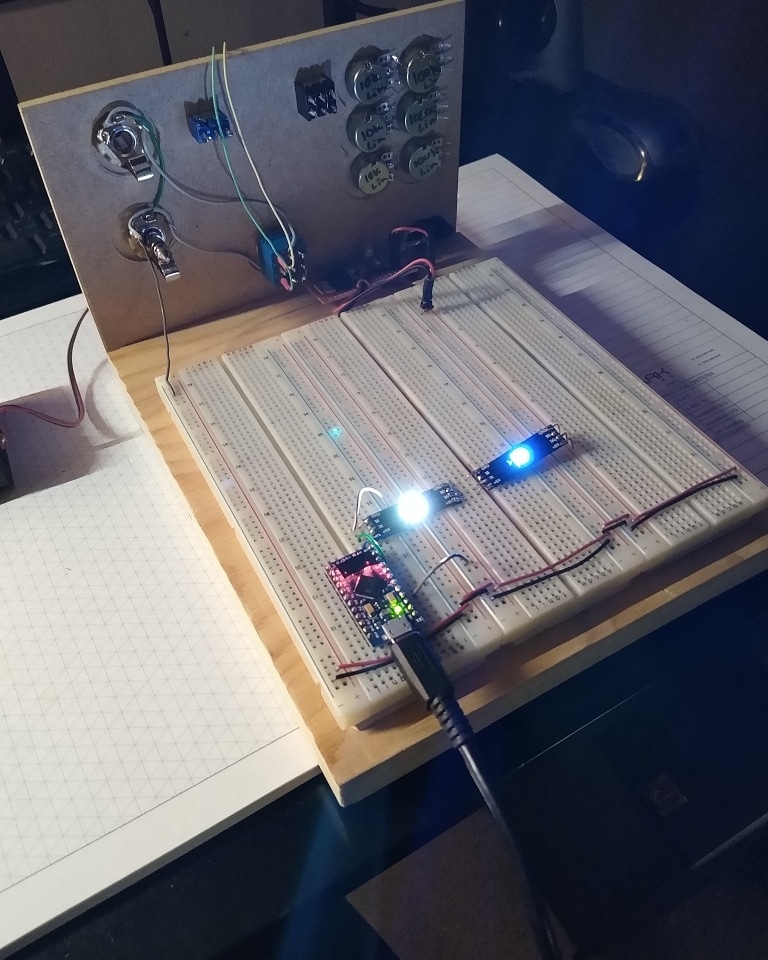
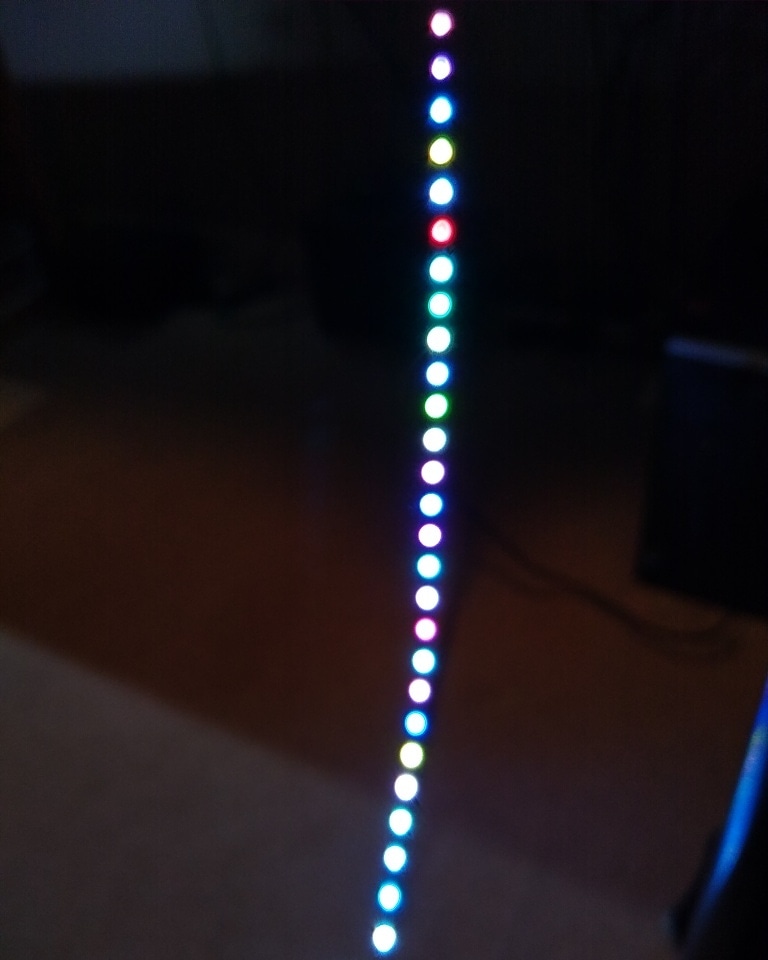
- I spent some time this month experimenting with addressible RGB LEDs.
December 2019
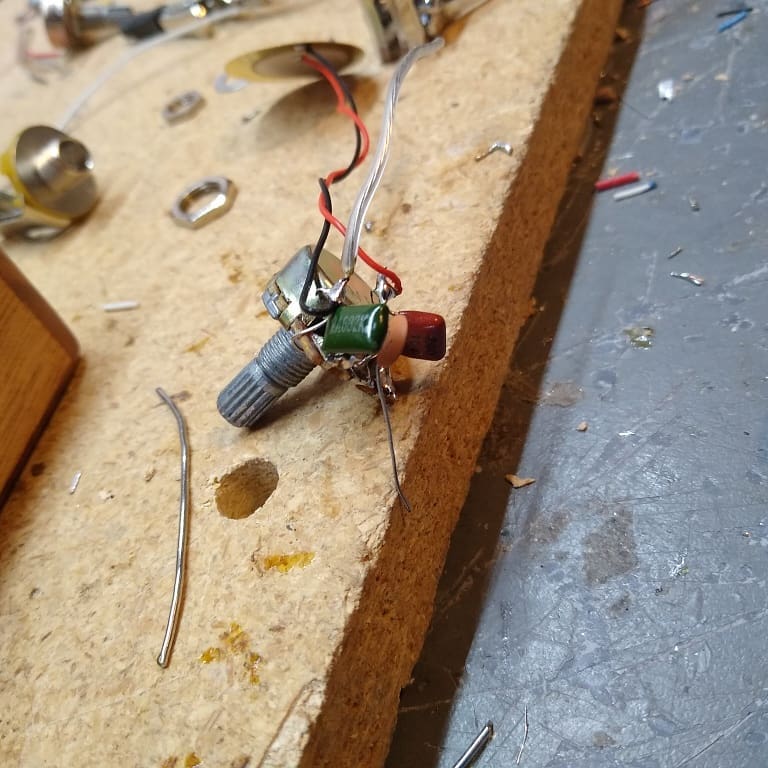
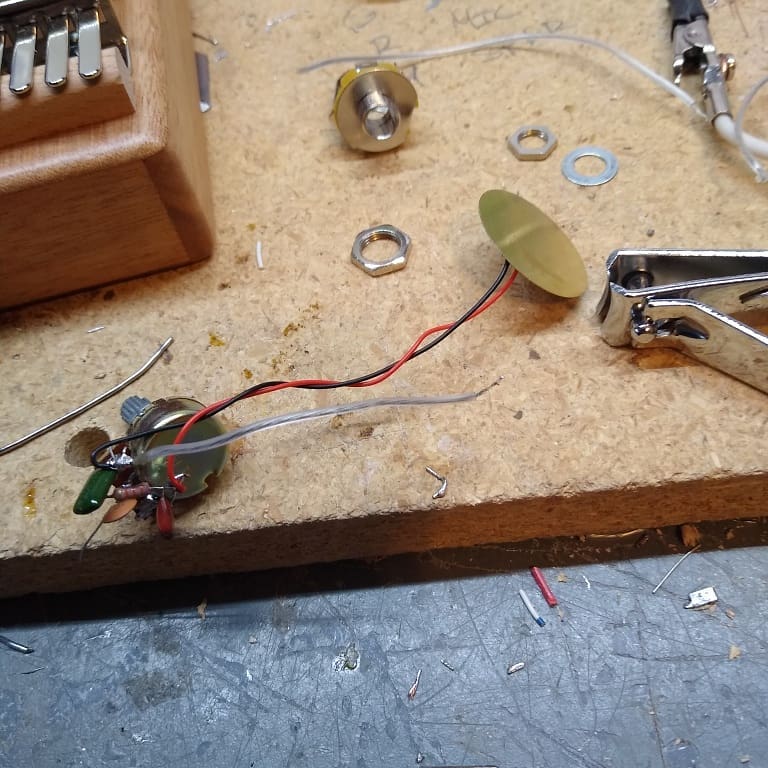
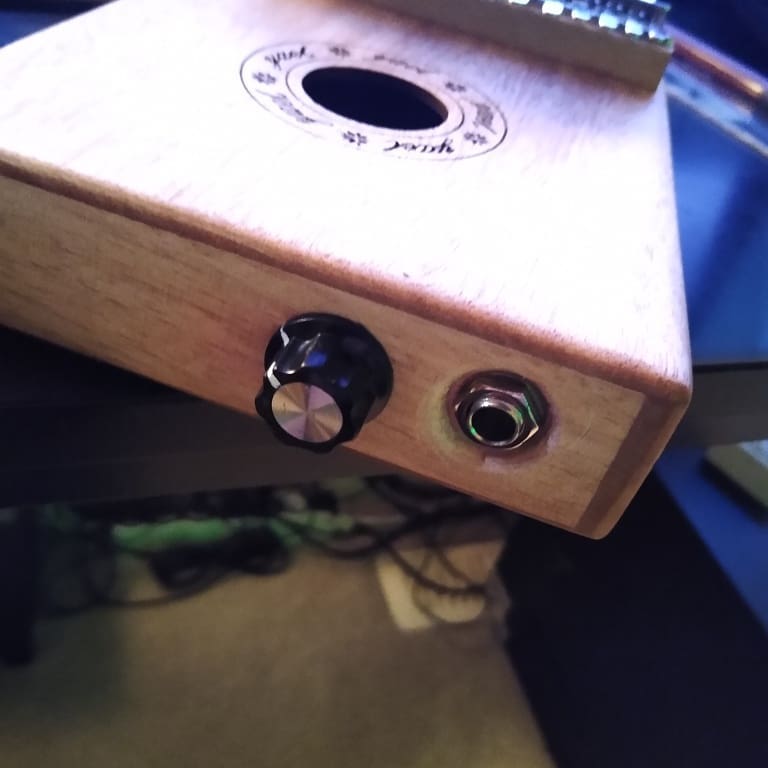
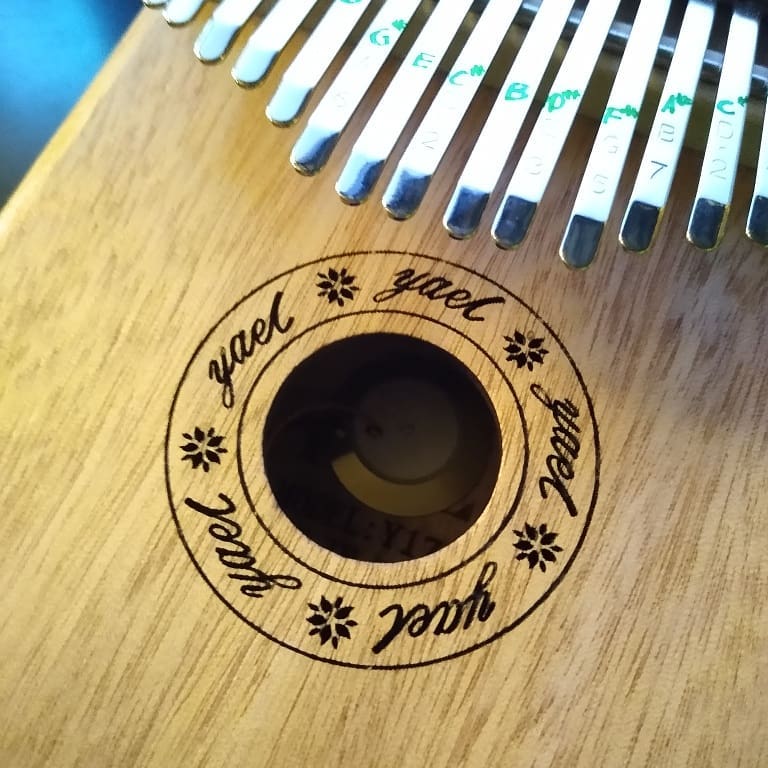
- During this month I made a piezo pickup for my kalimba. I used some passive filtering on the volume potentiometer similar to how electric guitars may have. The piezo was glued into the center of the instrument with a 1/4 inch audio jack at the base. Once complete, I was able to record audio from it while I was playing, and it was suprisingly clear too.