ONGOING
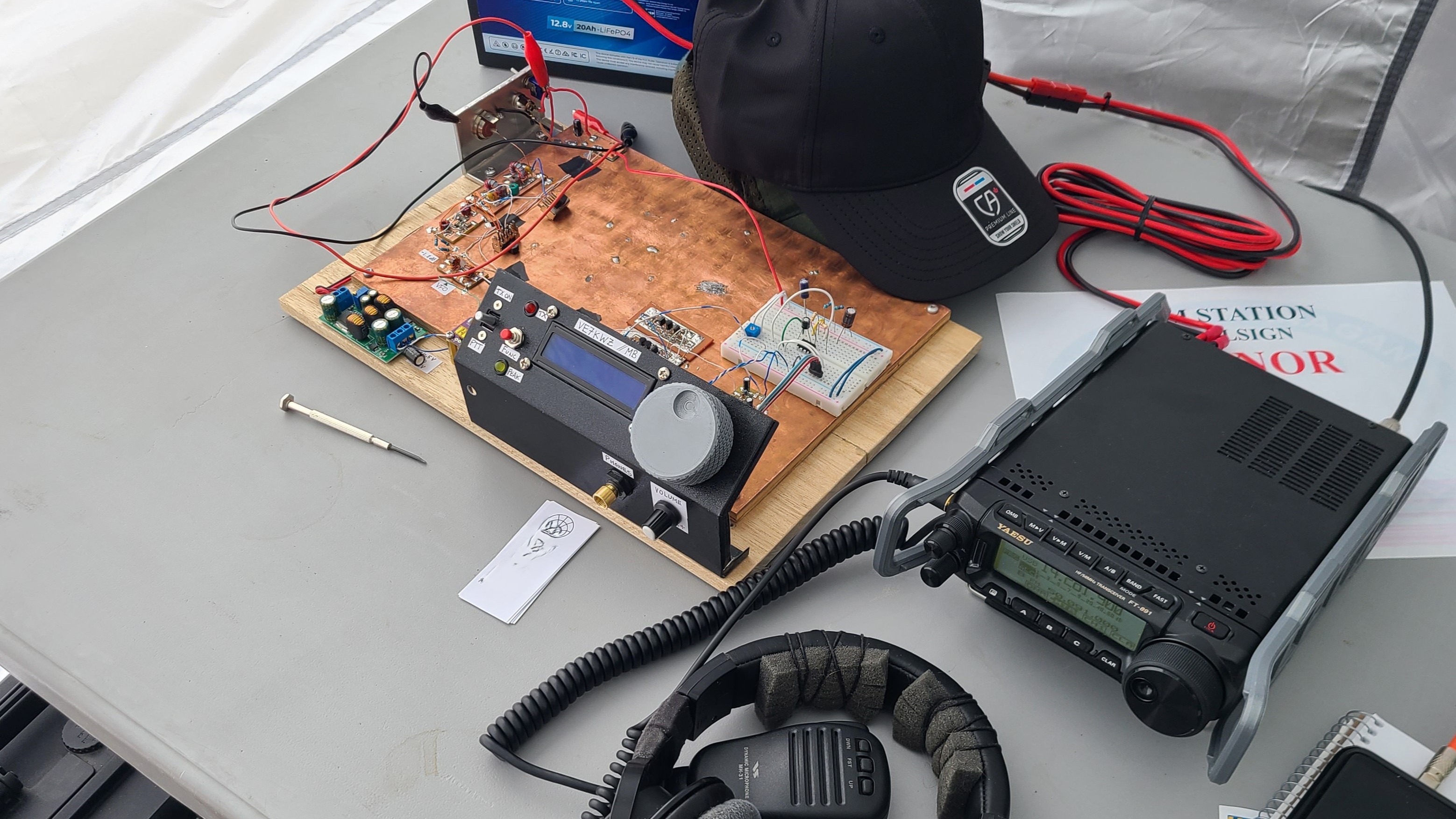
This project is new and ongoing as of June 2026. I have added it to the list as a way to show off where I am at in the project as it is quite complex. I will add to this page as I go. Once I finish the project, I will re-write the page.
For details on each of the components/building block of this radio, I will post the build process through my blog.
Since 2023 I wanted to make my own superheterodyne receiver. In 2025, I made my first direct conversion reciever and then later on a superheterodyne receiver. Because of my final year of university, I was unable to work on the radio and had to pack it away. Now that I have finished my degree, I have some additional free time that I spent revisiting the project.
I will update this project page as I go, but below are images and videos of what I have built so far.
Early June 2026
The Receiver in early June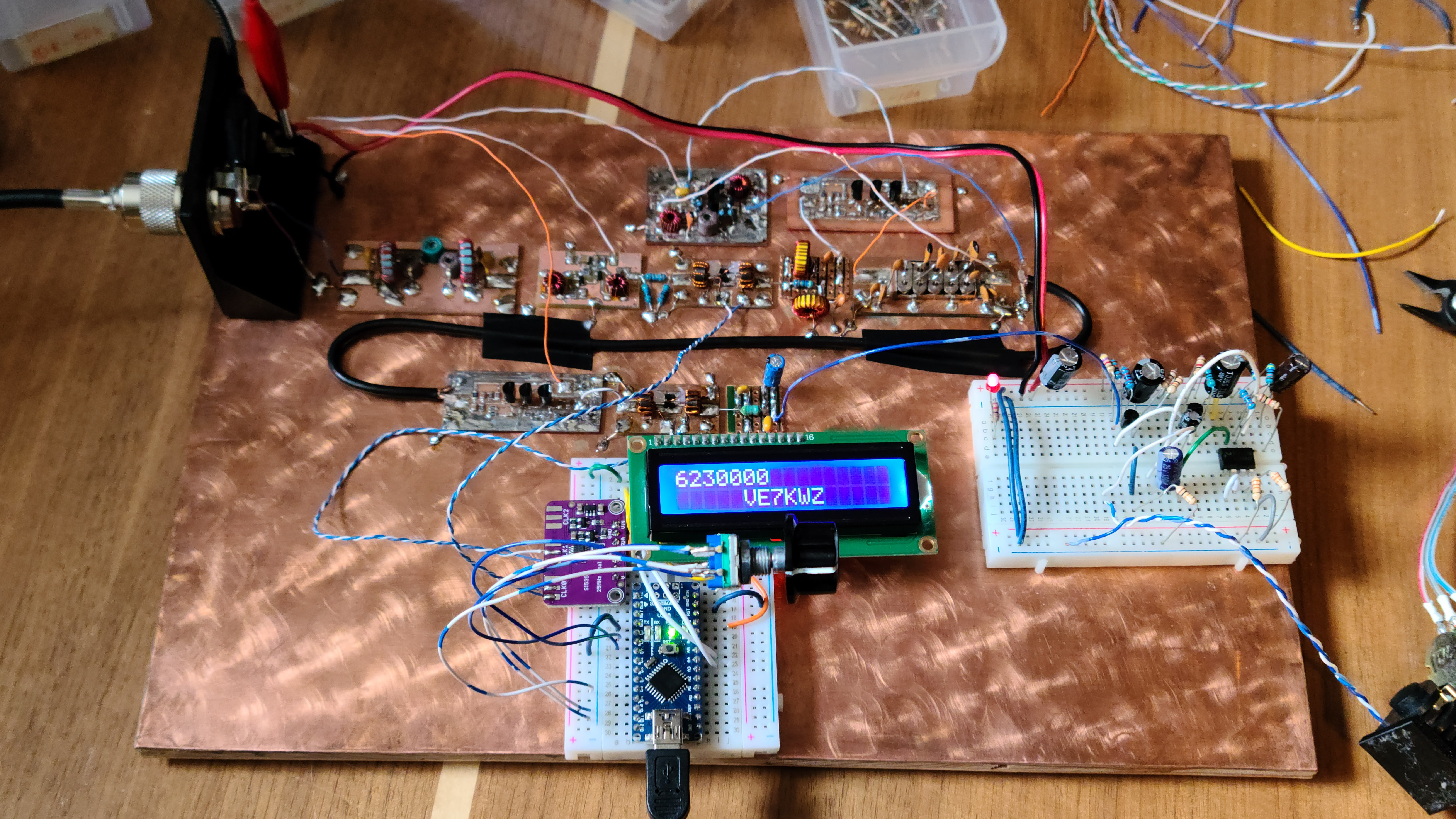
Receiving Signals
I was able to receive both Morse Code and single sideband (SSB) transmissions.
Note on this radio prototype
The current configuration has very little gain through the intermediate frequency, so I made up for that using a very high gain audio stage. The issue I was having is known as "motorboating" where a feedback loop causes a fast puttering/popping noise in the audio. Creating an audio diplexer after the final mixer fixed the noise problem, but the recievers gain was still very low.
At this early stage of the prototype, I am using an SI5351 clock generator for the variable frequency oscillator (VFO) and the beat frequency oscillator (BFO). The IF of my superheterodyne receiver is at 8 MHz, meaning a VFO around 6 MHz receives signals at 14 MHz.
Late June 2026
Just in time for the 2026 summer amateur radio field day event, I finished a new design featuring some additional amplifiers and a faceplate for the display and controls.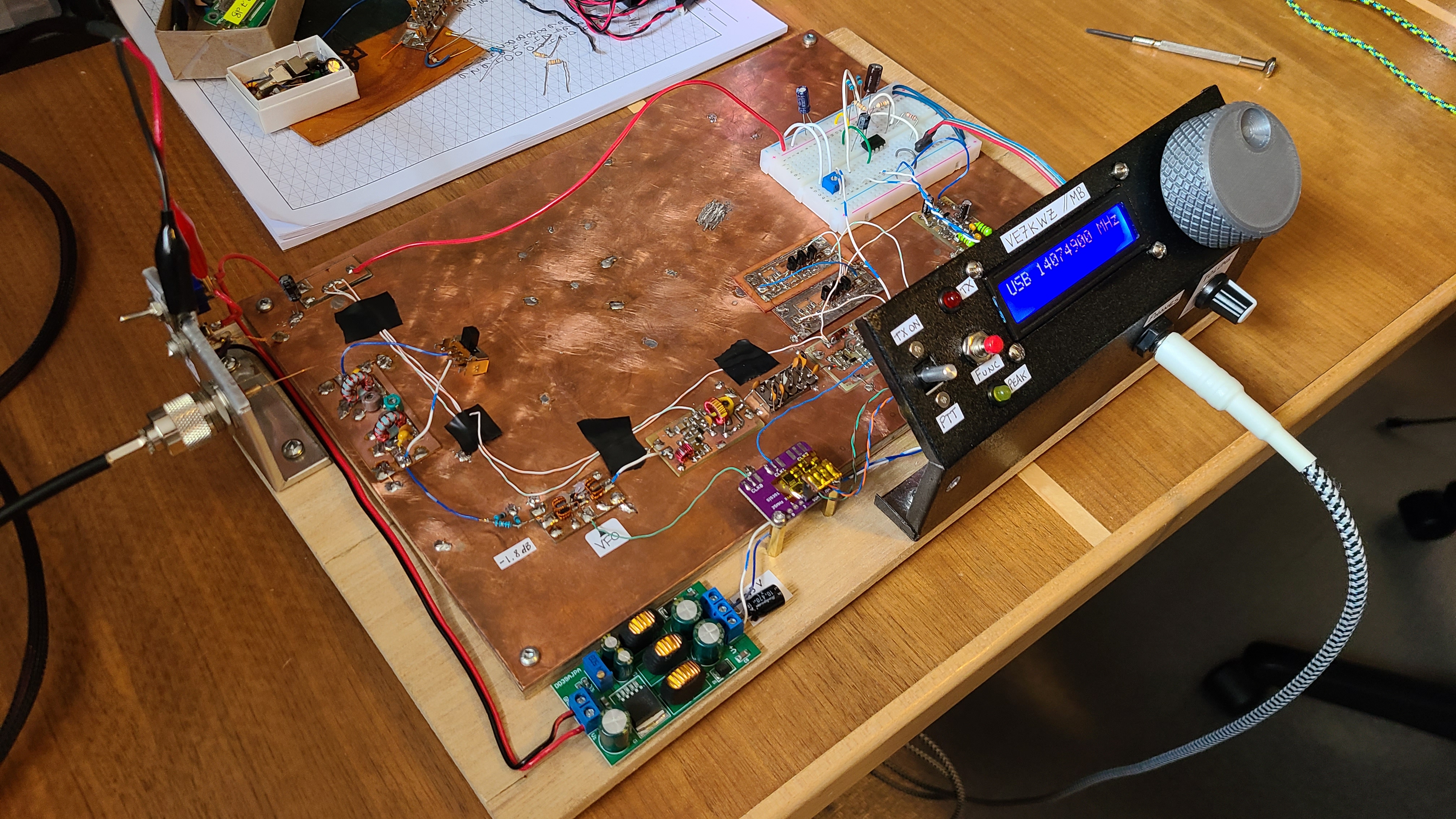
Receiving Signals
The reception was much clearer, and I had much less noise compared to my previous version.
I had so much success with this build I felt it was worth showing the guys at the local amateur radio club.